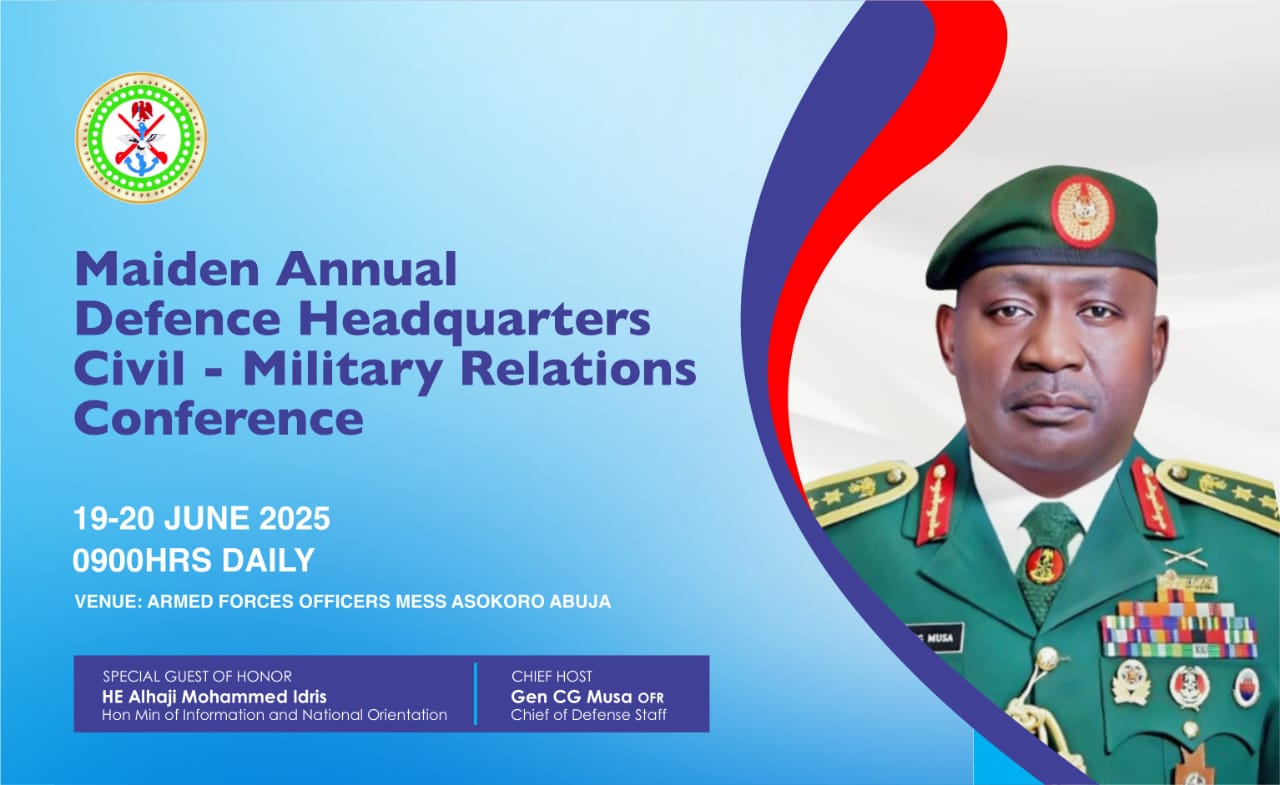
In a bold and historic move to recalibrate the relationship between the Nigerian Armed Forces and the citizens they are sworn to protect, the Defence Headquarters is convening its Maiden Annual Civil-Military Relations Conference, taking place from 19 to 20 June 2025 at the Armed Forces Officers Mess, Asokoro, Abuja. Themed “Winning Hearts and Minds: Non-Kinetic Approaches to National Security,” the conference signals a decisive shift in Nigeria’s internal security doctrine—from force-led responses to trust-building, empathy, and community partnership.
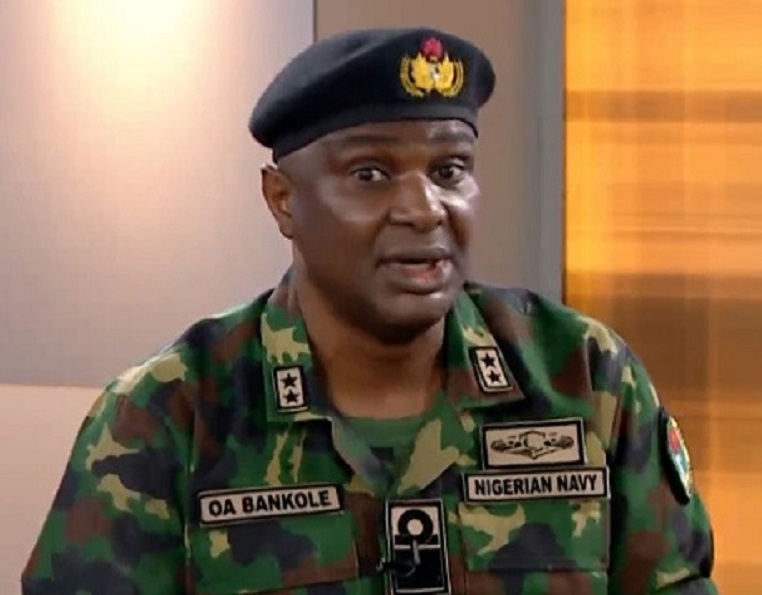
Rear Admiral Olusanya Bankole, Nigeria’s Chief of Defence Civil-Military Relations
According to Rear Admiral Olusanya Bankole, Chief of Defence Civil-Military Relations, the event seeks to correct longstanding misconceptions:
“There has been a false narrative that the military is brutish and does not like civilians. But the truth is, we are drawn from the same civilian population. This conference is about bridging that gap—it’s a two-way bridge. It’s about how the military can support civilians, and how civilians can support the military.”
His remarks reflect the deeper philosophical shift being driven by the Chief of Defence Staff, General Christopher Gwabin Musa, whose leadership continues to champion the Armed Forces as a people-centric institution.
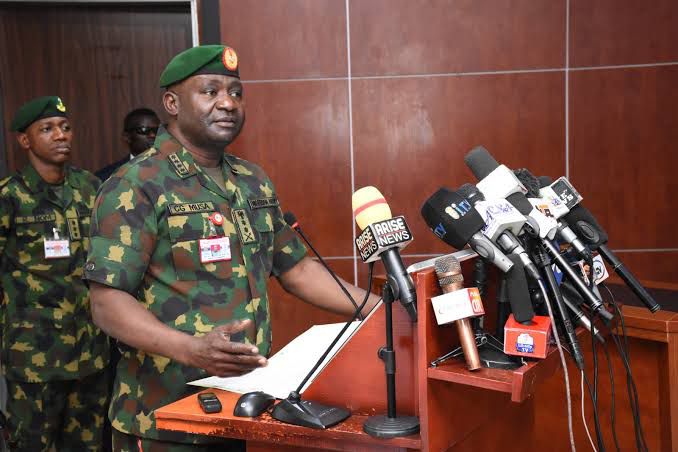
General Christopher Gwabin Musa, Nigeria’s Chief of Defence Staff,
“The CDS has always emphasised that people are central to military operations. Intelligence comes from the people. The military is theirs. This initiative is about earning their trust—to remind them that we exist to protect, not intimidate,” Rear Admiral Bankole added.
This conference is not symbolic, nor is it an isolated gesture. It forms part of a strategic framework inspired by international best practices where non-kinetic strategies have bolstered peacebuilding and improved security outcomes:
Global Case Studies
- Colombia’s “Hearts and Minds” Strategy (2000s): During the demobilisation of FARC rebels, the Colombian military collaborated with civil society and media to implement psycho-social reintegration, educational outreach, and healthcare programmes in rural areas. Public trust in the military rose significantly, particularly in previously volatile zones.
- Indonesia’s Tentara Manunggal Membangun Desa (TMMD) Programme: The Indonesian Armed Forces frequently deploy engineering units to rural communities, working alongside civilians to build roads, schools, and infrastructure. This initiative has strengthened the military’s image as a development partner.
- Kenya’s Post-Garissa Engagements (2015–2019): Following the Garissa University attack, the Kenyan Defence Forces launched soft power initiatives in northern Kenya—including school renovations, free medical camps, and interfaith community dialogues—which helped restore public confidence in their protective role.
These examples illustrate that when civil-military synergy is intentional, the outcomes are clear: peace becomes more durable, intelligence more credible, and military legitimacy more widely accepted.
Nigeria’s New Direction – Building from Within
For Nigeria, the timing of this Civil-Military Relations Conference could not be more significant. From countering insurgency in the North East to calming separatist agitation in the South East, rebuilding trust between the military and civilians is now as vital as achieving victory in battle.
In his keynote address, Gen. Musa aptly stated:
“This initiative encourages us to think beyond weapons and warfare. We must invest in human security, build resilient communities, and reinforce the idea that every Nigerian—uniformed or not—has a stake in peace and prosperity.”
By establishing this event as an annual forum, the Defence Headquarters is institutionalising civil dialogue, not merely initiating it. The participation of diverse stakeholders—from civil society leaders to local chiefs and development experts—ensures this is a national conversation, not a military monologue.
With clear strategy and political resolve, Nigeria’s Armed Forces can replicate the success seen in Colombia, Indonesia, and Kenya—developing a homegrown model that reflects Nigeria’s unique values, diversity, and democratic aspirations.
Under the steady, people-first leadership of General C.G. Musa, the message is unmistakable:
The military is not a force apart—it is a force among. A force for the people. A force with the people.
And in today’s complex security landscape, that might just be Nigeria’s most powerful strategic advantage.