For decades, Africa has been portrayed as the victim of climate change, its lands scarred by droughts, floods, desertification, and deepening food insecurity. Yet, at the Second Africa Climate Summit (ACS2) in Addis Ababa, the narrative shifted decisively. Leaders of the 54-nation continent, weary of being seen only through the prism of vulnerability, declared that Africa must be positioned not merely as the stage for climate suffering but as the driver of climate solutions. The message resonated beyond the walls of the Addis Ababa International Convention Centre: Africa intends to lead, not plead.
Climate finance worldwide has seen impressive growth in recent years. According to the Climate Policy Initiative, annual global climate finance flows nearly doubled to USD 1.3 trillion in 2021–2022, yet only 5 per cent of that went into adaptation. For Africa, where the effects of climate change are most acute, this imbalance has devastating consequences. The continent requires more than USD 3 trillion by 2030 to implement its climate goals. But between 2021 and 2022, it received a meagre USD 30 billion, a fraction of its need.
READ ALSO: Africa’s Global Climate Ambitions: What Are the Realities on the Ground?
Even as global flows expand, Africa’s share remains disproportionately low. The continent captures just 2 per cent of global renewable energy investment, despite holding 60 per cent of the world’s best solar resources. As storms intensify and temperatures rise, the shortfall in adaptation finance is not just a financial gap; it is a question of survival.
What Happened at the 2nd Africa Climate Summit in Ethiopia?
Against this backdrop, Ethiopia’s Prime Minister Abiy Ahmed unveiled an ambitious framework at ACS2, seeking to mobilise USD 50 billion annually through two instruments: the Africa Climate Innovation Compact (ACIC) and the African Climate Facility (ACF). These mechanisms aim to deliver 1,000 African solutions by 2030 in areas such as clean energy, agriculture, water security, and transport and climate resilience.
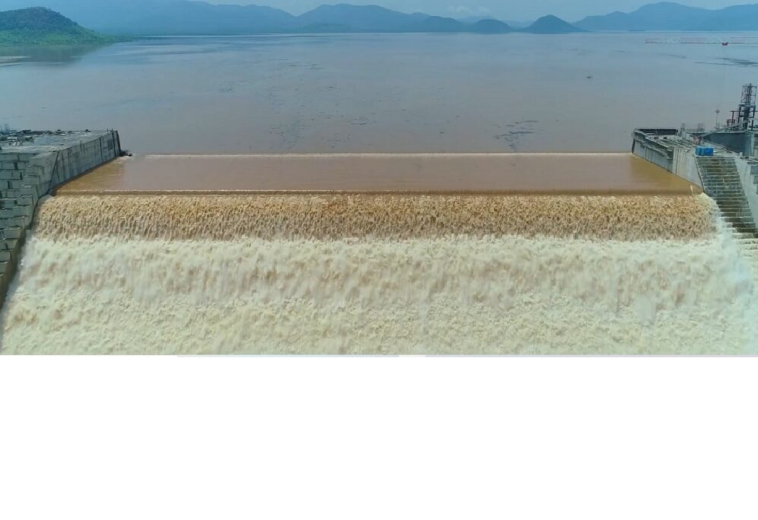
Ethiopia showcased its Green Legacy initiative, a tree-planting campaign launched in 2019 and a newly commissioned mega hydroelectric dam as evidence that Africa can chart a path that couples growth with ecological stewardship. These symbols of local initiative underlined a wider point: the continent’s climate ambition is not rhetoric but already visible in action.
At the close of ACS2, the Addis Ababa Declaration on Climate Change and Call to Action was unanimously adopted. This was more than a document; it was a covenant. It pledged to scale up African-led initiatives like the Great Green Wall, the African Forest Landscape Restoration Initiative, and Ethiopia’s Green Legacy programme. It also reinforced the principle that adaptation finance is not charity but a legal obligation of developed countries, to be delivered as grants rather than debt-burdening loans.
Equally transformative was the agreement between African development financiers and commercial banks to mobilise USD 100 billion for clean power generation. By blending public and private capital, the deal signalled a recognition that Africa must also build domestic financing capacity, not depend indefinitely on external goodwill.
The summit drew not just rhetoric but tangible pledges. Denmark announced USD 79 million for agricultural transformation. Italy reaffirmed its USD 4.2 billion climate fund, directing nearly 70 per cent of it to Africa, and formalised its commitment through a memorandum with Ethiopia. The African Development Bank, Afreximbank, Africa50, and the Africa Finance Corporation signed a landmark cooperation framework to operationalise the Africa Green Industrialisation Initiative (AGII), backed by USD 100 billion for green industries and renewable energy projects.
At the same time, the second phase of the Africa Adaptation Acceleration Programme (AAAP 2.0) was launched, with the aim of mobilising USD 50 billion by 2030 to climate-proof Africa’s food systems, safeguard infrastructure, and unlock resilience at scale.
Europe also joined the table: the European Investment Bank signed agreements with Ethiopian banks under its “Readiness Support for Greening Central Banks” programme, part of a wider strategy to channel EUR 100 billion in global climate investment by 2027.
Clean Energy and Cooking for All
Energy poverty remains one of Africa’s most pressing challenges, with more than 600 million people lacking access to electricity and 900 million without clean cooking solutions. At ACS2, African leaders advanced the Mission 300 Agenda, a plan to provide modern energy to 300 million Africans, alongside a bold clean cooking initiative aiming to reach 900 million by 2030.
The Addis Ababa Declaration further called for Africa’s share of global renewable energy investment to rise from its current 2 per cent to at least 20 per cent by 2030, a demand reflecting not just fairness but the continent’s vast renewable potential.
Another significant outcome was the launch of a Green Minerals Strategy, designed to ensure that cobalt, lithium, copper, and rare earths resources critical for global clean energy supply chains, fuel not only foreign industries but also African beneficiation, job creation and industrialisation. The ambition is clear: Africa will not be a quarry of raw materials but a factory of climate-smart growth.
The Human Face of Climate Justice
Climate change is not just an environmental crisis; it is also a human security challenge. Leaders at ACS2 pledged to create dedicated financial mechanisms for health threats linked to climate change, from deadly heatwaves to the spread of malaria and other vector-borne diseases. They also unveiled the Africa Just Resilience Framework (JRF) and the Climate Justice Impact Fund for Africa (CJIFA), the latter already disbursing 64 grants in 17 African countries.
This human-centred approach marked a departure from sterile negotiations that often dominate global climate summits. In Addis, the message was clear: climate action must protect lives and livelihoods, not just reduce emissions.
A Chorus of Many Voices
The spirit of ACS2 was underscored by its inclusivity. Over 25,000 delegates, from heads of state and government to farmers, youth, indigenous peoples, civil society and the private sector, gathered in Addis Ababa. Twenty-three national and institutional pavilions hosted debates, 43 exhibitions showcased innovations, and more than 240 side events explored pathways for African-led solutions. This collective energy underscored that climate change is not merely a diplomatic issue but a societal struggle, demanding the mobilisation of every sector.
The Road to COP30
The adoption of the Addis Ababa Declaration is not an end but a beginning. Leaders stressed that ACS2 must pave the way to COP30 in Belem, Brazil, where Africa intends to speak with one voice. By building strong continental frameworks, mobilising catalytic finance, and asserting its role as a solutions hub, Africa is positioning itself to be a central actor in global negotiations.
A Future Forged, Not Granted
The Second Africa Climate Summit closed with a rare sense of resolve. Africa made it known that it will not be a passive recipient of sympathy or sporadic aid. Instead, it is establishing the financial, institutional and political mechanisms needed to steer its own climate destiny.
The commitments made in Addis Ababa, from the USD 50 billion annual target to the Africa Green Industrialisation Initiative and the Just Resilience Framework demonstrate that the continent is willing to act. What remains is for the international community to meet Africa with genuine partnership, honouring obligations not as charity but as justice.
In this decisive era, the words of the Addis Ababa Declaration echo: Africa will not wait to be saved. It will lead, innovate, and demand its rightful place in shaping the global climate economy. The test now is whether the world will walk alongside it.