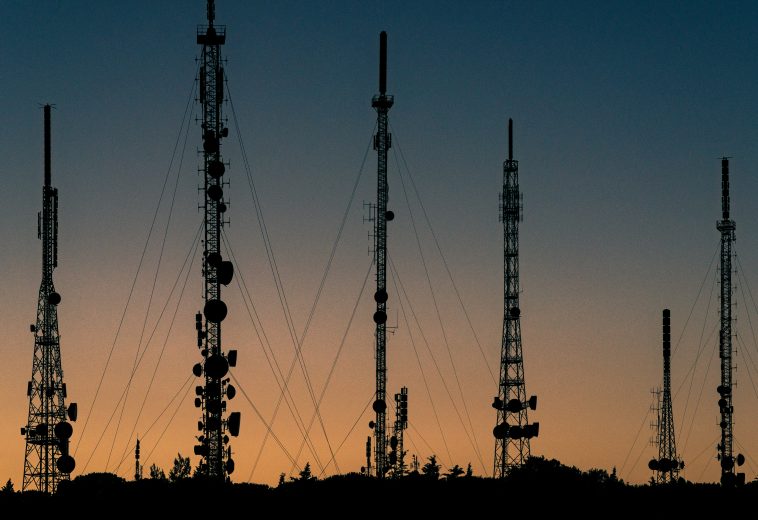
In a small farming community outside Kaduna, a battery powered radio crackles to life before the sun rises. The voice that follows is familiar, steady, warm, speaking Hausa with the cadence of someone who understands the soil, the seasons, and the people listening. Farmers pause over their tea. Market women adjust their headscarves. A schoolteacher preparing lessons leans closer.
The broadcast is not dramatic. It carries weather forecasts, crop advice, a public health update, and a brief segment on a new policy affecting rural traders. There is no algorithm curating emotion. No push notification competing for attention. Just a human voice, trusted over the years.
READ ALSO: International Day of Women and Girls in Science: A Strategic Imperative for Africa’s Economic Growth
That scene, repeated across villages, townships, and cities, explains why World Radio Day 2026 matters profoundly for Africa.
Proclaimed in 2011 by UNESCO and adopted in 2012 by the United Nations General Assembly, World Radio Day is celebrated every February 13 to recognize radio’s enduring role in fostering access to information, strengthening freedom of expression, and advancing international cooperation.
This year’s theme, “Radio and Artificial Intelligence: AI is a Tool, Not a Voice,” could not be more relevant to the African continent.
The Most Democratic Medium on the Continent
Globally, radio accounts for approximately 86% of audio listening time among adults aged 25 to 54. But in Africa, its dominance is even more pronounced due to infrastructure gaps and uneven digital access.
Internet penetration across Africa stood at roughly 43% in early 2020, compared to 64% globally. That gap is not merely statistical; it is structural. For millions across the continent, radio is not a complementary medium; it is the primary source of news and civic information.
A 2019 Afrobarometer survey covering 34 African countries confirmed radio as the most widely used news medium, surpassing television, print, and the internet. A 2022 Kantar study across eight Sub-Saharan countries showed that 62% of respondents regularly spend time listening to the radio.
The scale of listenership is staggering. Ethiopian Radio reaches approximately 45 million weekly listeners. Nogoum FM Egypt attracts about 30 million weekly listeners. Clouds FM Tanzania draws 17.4 million weekly listeners. Wazobia FM Nigeria reaches 15.6 million weekly listeners. Ray Power FM Nigeria serves approximately 13 million weekly listeners.
South Africa alone contributes a combined 35.6 million listeners across its stations. According to the 2024 RAM Amplify report, 75% of South Africans aged 15 and above listen to the radio daily. Ukhozi FM, with 7.7 million weekly listeners, remains one of the largest radio stations globally by audience size.
Community radio also plays a critical role. In South Africa, Jozi FM reaches about 450,000 listeners, followed by Izwi LoMzansi with 288,000 and Thetha FM with 216,000. These stations broadcast in local languages, addressing community specific concerns that national media often overlook.
These figures confirm a fundamental truth: in Africa, radio is infrastructure.
AI Enters the Studio, But Not the Soul
World Radio Day 2026 acknowledges that Artificial Intelligence is reshaping the broadcasting landscape. Across the continent, conversations are underway, from South Africa to West Africa, about how AI can support radio without displacing the human element that defines it.
AI applications already being explored include automated transcription for newsroom efficiency, real time translation across African languages, digital archiving of historical broadcasts, script assistance and content indexing, and accessibility enhancements for people with disabilities.
Educational innovation is also emerging. The DRM Consortium is broadcasting educational demonstrations to Central and Southern Africa via 21605 kHz frequency and to East Africa via 15310 kHz, creating radio classrooms for remote learners without internet access. This model illustrates how technology can expand learning while preserving radio’s accessibility.
Yet the 2026 theme insists on a boundary: AI must remain a tool, not a substitute for human editorial judgment, empathy, or credibility.
Trust Is the Real Frequency
In Africa, radio often functions as the first line of defence against misinformation. During elections, public health emergencies, and security crises, radio stations provide verified information in languages communities understand.
In Nigeria, radio is actively used to raise awareness about gender based violence, inform citizens about legal rights, and connect vulnerable individuals to support services. Insights from the Womanity Index 2025 show that radio remains essential in amplifying voices in underserved areas, particularly in justice and law outreach.
Across West Africa, media advocacy organisations have emphasised that AI integration must enhance credibility, not erode it. Synthetic voices and automated content generation must be used transparently to preserve public trust.
Infrastructure, Not Nostalgia
Radio’s strength lies in affordability, portability, and linguistic inclusivity. It reaches communities without electricity. It functions during network failures. It transcends literacy barriers.
In moments of crisis, floods, displacement, and conflict, the radio does not depend on broadband speed. It depends on a transmitter and a human voice.
The introduction of AI presents Africa with a strategic opportunity. Used responsibly, it can expand multilingual reach, enhance archiving of oral histories, and scale educational programming. Used carelessly, it risks undermining the very trust that makes radio powerful.
A Leadership Imperative for the Continent
On this World Radio Day, African Leadership Magazine calls on broadcasters to adopt AI ethically and transparently, policymakers to strengthen regulatory frameworks that protect editorial integrity, investors to support community radio modernisation without compromising independence, and media professionals to prioritise training that integrates technology with ethical journalism.
Africa must not merely consume AI tools developed elsewhere. It must shape the standards governing their use in broadcasting.
Radio has carried the continent through transitions, from independence movements to democratic reforms, from public health campaigns to agricultural transformation.
As Artificial Intelligence opens a new chapter, Africa must ensure that innovation strengthens, rather than silences, the human voices that bind communities together.
AI may assist that voice. But it must never replace it.
#WorldRadioDay