Africa’s digital transformation has reached a decisive inflexion point, moving beyond a decades-old model defined by technology consumption, imported platforms, offshore data hosting, and tools designed primarily for Western markets. A new continental imperative is emerging: digital sovereignty. This shift is driven by the recognition that data has become one of the most strategic economic assets of the twenty-first century, and that those who control data infrastructure, cloud systems, AI models, and digital platforms increasingly shape economic productivity, financial systems, public services, and information flows.
In response, countries across the continent are investing in local data centres, AI factories, cloud infrastructure, regulatory frameworks, and indigenous language models tailored specifically for African societies.
READ ALSO: Africa Moves from Tech Consumption to Building Its Own Digital Future
The ambition is not technological isolation, but rather ensuring Africa participates in the AI era as a producer of technology rather than merely a consumer of foreign systems. This transformation is sparking a new continental race to build African AI systems rooted in African languages, realities, governance priorities, and economic interests, fundamentally redefining the continent’s place within the global digital economy.
For more than two decades, Africa’s digital agenda focused largely on connectivity: expanding mobile networks, laying fibre-optic cables, and increasing internet penetration. These efforts delivered major gains in mobile money, e-commerce, and digital public services. However, connectivity alone did not create technological ownership. Most African data continued to flow through servers in Europe, North America, or Asia, while many AI systems deployed across the continent were trained on datasets containing little representation of African languages, cultures, legal systems, or economic realities.
This created what policymakers increasingly describe as digital dependency, where African users interact with technologies that neither fully reflect nor understand their societies. The push for digital sovereignty, therefore, seeks to correct structural exclusion before AI becomes permanently embedded in global economic systems.
Language lies at the heart of this sovereignty movement. Africa is home to more than 2,000 languages, making it the most linguistically diverse continent in the world. Yet historically, less than one percent of global AI training data meaningfully represents African languages or cultural contexts. The implications are significant. When languages are excluded from AI systems, entire populations risk becoming digitally marginalised, facing barriers in education, healthcare, financial services, and access to government systems.
Researchers and startups across Africa are now developing large language models and speech systems trained on indigenous languages such as Yoruba, Hausa, Igbo, Swahili, Zulu, Xhosa, Wolof, and Amharic. These systems are designed to power AI-driven education platforms, agricultural advisory tools, healthcare chatbots, legal accessibility systems, and voice-based technologies for populations with lower literacy levels. In doing so, they are expanding digital participation for millions who might otherwise remain excluded from the AI economy.
Data sovereignty has become central to Africa’s digital strategy because modern AI systems rely entirely on data access, storage, and control. When African data is continuously exported abroad for processing, the economic value generated through analytics, AI training, and predictive modelling accumulates outside the continent, reinforcing the historical pattern of exporting raw resources while external actors capture the industrial value.
National security concerns have also accelerated the push for stronger data governance. Sensitive citizen data relating to healthcare, finance, digital identity systems, and public administration carries significant security implications that are best managed through local storage and processing. Locally governed datasets also improve linguistic diversity, reduce algorithmic bias, and increase the relevance of AI services for African populations, making data sovereignty both an economic imperative and a question of cultural representation.
Achieving AI sovereignty requires substantial physical infrastructure, including high-performance computing, advanced GPUs, large-scale cloud systems, reliable electricity, fibre connectivity, data centres, and cybersecurity capabilities that Africa historically lacked at scale but is now beginning to build.
Major investments are flowing into hyperscale data centres across Lagos, Nairobi, Johannesburg, Kigali, Cairo, Casablanca, and Cape Town. At the same time, the emergence of African AI factories, specialised computing facilities designed to train, host, and deploy AI systems locally, represents a foundational shift in Africa’s technological capabilities.
Partnerships involving companies such as Cassava Technologies and NVIDIA are accelerating the deployment of high-performance AI infrastructure on African soil. These initiatives aim to reduce dependence on overseas cloud systems, lower latency, support local AI research, provide GPU access to startups and universities, and keep strategic data within African jurisdictions.
Country-level ecosystems are advancing rapidly. Nigeria is emerging as one of Africa’s most active AI development environments, supported by its large developer population, expanding startup ecosystem, linguistic diversity, and rapidly growing fintech sector. Homegrown initiatives are developing multilingual AI systems for Yoruba, Hausa, Igbo, and Nigerian Pidgin, while infrastructure investments such as Kasi Cloud’s hyperscale facilities are strengthening domestic computing capacity.
South Africa remains a leading centre for AI research, with firms building language models optimised for Swahili, Zulu, and Xhosa while integrating AI into banking, healthcare, mining, and public administration. East Africa is also building regional AI ecosystems around practical applications in agricultural forecasting, mobile financial services, digital healthcare, climate monitoring, and educational technology.
This reflects a broader African trajectory: developing AI solutions not merely to replicate foreign consumer technologies, but to solve real developmental challenges unique to the continent.
Despite progress, Africa still faces significant structural obstacles. The continent accounts for nearly twenty percent of the global population but less than one percent of global data-centre capacity, limiting its ability to process and monetise its own digital activity. Energy constraints pose an additional challenge, as AI infrastructure is highly energy-intensive and reliable electricity remains inconsistent across several markets.
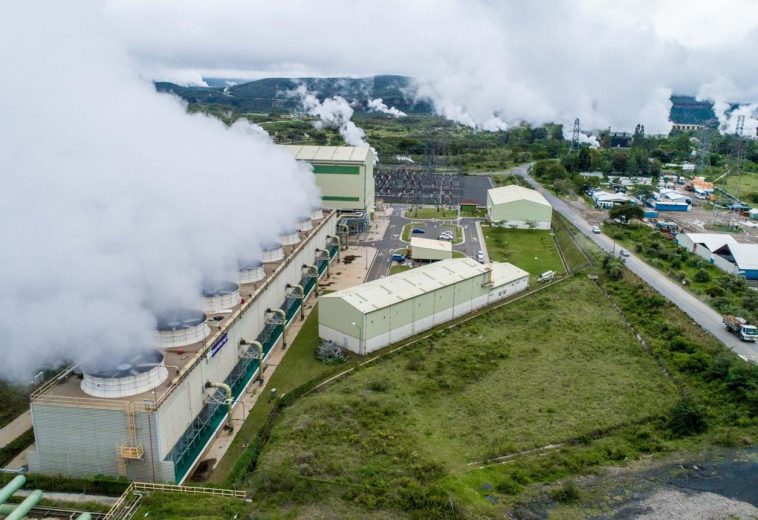
However, Africa’s renewable-energy potential offers important strategic advantages. Kenya’s geothermal energy resources, solar capacity across the Sahel, hydroelectric power in Central Africa, and wind energy potential in North and Southern Africa could support greener digital infrastructure growth in the years ahead.
Financing gaps also remain substantial. Building AI infrastructure requires billions of dollars in long-term investment at a time when many African economies continue to navigate limited capital markets and high borrowing costs. As a result, public-private partnerships and regional financing mechanisms are becoming increasingly important.
One of the strongest motivations behind Africa’s AI sovereignty movement is the desire to avoid what many now describe as digital colonialism, a new form of dependency in which African users generate data, foreign companies process it, external AI systems capture the value, and African economies remain consumers rather than owners.
The sovereignty push seeks to interrupt this cycle by building local infrastructure, local AI models, local regulatory systems, and local innovation ecosystems. Regional cooperation is emerging as a practical necessity, since no single African country can independently dominate global AI infrastructure.
The central question is therefore no longer whether Africa will participate in the AI era, but whether it will participate primarily as a market or as a builder. The answer will shape not only technology policy, but also the continent’s broader economic transformation across manufacturing, healthcare, agriculture, education, finance, and public administration for generations to come.