Africa is approaching a defining test of its ability to turn vulnerability into strategic opportunity. As a powerful El Niño develops, the continent faces renewed risks to food security, water supplies, livelihoods and infrastructure. Yet the response need not be defined by emergency aid alone. Africa has an opportunity to build something more enduring: a homegrown climate-adaptation economy driven by African technology, capital, entrepreneurship and leadership.
The warning is already significant. UNICEF estimates that more than 162 million children across Eastern and Southern Africa live in areas exposed to the effects of the strengthening 2026/27 El Niño. The organisation says drought, extreme heat and flooding threaten nutrition, health, education, safety and access to water.
READ ALSO: Africa’s Climate Health: Negotiating Survival at Global Summits
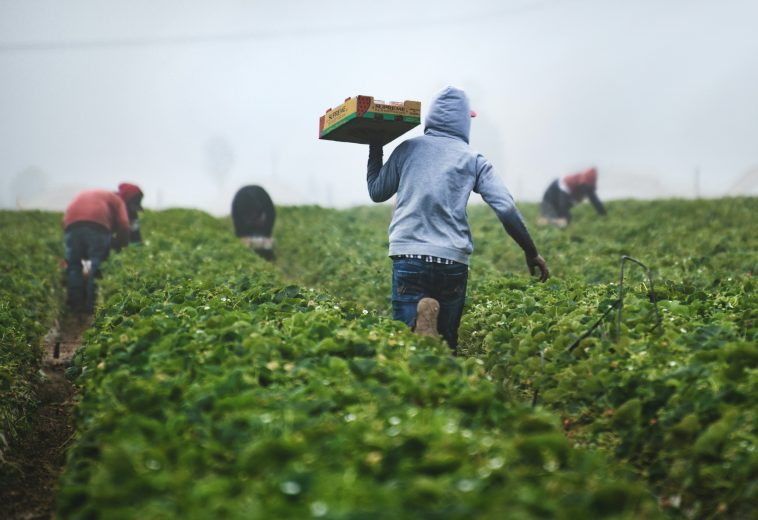
The World Food Programme estimates that El Niño could push at least 49 million additional people into acute food insecurity by the end of 2027 across 45 food-insecure countries. Importantly, WFP’s experience shows that acting before a crisis becomes acute can save between $3 and $7 for every dollar invested in anticipatory action.
This changes the economic calculation. Climate adaptation should not be viewed solely as a humanitarian expense. It is increasingly an investment in productivity, infrastructure, food security and economic stability.
Africa’s financing challenge, however, remains substantial. The African Development Bank has previously estimated that the continent requires about $125 billion annually for climate finance, while receiving roughly $18 billion. Of the latter, only about $11 billion was directed towards adaptation. The resulting gap is not simply a financing problem; it is a barrier to Africa’s ability to shape its own climate future.
The answer should therefore combine international partnership with stronger African ownership.
The Africa Adaptation Acceleration Program (AAAP), jointly developed by the African Development Bank and the Global Centre on Adaptation, provides one example. The Africa-owned and Africa-led programme seeks to mobilise $25 billion to accelerate adaptation across the continent, including climate-smart agriculture, resilient infrastructure and youth entrepreneurship. Its food-security pillar alone aims to support data-driven agricultural and financial services for more than 30 million farmers across 26 countries.
This is where Africa’s innovation advantage becomes important.
Digital agriculture, satellite-based weather intelligence, mobile financial services, drought-resistant crops, decentralised renewable energy, climate insurance and water technologies can allow countries to bypass some of the infrastructure constraints that have historically slowed development. Instead of waiting for every conventional system to be built, African economies can combine digital technology with local knowledge to deliver resilience faster.
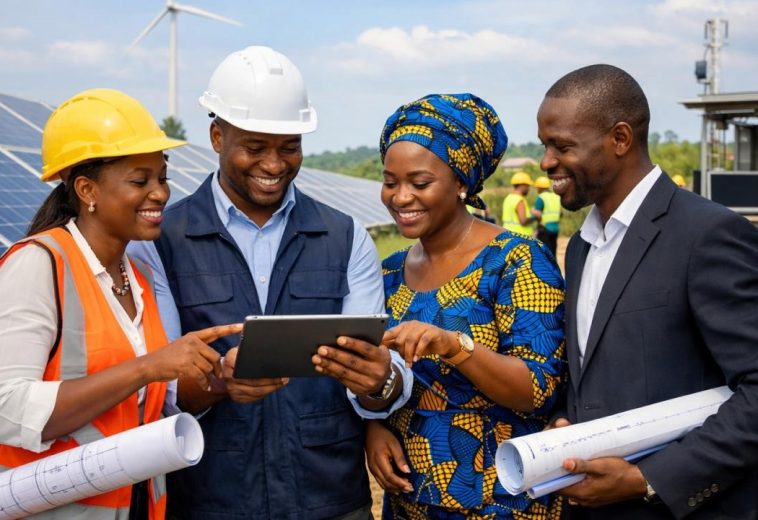
The opportunity extends beyond public policy. Adaptation can become an investable market. African entrepreneurs can develop products for farmers, insurers can design climate-risk solutions, banks can structure resilience financing, and technology companies can turn weather and satellite data into commercial services.
The continent also has an important strategic precedent: Africa’s leapfrogging in mobile communications and digital finance demonstrated that limited legacy infrastructure does not necessarily prevent technological leadership. The same principle can be applied to climate resilience.
For African leaders, the priority now should be to build markets, not merely programmes. Governments can create regulatory frameworks that encourage climate-tech investment, strengthen local manufacturing, improve climate data systems and integrate adaptation into national infrastructure planning. Development finance institutions can help de-risk projects, while pension funds, banks and private investors can provide the long-term capital required to scale viable businesses.
International partners also have a role, but increasingly as investors and partners rather than simply donors.
The climate challenge allows Africa to redefine the development narrative. The continent should not be seen only as a recipient of climate assistance, but as a laboratory for solutions that can serve a warming world.
The strategic question for Africa’s leaders is therefore no longer whether adaptation is necessary. It is who will own the technologies, businesses and financial systems that make adaptation possible.
Africa’s next climate story should be one in which resilience is not donated but designed, financed, manufactured and scaled from within the continent.