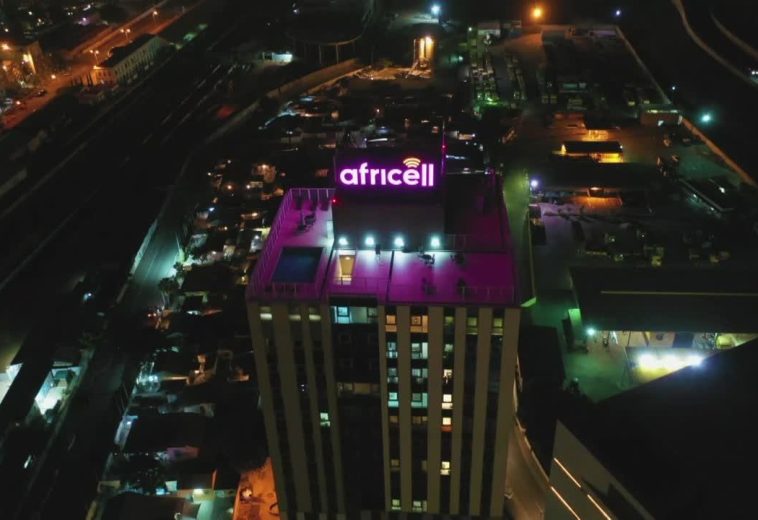
Africa’s digital transformation is receiving another major investment, with telecommunications operator Africell securing a $99.6 million direct loan from the U.S. Export-Import Bank (EXIM) to strengthen its mobile network technology in Angola.
Announced on 11 September 2026, the financing will enable Africell to invest in American and European telecommunications technology for its Angolan operations. Africell describes itself as the only U.S.-owned mobile network operator in Africa and currently operates in Angola, the Democratic Republic of Congo, The Gambia and Sierra Leone.
READ ALSO: Rwanda’s New Trade Gateway: How Rusizi Port Could Transform Regional Commerce
The development arrives as Africa’s demand for reliable connectivity continues to grow, with digital access increasingly linked to commerce, financial inclusion, education, healthcare and employment.
More than connectivity
The importance of the investment extends beyond telecommunications infrastructure.
Africell currently serves more than 15 million subscribers across its markets, according to company figures, while its services include mobile data and Afrimoney, its mobile-money platform.
This places network investment at the centre of a much larger digital ecosystem.
Reliable connectivity enables small businesses to reach customers beyond their immediate communities. It allows workers to access digital services and creates opportunities for entrepreneurs developing businesses around e-commerce, fintech, entertainment and online education.
In markets where traditional banking infrastructure remains limited, mobile connectivity can also become a gateway to financial services.
Afrimoney, for example, allows users to send money, pay bills and access other financial services through mobile devices.
The expansion of network capacity therefore has implications well beyond faster internet.
Angola at the centre
Angola is particularly significant to Africell’s growth strategy.
The company reported in July that its Angolan operation had surpassed seven million customers, demonstrating the scale of demand in one of Africa’s largest economies.
The new financing will support the deployment of more advanced telecommunications technology in the country, potentially improving coverage, capacity and reliability.
For Angola, stronger digital infrastructure can support the government’s wider economic diversification ambitions by making it easier for businesses and citizens to participate in the digital economy.
It also comes as Angola positions itself as a strategic gateway to regional trade and investment, particularly around the Lobito Corridor, where infrastructure development is attracting international attention.
Africell said the EXIM-backed investment forms part of a wider U.S. commercial effort in Angola and neighbouring countries, including commitments related to electricity, transportation and communications infrastructure around the corridor.
A competitive digital landscape
The financing also highlights the growing strategic importance of Africa’s telecommunications sector.
Reuters reported that the U.S. financing is part of Washington’s effort to expand American technological influence in Africa amid competition with Chinese telecommunications suppliers, particularly Huawei.
For African countries, however, the broader issue is not simply which foreign technology provider wins market share. It is how governments and businesses can use increased competition to build telecommunications systems that are affordable, secure, reliable and capable of supporting long-term development.
That makes investment in infrastructure particularly important.
Building Africa’s digital future
Africa’s young population and rapidly expanding digital economy create enormous opportunities, but those opportunities depend on infrastructure.
A digital entrepreneur cannot scale without reliable connectivity. A mobile-money service cannot reach underserved communities without network coverage. A student cannot fully benefit from online education where internet access remains unreliable or unaffordable.
Investment such as Africell’s latest financing therefore contributes to a much larger conversation about Africa’s economic future.
The continent’s digital transformation will require continued investment from governments, development institutions, technology companies and private capital. It will also require policies that encourage competition, local innovation, skills development and responsible technology deployment.
Africell’s $99.6 million financing is one investment, in one company and primarily focused on one market. Yet its significance reaches further.
It demonstrates that telecommunications infrastructure remains an important area for international capital and strategic partnerships in Africa.
As the continent moves deeper into the digital economy, connectivity is no longer simply a communications service. It is becoming foundational economic infrastructure.
The next phase of Africa’s digital transformation will depend on whether investment can translate into broader access, stronger businesses, new jobs and greater participation in the continent’s emerging digital economy.