What will it take to turn Africa’s investment potential into jobs, stronger businesses and more resilient economies? For British International Investment (BII), the answer lies in mobilising public and private capital at greater scale, strengthening financial markets and directing investment towards sectors with long-term development potential.
The UK’s development finance institution launched its 2026–2031 investment strategy in Nairobi on 6 November 2026, setting out an ambitious programme to support sustainable economic growth, job creation and climate resilience across Africa.
READ ALSO: Africa’s Financial Future: Luanda Summit Calls for Domestic Capital to Drive Development
Under the strategy, BII aims to invest approximately KSh864.3 billion (about £5 billion) of its own capital and mobilise up to KSh683.7 billion in additional private investment across the continent. The approach places particular emphasis on using development finance to attract other investors, rather than relying solely on institutional funding.
The strategy identifies three broad priorities: expanding economic opportunities, accelerating the climate transition and strengthening the markets and financial systems that enable businesses to grow.
Climate finance is expected to account for at least 40 per cent of BII’s investments. The institution also aims to help provide clean energy to 10 million households and support jobs and economic opportunities for 10 million people across Africa. At least 30 per cent of its core investments will target improved economic opportunities for women.
These targets reflect a wider recognition that Africa’s development challenge is not simply about attracting capital, but ensuring that investment produces measurable improvements in productivity, employment, energy access and livelihoods.
Kenya provides an established platform for this approach. During its previous five-year strategy period, BII committed approximately KSh154.8 billion to the country. Its portfolio currently supports more than 57,000 direct jobs across over 120 businesses, while those businesses have paid more than KSh62 billion in taxes, according to the British High Commission.
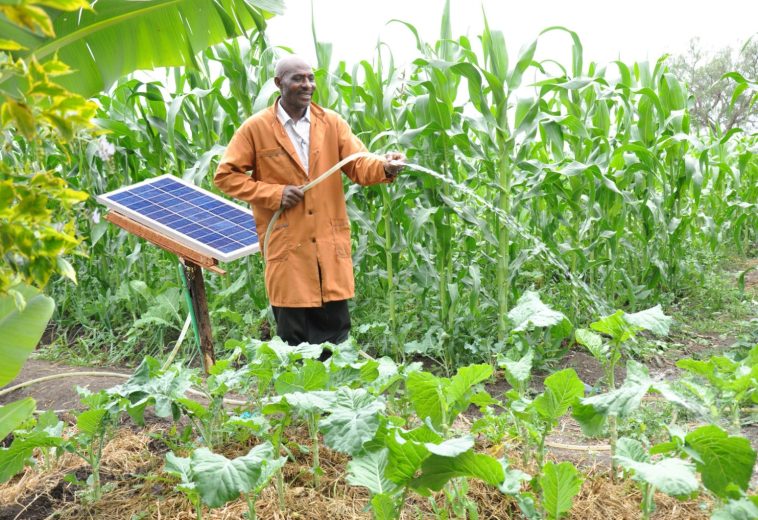
Its investments have covered sectors including manufacturing, agriculture, renewable energy and digital connectivity. Among the examples highlighted by BII is SunCulture, which provides solar-powered irrigation solutions to more than 16,000 smallholder farmers, helping them improve agricultural productivity while reducing water consumption.
The new strategy also seeks to address a persistent constraint across African economies: the difficulty of directing domestic savings and institutional capital towards productive businesses and infrastructure. BII says it will work with public and private-sector partners to strengthen financial markets, develop investment systems and remove barriers that restrict investment flows.
For African governments, the strategy presents an opportunity to deepen partnerships with development finance institutions while improving the conditions that attract long-term private investment. However, the scale of the proposed capital mobilisation will ultimately depend on the quality of projects, policy consistency, institutional capacity and the confidence of investors.
The significance of the announcement therefore extends beyond the size of its financial targets. It raises an important question for African economies: how can development finance be used to build stronger domestic businesses and institutions capable of attracting investment long after individual funding commitments have been made?
For Kenya and the wider continent, the test will be whether the strategy translates into productive enterprises, reliable infrastructure, better employment opportunities and more inclusive economic growth.