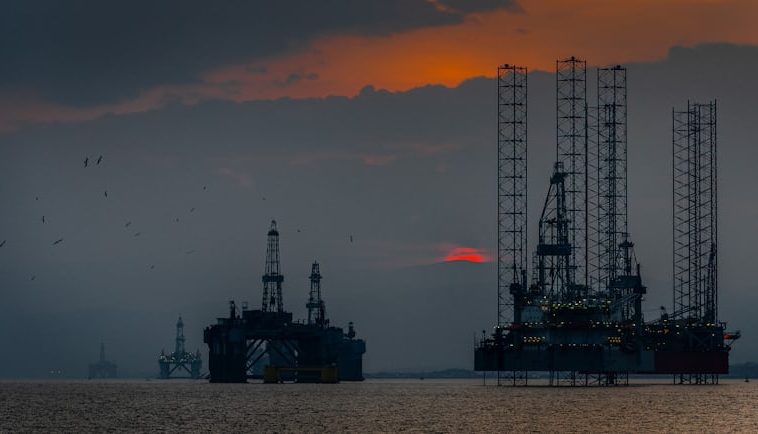
Ghana’s fuel economy is once again under pressure as rising global oil prices trigger higher domestic fuel costs, exposing the country’s vulnerability to external energy shocks. With tensions in the Middle East pushing crude prices upward, Ghana, like many oil-importing economies, is feeling the impact through higher transport fares, rising business costs, and growing inflationary pressure.
To ease the burden on consumers, the government has announced plans to reduce selected fuel taxes and levies. The move is designed to provide immediate relief to households and businesses already struggling with the rising cost of transportation, food, and energy.
READ ALSO: US-Iran Tensions Push North Africa as New Oil Powerhouse
This response shows just how quickly global oil shocks can ripple through Ghana’s domestic economy. When crude prices rise internationally, countries that rely on imported refined petroleum products face immediate increases in fuel costs. Those increases then spread across the economy, affecting transportation, electricity generation, food prices, and overall inflation.
In Ghana, fuel prices influence nearly every sector. A rise at the pump raises the cost of moving goods, operating businesses, and powering services. This makes fuel one of the most sensitive pressure points in the economy, especially for low- and middle-income households.
Government officials say the proposed reductions will target specific taxes and levies within the fuel pricing structure. These charges are normally used to fund infrastructure projects, support the energy sector, and contribute to public revenue. Reducing them may offer short-term relief, but it also reduces government income at a time when fiscal resources are already stretched.
The impact of recent fuel price increases is already being felt. Transport operators have raised fares, businesses are passing higher logistics costs to consumers, and household budgets are coming under increasing strain. For many families, the result is a rising cost of living that erodes purchasing power and deepens economic hardship.
This creates a difficult balancing act for policymakers. On one hand, reducing fuel taxes helps protect consumers from immediate hardship. On the other hand, those taxes are an important source of government revenue, funding infrastructure, debt obligations, and social programmes.
That trade-off is particularly sensitive in Ghana’s current fiscal environment. In recent years, the country has faced mounting debt, exchange rate pressures, and inflation shocks. Its recent debt restructuring under an International Monetary Fund support programme helped stabilise the economy, but fiscal vulnerabilities remain.
This means that every revenue decision matters. Lowering fuel taxes may ease public pressure in the short term, but it can also tighten fiscal space, limiting the government’s ability to finance long-term development priorities.
The current spike in global oil prices is being driven by geopolitical tensions and disruptions in key oil-producing regions, particularly in the Middle East. Critical supply routes such as the Strait of Hormuz remain central to global energy flows, and any threat to these routes creates immediate price volatility.
For countries like Ghana, the consequences are immediate. Even though the crisis originates thousands of miles away, domestic fuel prices rise almost instantly, demonstrating how deeply connected national economies are to global energy markets.
Ghana is not alone in this challenge. Across Africa, several governments have introduced temporary tax cuts, subsidies, or price controls to soften the impact of rising fuel prices. These measures highlight the broader vulnerability of many African economies to external energy disruptions.
The underlying issue is structural. Despite being an oil-producing nation, Ghana still depends heavily on imported refined petroleum products. Limited domestic refining capacity means the country exports crude but imports refined fuel, leaving it exposed to global price swings and foreign exchange pressures.
This gap is one of the central weaknesses in Ghana’s fuel economy. Tax cuts can reduce immediate pressure, but they do not solve the deeper problem of import dependence.
Economists argue that long-term resilience will require structural reforms. Strengthening domestic refining capacity, improving storage infrastructure, expanding renewable energy investment, and improving fuel distribution systems would all help reduce exposure to external shocks.
Social protection is also critical. Targeted subsidies, transport support measures, and stronger welfare systems can help shield vulnerable households from sudden increases in fuel prices, ensuring that energy shocks do not push more people into economic hardship.
The broader lesson is clear: in a globally connected oil market, no country is insulated from external disruptions. For Ghana, the challenge is not simply how to respond to higher prices, but how to build an energy system resilient enough to withstand them.
The government’s decision to reduce fuel taxes is a practical short-term measure. It offers temporary relief and may help contain inflationary pressure in the immediate term. But it also underscores the urgent need for deeper structural reform.
As global oil markets remain unpredictable, Ghana’s economic stability will depend on its ability to balance short-term consumer relief with long-term energy resilience.
The real challenge is not just managing today’s fuel prices, but building an energy system that can withstand tomorrow’s shocks.