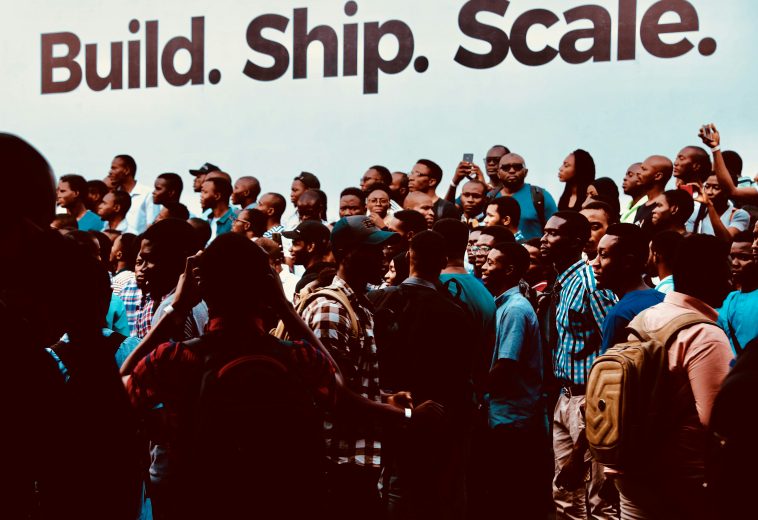
As AfriConnect officially launches its groundbreaking digital trade platform, Co-founder and Chief Executive Officer Hiruy Mulugeta explains why Africa’s greatest trade barriers are no longer tariffs but infrastructure, why digital innovation must work hand in hand with capital markets, and how technology can transform the African Continental Free Trade Area (AfCFTA) from an ambitious policy into an everyday reality for millions of businesses across the continent.
Excerpt
Africa is entering a defining chapter with the implementation of the African Continental Free Trade Area (AfCFTA). Despite its enormous potential, many businesses still struggle to benefit from the agreement. What are the biggest barriers, and how can technology help overcome them?
The greatest obstacle to AfCFTA today is no longer tariffs. It is the persistence of non-tariff barriers that continue to frustrate businesses across the continent. Customs clearance can still take more than 120 hours along many trade corridors, while intra-African trade accounts for only about 16 percent of the continent’s total trade, compared with nearly 60 percent in Asia. For many micro, small, and medium enterprises, these delays result in rejected shipments, unpaid invoices, and missed commercial opportunities.
Although the AfCFTA Digital Trade Protocol has now been adopted, implementation remains a significant challenge. Compliance with Rules of Origin, digital documentation requirements, and cross-border payment systems requires digital infrastructure that many SMEs simply do not possess.
Equally important is the issue of financial invisibility. Many African businesses lack structured business records, making it difficult for banks and financial institutions to assess their creditworthiness. As a result, they remain excluded from the more than $300 billion trade finance gap that continues to constrain African commerce.
Technology has the power to transform this reality. Artificial intelligence can automate complex compliance processes, including Rules of Origin verification, tariff calculations, and digital documentation in multiple local languages. Digital Credit Profiles convert commercial activity into measurable financial credibility, while escrow based payment systems provide transparent alternatives to traditional letters of credit.
This vision inspired the creation of AfriConnect.
Tomorrow, 27 July 2026, we officially launch the AfriConnect Web and Mobile Platform, designed specifically to bridge the gap between AfCFTA policy and practical implementation. We believe African businesses should not have to become trade experts before they can trade across borders. Our responsibility is to make compliance simple, accessible, and digital.
Ethiopia is witnessing the birth of its modern capital market. How do you assess the progress made so far, and what more is required to ensure sustainable growth?
Ethiopia has made encouraging progress in a relatively short period. The Ethiopian Capital Market Authority has licensed several capital market service providers, including investment banks. The Ethiopian Securities Exchange has been established, and many companies have already completed their share registrations.
However, establishing institutions should never be confused with building a mature market. Sustainable capital markets require trust, liquidity, transparency, and continuous investor education. Today, many businesses and investors still have only a limited understanding of capital market instruments and investment opportunities.
Consistency in regulation is equally essential because markets thrive on predictability. Governments must continue strengthening macroeconomic stability while advancing financial liberalisation. Regulators, financial institutions, and private sector stakeholders must work together to build institutional capacity, deepen market participation, and maintain investor confidence through transparent supervision.
Your work uniquely combines technology, finance, and capital markets. Why do you believe these sectors must become increasingly interconnected?
The separation between technology and capital markets is largely artificial because capital follows information, and today information is generated digitally.
Across Africa, SMEs create enormous economic value every day, yet many remain invisible to investors because their operations have not been digitised. Without reliable commercial data, financial institutions cannot accurately assess risk, regardless of how successful those businesses may be.
Digital platforms create transparency. Every transaction, payment, compliance record, and customer interaction generates valuable data that reduces lending risk and improves access to finance.
The AfCFTA Digital Trade Protocol provides an important framework, but frameworks alone do not create economic transformation. Africa must build the infrastructure that enables businesses to trade digitally, generate trusted commercial data, and connect seamlessly with financial markets. That is the future we are building.
Financing remains one of the biggest challenges facing African entrepreneurs. What reforms would make the greatest difference?
We must first rethink how creditworthiness is measured. Traditional lending models rely heavily on physical collateral, excluding millions of capable entrepreneurs. Alternative data, including transaction history, inventory turnover, digital payments, and trading behaviour, should become recognised indicators of business performance.
Governments should also simplify business registration through fully digital systems that encourage formalisation without imposing unnecessary costs.
Regulatory sandboxes will become increasingly important as fintech companies develop innovative cross-border financial products aligned with the AfCFTA framework.
Strengthening credit bureaus, expanding movable asset registries, establishing guarantee schemes, promoting supply chain finance and invoice factoring, and introducing digital escrow systems will significantly improve SME access to finance while reducing risk for lenders.
Which technologies will define the future of African trade over the next decade?
Artificial Intelligence will undoubtedly become one of Africa’s most transformative technologies. It can simplify tariff schedules, interpret Rules of Origin, generate compliant trade documentation, and provide guidance in multiple African languages.
Digital identity systems will strengthen trust while simplifying cross border verification and improving financial inclusion.
Interoperable payment infrastructure, such as PAPSS, will enable African businesses to transact directly in local currencies, reducing dependence on foreign exchange while lowering transaction costs.
Blockchain technology also presents significant opportunities in trade finance, agricultural exports, supply chain traceability, and product authentication.
Governments must invest in digital public infrastructure, strengthen cybersecurity, encourage innovation through regulatory sandboxes, and accelerate regulatory harmonisation across the continent.
AfriConnect officially launches this week. What does success look like for the company over the next five years?
Success means making AfCFTA genuinely accessible to every African entrepreneur.
Our ambition is for AfriConnect to become the digital operating system for Pan-African trade, connecting SMEs across all 55 AfCFTA member states with compliance tools, logistics providers, financing opportunities, and new markets.
The platform combines everything businesses need within a single ecosystem. It includes an AfCFTA AI Assistant, an intelligent Deal Room for facilitating cross-border trade, AfCFTA compliance tools, an integrated ERP system, a Digital Credit Profile engine, an Export Readiness Assessment Tool, and several other practical solutions designed to simplify international trade.
Every transaction completed through the platform contributes to a trusted Digital Credit Profile, making businesses more visible to financial institutions while improving their access to finance.
Ultimately, we want every entrepreneur, regardless of where they operate in Africa, to verify compliance, connect with buyers, receive secure payments, and build commercial credibility through one integrated platform.
What advice would you offer young African entrepreneurs seeking to build businesses with continental impact?
Start by solving a real problem rather than simply building a product.
Think beyond your national borders from the very beginning because AfCFTA has created a market of approximately 1.4 billion people. Design your business for continental scale.
Build partnerships rather than trying to do everything alone. Strong partnerships provide credibility, market access, operational capacity, and knowledge that no entrepreneur can develop independently.
Most importantly, embrace technology as the engine of growth. It enables businesses to serve customers across multiple countries, automate compliance, and build trust digitally.
Finally, remain patient and persistent. Continental businesses are not built overnight. Success belongs to entrepreneurs who continue moving forward despite setbacks.
What is your long term vision for Africa, and what legacy would you like your work to leave behind?
I envision an Africa where trade moves as freely across our borders as it does within any major economic bloc in the world. An Africa where capital flows efficiently, businesses compete across the continent, and every entrepreneur has equal access to opportunity regardless of geography, gender, or background.
I hope AfriConnect becomes far more than a technology company. I want it to become foundational infrastructure that continues serving African businesses for generations.
More importantly, I want our work to demonstrate that African challenges deserve African solutions. AfriConnect was built in Africa, by Africans, to solve African problems.
If we succeed in transforming AfCFTA from an ambitious agreement into a practical reality for millions of businesses, we will have made a lasting contribution to Africa’s economic transformation. That is the legacy I hope to leave behind.