Ghana is increasingly turning to artificial intelligence (AI) to strengthen climate resilience, improve environmental monitoring, and enhance disaster preparedness as climate pressures intensify across West Africa. Rising temperatures, erratic rainfall, prolonged dry spells, and more frequent flooding are placing a growing strain on agriculture, infrastructure, and food security, making climate adaptation an urgent national priority.
Agriculture remains central to Ghana’s economy, employing a significant share of the population and supporting rural livelihoods. Yet the sector is highly vulnerable to climate variability. Over the years, Ghana has experienced repeated climate-related disruptions, including severe flooding in Accra and coastal communities, alongside drought conditions in the northern regions. These events have revealed the limitations of traditional forecasting systems and highlighted the need for more advanced, data-driven approaches.
READ ALSO: GEPA Leads Ghana’s Industrial Export Transformation
In response, Ghana is integrating AI into climate governance systems to improve forecasting accuracy, strengthen early warning mechanisms, and support environmental decision-making. Artificial intelligence can analyse vast amounts of data, including satellite imagery, historical climate records, and real-time meteorological information, enabling more accurate predictions and better planning in agriculture, water management, and disaster response.
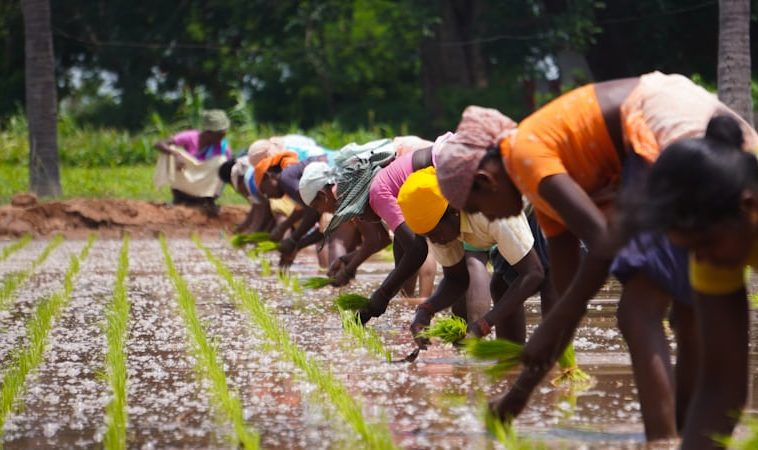
Agriculture is one of the most significant areas benefiting from these innovations. Because a large proportion of farming in Ghana depends on rainfall, the sector is especially sensitive to changing weather conditions. AI-powered systems are being developed to provide early warnings for droughts, floods, and pest outbreaks. These tools help farmers adjust planting schedules, improve irrigation decisions, and reduce crop losses, supporting a sector that contributes about 20 percent of GDP and employs over a third of the national workforce.
Flood management is another critical area of focus. In fast-growing urban centres such as Accra, flooding has become increasingly common due to poor drainage systems, unplanned settlements, and changing climate patterns. AI models can combine rainfall forecasts, land elevation data, and drainage capacity to identify high-risk flood zones. This strengthens early warning systems, improves emergency planning, and helps authorities allocate resources more effectively during disasters.
These efforts are being supported by institutions such as the Ghana Meteorological Agency, which plays a key role in collecting and analysing weather data. Integrating AI into meteorological operations is improving the speed and accuracy of forecasts, helping reduce climate-related risks and strengthen planning across sectors.
International collaboration is also accelerating Ghana’s progress in AI-driven climate adaptation. One example is the Cumulus Project, supported by the Bill & Melinda Gates Foundation and the Foreign, Commonwealth & Development Office. The initiative is focused on building AI-based forecasting systems tailored to West African climate conditions, improving seasonal forecasts for farmers and planners.
Unlike conventional weather models, AI systems can process multiple data sources at once and adapt to both data-rich and data-scarce environments. This is especially valuable in sub-Saharan Africa, where weather monitoring infrastructure remains uneven. Advanced forecasting systems inspired by global earth system models are helping improve prediction accuracy while adjusting to local climate realities.
Another initiative supporting this transition is the Safe4All Project, funded by the European Union. The project includes the Uliza-WI mobile application, which provides weather forecasts and agricultural advisory services to smallholder farmers. This improves decision-making, boosts productivity, and reduces vulnerability to climate shocks.
Experts also emphasise AI’s expanding role in disaster preparedness. Predictive models based on machine learning can simulate flood risks and other extreme weather events, enabling early warnings that help reduce loss of life and economic damage.
Beyond agriculture and flood prevention, AI is also strengthening environmental protection. Ghana’s forests, part of the Upper Guinean biodiversity zone, face increasing pressure from illegal logging, mining, and land-use changes. AI-powered satellite systems can detect deforestation in near real time, allowing faster enforcement responses and improving conservation efforts.
Despite this progress, important challenges remain. AI systems depend on reliable data, robust digital infrastructure, and stable internet connectivity, all of which are still developing in some parts of the country. Rural areas in particular face infrastructure and data limitations that reduce the effectiveness of digital tools.
Building local expertise is another critical challenge. Effective deployment of AI requires skilled professionals in data science, climate modelling, and digital analytics. Ghana is therefore increasing investment in education and technical training to ensure that local institutions can manage and sustain these systems.
Accessibility is equally important. For AI-driven climate solutions to have a meaningful impact, they must reach vulnerable communities, especially smallholder farmers who are most exposed to climate shocks. Ensuring broad access to these tools is essential for inclusive climate resilience.
Overall, Ghana’s use of artificial intelligence for climate adaptation reflects a wider shift toward modern, data-driven environmental governance. By integrating AI into forecasting, disaster management, and agricultural planning, the country is improving its capacity to anticipate risks, protect livelihoods, and strengthen long-term resilience.
In conclusion, Ghana’s adoption of AI for climate resilience demonstrates the growing potential of digital innovation in tackling environmental challenges. While infrastructure and capacity gaps remain, the country’s progress shows that artificial intelligence can play a transformative role in improving preparedness, protecting vulnerable communities, and supporting sustainable development in emerging economies.