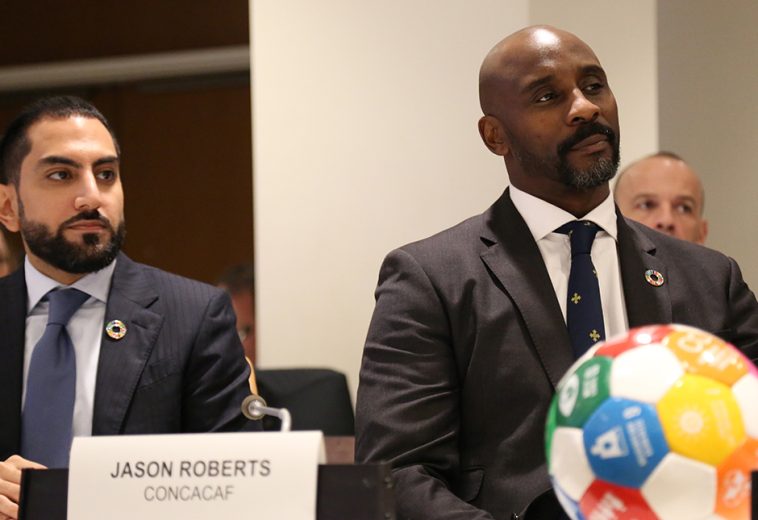
On a dusty football pitch in a small town in Senegal, a teenage boy tightened his worn-out boots, his eyes fixed on a future far beyond the field. Just a year earlier, he had been at risk of dropping out of school, disconnected and uncertain of his path. But through a community sport programme linked to Olympic education initiatives, he found discipline, mentorship, and purpose. Today, he is back in school, mentoring younger players, and dreaming of representing his country. His journey reflects a broader truth unfolding across Africa, sport is no longer just play; it is a pathway to transformation.
This is precisely the spirit captured in the 2026 theme for the International Day of Sport for Development and Peace (IDSDP) by the United Nations: “Sport: Building Bridges, Breaking Barriers.” It is a theme that resonates deeply with Africa’s realities, where sport is not merely recreational but a strategic instrument for social cohesion, economic growth, and sustainable development.
A Universal Language in a Fragmented World
Since its proclamation by the United Nations General Assembly in 2013, IDSDP has positioned sport as a credible driver of peace and development. The 2026 theme underscores sport’s ability to transcend cultural, social, political, and generational divides while fostering dialogue and inclusion.
As emphasised by the United Nations, sport is “a powerful enabler of sustainable development,” advancing health, education, gender equality, and peaceful societies. In a world increasingly defined by fragmentation, sport remains one of the few universal languages. This is especially significant in Africa, where over 70% of the population is under the age of 30, presenting both a challenge and an unprecedented opportunity.
Africa’s Sporting Renaissance: Progress and Potential
Africa stands at a defining moment. With the upcoming Dakar 2026 Youth Olympic Games, the continent is not just hosting a global sporting event, it is positioning itself as a leader in leveraging sport for development.
According to the International Olympic Committee, its Olympism365 initiative has supported over 643,000 young people across Africa since 2022 through sport based education, skills training, and inclusion programmes. More than 4,000 practitioners have been trained and 950 organisations strengthened, creating a growing ecosystem for sustainable impact.
The Sport, Education and Sustainable Livelihoods Africa (SESLA) programme, implemented in partnership with the Agence Française de Développement, has reached over 40,000 young people across 13 countries and trained more than 3,000 educators, coaches, and youth workers. Meanwhile, the Olympic Values Education Programme continues to expand its reach, with thousands of children engaged across multiple African countries and ambitious plans to impact nearly one million students in Senegal alone.
Investment, Infrastructure, and Inclusive Growth
Strategic investment is accelerating this momentum. The Agence Française de Développement reports over €166 million committed to sport for development projects in Africa since 2012, with the continent receiving the majority of global funding in this space.
These investments are driving inclusive outcomes. A significant proportion of projects focus on gender equality, multi dimensional inclusion, and urban development through accessible sporting infrastructure. Countries such as Senegal, Cameroon, Rwanda, and the Democratic Republic of Congo are already demonstrating how sport can strengthen social cohesion and empower young people.
Despite this progress, Africa still captures less than 1% of the global sports economy. Yet projections indicate that with sustained investment, the sector could contribute up to 5% of the continent’s GDP by 2050, with steady annual growth. This signals a clear opportunity for Africa to reposition sport not just as a social tool but as a major economic driver.
Sport as a Tool for Peace and Social Transformation
Beyond economic value, sport continues to play a critical role in peacebuilding across Africa. Evidence from grassroots initiatives shows measurable social impact.
In Rwanda, sport based programmes have increased trust and cooperation among youth, while in Kenya, initiatives such as Moving the Goalposts have empowered thousands of girls, significantly improving confidence and decision making.
The German Development Agency (GIZ), through its Sport for Development in Africa programme, emphasises that sport promotes social cohesion, gender equality, and life skills development. Complementing these efforts is the African Union Peace Fund partnership with Football for Peace, which aims to use sport as a structured tool for conflict prevention and youth engagement across the continent from 2026.
The African Leadership Magazine Perspective: From Progress to Scale
For the African Leadership Magazine, the conclusion is clear sport has evolved into a tested and scalable development instrument.
Africa has already demonstrated proof of impact through youth empowerment, gender inclusion, and peacebuilding initiatives driven by sport. The next phase requires deliberate expansion, stronger institutional frameworks, and sustained collaboration across sectors.
A Strategic Call to Action
As Africa approaches 2026, the call to action is both urgent and strategic.
Governments must elevate sport within national policy frameworks, integrating it into education, health, and youth development systems.
READ ALSO: World Autism Awareness Day: Autism in Africa—The Untold Story Behind the Numbers
The private sector must recognise sport as an emerging investment frontier, particularly as global sports tourism continues to expand rapidly.
Development partners must scale proven programmes that have already demonstrated measurable outcomes across communities.
Governance reforms must be prioritised to ensure transparency, accountability, and investor confidence.
Most importantly, Africa’s youth must be positioned as leaders, not just participants, within the sport for development ecosystem.
Conclusion: From Possibility to Legacy
The 2026 theme, “Sport: Building Bridges, Breaking Barriers” is more than a global campaign; it is a continental opportunity.
The United Nations, International Olympic Committee, and Agence Française de Développement all affirm one reality, sport is a proven catalyst for development, peace, and economic growth.
Africa has already made significant progress. What is required now is scale.
As global attention turns to the continent in 2026, Africa has a rare opportunity not only to host major sporting events but to redefine sport as a cornerstone of sustainable development.
The evidence is clear. The momentum is building. What remains is decisive leadership.