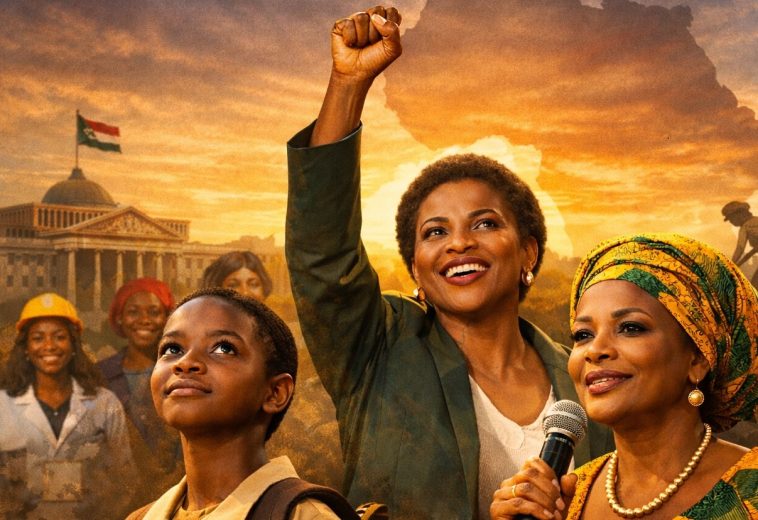
On a warm afternoon in a rural classroom in northern Ghana, a teacher asked a group of students what they wanted to become in the future. Several boys answered confidently engineer, minister, president. The girls hesitated. Then one young girl slowly raised her hand and said, “I want to lead my country.” Her voice carried both courage and uncertainty, reflecting a reality that many African girls still face today: a world where opportunities are expanding, yet barriers remain.
That reality was captured powerfully by Sima Bahous when she delivered the official statement for International Women’s Day 2026 on behalf of UN Women, warning that “we have never been so close to achieving gender equality, and never closer to losing it.” Her words capture the paradox of our time: while remarkable progress has been made in advancing women’s rights, the gains remain fragile and uneven.
Across Africa, this paradox is visible everywhere. Women are transforming political systems, driving economic growth, excelling in education, and strengthening communities. Yet persistent inequalities continue to slow the pace of change.
A Continent of Progress and Persistent Inequality
The story of African women is one of resilience, innovation, and leadership. Women are increasingly shaping public policy, expanding entrepreneurial ecosystems, and contributing to national development. However, structural barriers from discriminatory social norms to limited economic opportunities, continue to restrict their full participation.
Insights referenced by African Leadership Magazine reveal that while Africa has made measurable progress toward gender equality, the continent remains only halfway toward achieving full parity. This reality underscores the urgency of sustained action.
Political Leadership: Breakthroughs That Inspire
African women have made historic gains in political representation, in some cases outpacing global averages. The continent now holds one of the highest regional shares of women in parliament, demonstrating that inclusive policies can reshape leadership landscapes.
Rwanda continues to set the global standard, with women occupying over sixty percent of seats in its lower parliamentary chamber. Such representation demonstrates the transformative impact of gender-sensitive governance frameworks.
Africa has also witnessed symbolic breakthroughs at the highest levels of leadership. The election of Netumbo Nandi-Ndaitwah as Namibia’s first female president in 2024 marked a defining moment for women in African politics. Meanwhile, global leaders such as Ngozi Okonjo-Iweala continue to showcase the growing influence of African women in shaping international policy and economic governance.
Yet political empowerment remains incomplete. Women still occupy a limited share of executive leadership roles across Africa. Cultural barriers, financial constraints, and weak enforcement of gender quotas continue to hinder progress. At the current pace, closing the political gender gap could take decades.
Economic Power: Women Fueling Africa’s Growth
African women are among the most entrepreneurial in the world. Sub-Saharan Africa records the highest female entrepreneurship rate globally, with millions of women running businesses that sustain households and support local economies.
From agriculture to retail and technology, women are driving economic activity across the continent. Business leaders such as Ibukun Awosika and Halima Dangote exemplify how African women are redefining corporate leadership and enterprise development.
Yet economic inequality persists. African women earn significantly less than men and are heavily concentrated in the informal sector, where job protections and financial services remain limited. Although women constitute the majority of the agricultural workforce, they own only a fraction of agricultural land, limiting access to credit, technology, and investment.
The burden of unpaid care work further deepens economic inequality. Across many African households, women spend several times more hours than men on domestic and caregiving responsibilities, restricting their economic mobility and opportunities for advancement.
Education: Progress That Must Be Protected
Education remains one of Africa’s most encouraging areas of gender progress. In many countries, girls now enroll in school at rates comparable to or even higher than, boys. Expanded educational access has enabled more women to enter professional fields and leadership roles.
However, barriers remain. Poverty, early marriage, and teenage pregnancy continue to force millions of girls out of school before completing their education. In some regions, child marriage still affects one in five girls, severely limiting their opportunities for personal and economic advancement.
READ ALSO: Why Africa’s Women Hold the Key to Global Peace and Security
Ensuring that girls not only enroll in school but remain there through completion is critical to Africa’s future development.
Health and Safety: Safeguarding Women’s Lives
Health disparities continue to affect women across Africa. Limited access to reproductive healthcare and maternal services contributes to high maternal mortality rates in several countries. Young women also remain disproportionately affected by diseases such as HIV.
Gender-based violence remains one of the most pressing challenges facing African women. Domestic abuse, harmful traditional practices, and rising digital harassment continue to threaten women’s safety and dignity.
These realities reinforce Bahous’ warning that progress toward equality must be defended and strengthened.
A Call to Action for Africa
Despite the challenges, African women remain powerful agents of change. From grassroots organisers to corporate executives and political leaders, women are reshaping Africa’s social and economic landscape.
As emphasised by policy advocates highlighted in African Leadership Magazine, empowering women is not merely a moral imperative, it is a strategic necessity for Africa’s growth.
Governments must strengthen gender equality legislation and enforce political quotas that ensure women’s representation in leadership. Financial institutions must expand access to credit, land ownership, and digital technologies for women entrepreneurs. Education systems must prioritise keeping girls in school, while healthcare investments must protect the well-being of women and girls.
Equally critical is the expansion of gender data systems and accountability mechanisms to guide policy reforms and track progress.
When African Women Rise, Africa Rises
The empowerment of African women is inseparable from the continent’s future. When women lead, economies grow stronger, communities become more resilient, and governance becomes more inclusive.
International Women’s Day 2026 therefore, represents more than a celebration, it is a moment of responsibility.
The young girl in that Ghanaian classroom who dared to imagine herself as a leader represents millions of African girls whose dreams are reshaping the continent’s destiny.
And as those dreams rise, so too does the future of Africa because when African women rise, Africa rises with them.