As the global competition for critical minerals intensifies, a historic railway stretching from Africa’s mineral-rich interior to the Atlantic Ocean is being transformed into one of the continent’s most important economic corridors. The Lobito Corridor is rapidly emerging as a strategic gateway linking the Democratic Republic of the Congo (DRC) and Zambia to international markets through Angola’s Port of Lobito, creating a faster, more efficient route for trade while strengthening regional integration.
Backed by more than US$700 million in financing from international and African partners, the project is revitalising the historic Benguela Railway and reshaping trade patterns across Southern and Central Africa. Beyond infrastructure, the corridor represents a broader vision for economic connectivity, industrial development, and Africa’s integration into global value chains.
READ ALSO: Kenya Accelerates Road Expansion to Deepen Regional Trade Links
For decades, landlocked economies such as Zambia and the DRC depended on lengthy and often congested transport routes through ports on Africa’s eastern coast. These logistical challenges increased costs, delayed exports, and reduced the competitiveness of some of the world’s most valuable mineral resources.
The Lobito Corridor offers a compelling alternative.
By creating a direct connection between major mining regions and the Atlantic Ocean, the corridor significantly shortens the distance between African producers and international markets in Europe, North America, and beyond. The result is a more competitive export route capable of supporting growing trade volumes while reducing transportation costs.
One of the project’s most significant advantages is speed. Exporting copper, cobalt, and other commodities has historically taken several weeks due to infrastructure constraints and border delays. Through the Lobito Corridor, transit times can be reduced to roughly one week, enabling producers to respond more quickly to market demand and improve supply chain efficiency.
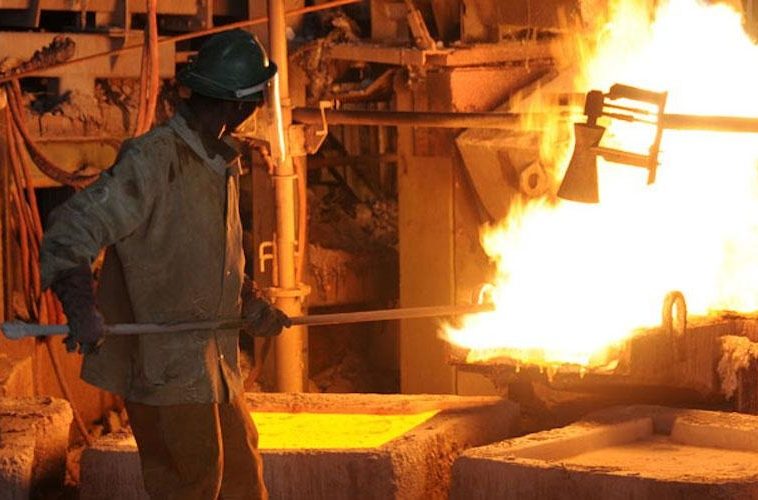
The timing is particularly important. The corridor serves regions that hold some of the world’s largest reserves of copper and cobalt, two minerals that are essential for electric vehicles, battery technologies, renewable energy systems, and modern electricity infrastructure.
As countries accelerate efforts to decarbonise their economies and achieve net-zero targets, demand for these minerals continues to rise. This places the Lobito Corridor at the centre of one of the most significant industrial transformations of the twenty-first century.
The corridor’s importance, however, extends well beyond mining.
While critical minerals may be the primary driver of current investment, the infrastructure is designed to support the movement of agricultural products, manufactured goods, and processed commodities. Improved connectivity is expected to stimulate industrial activity, encourage regional trade, and create new economic opportunities across Angola, the DRC, and Zambia.
This diversification is crucial. The long-term success of the corridor will depend not only on its ability to transport raw materials but also on its capacity to support value addition, manufacturing, and broader economic development.
Environmental sustainability is another important advantage. Rail transport generates significantly lower carbon emissions than long-haul trucking. Studies suggest that freight moving through the corridor can produce up to ten times fewer emissions than equivalent road transport, helping companies meet increasingly important Environmental, Social, and Governance (ESG) requirements while supporting global climate objectives.
The corridor has also become a symbol of growing international interest in African infrastructure and trade development. Key partners include the African Development Bank, the Africa Finance Corporation, the Development Bank of Southern Africa, the European Union, and the United States. Their collective investments reflect the corridor’s growing importance within global supply chains and regional development strategies.
Infrastructure development includes the rehabilitation of existing railway assets in Angola and the construction of approximately 400 kilometres of new rail links extending into the DRC. Yet physical infrastructure is only part of the transformation.
Digital trade facilitation is becoming equally important. Governments and development partners are implementing modern customs systems, electronic documentation processes, and digital border management solutions to reduce delays and improve transparency. These innovations are expected to lower transaction costs, accelerate cargo movement, and enhance the overall competitiveness of the route.
Importantly, the Lobito Corridor aligns closely with the ambitions of the African Continental Free Trade Area by strengthening cross-border connectivity and creating new opportunities for intra-African trade. It demonstrates how infrastructure can catalyse deeper regional integration and economic cooperation.
The Lobito Corridor is far more than a railway project. It is a strategic investment in Africa’s future competitiveness. By connecting critical mineral regions to global markets, reducing trade barriers, encouraging industrial development, and strengthening regional integration, the corridor is helping to build the foundations of a more connected and economically resilient continent.
In many ways, the success of the Lobito Corridor will be measured not only by the volume of goods it carries but by its ability to transform trade, unlock investment, and position Africa more prominently within the global economy.