What seemed like just another routine day at the office changed the moment I opened my inbox and saw a message that left me deeply emotional and reflective. It was a statement from the Executive Director of the United Nations Population Fund (UNFPA), Diene Keita.
The subject line was as stark as it was sobering: “Three Years of Conflict in Sudan – Statement by UNFPA Executive Director Diene Keita.”
READ ALSO: Morocco Institutionalises Drone Technology for Continental Security
What followed was more than an official statement; it was an urgent alarm the world can no longer afford to ignore.
As Group Editor of African Leadership Magazine, I have read countless reports on conflict across the continent. Yet few have conveyed the scale of human suffering as powerfully as this message from Diene Keita.
Three years into Sudan’s war, the numbers are overwhelming: nearly 34 million people now require humanitarian assistance, making it the world’s largest humanitarian crisis. Yet behind these figures lies an even harsher reality; women and girls are bearing the heaviest burden of this war.
Keita puts it plainly: “Women and girls in Sudan continue to pay an unbearable price.”
That price is measured not only in lives lost, but in dignity shattered, futures disrupted, and communities forced into survival.
More than 7 million women of reproductive age and nearly one million pregnant women are trapped amid the collapse of Sudan’s healthcare system. Hospitals have been destroyed or abandoned, medical personnel have fled, and critical supplies are running dangerously low. In many parts of the country, access to life-saving maternal care is either days away or nonexistent.
In Sudan today, childbirth has become a life-threatening ordeal.
The crisis, however, extends far beyond healthcare.
Since the outbreak of conflict, reports of sexual violence, abductions, and forced marriages have become alarmingly widespread. These are not isolated atrocities; they are systematic violations that reveal the brutal realities of war.
Meanwhile, the disappearance and killing of men and boys have left millions of women to sustain their families under impossible conditions. They are not only victims of this conflict—they have become the providers, protectors, and survivors in a society stripped of stability.
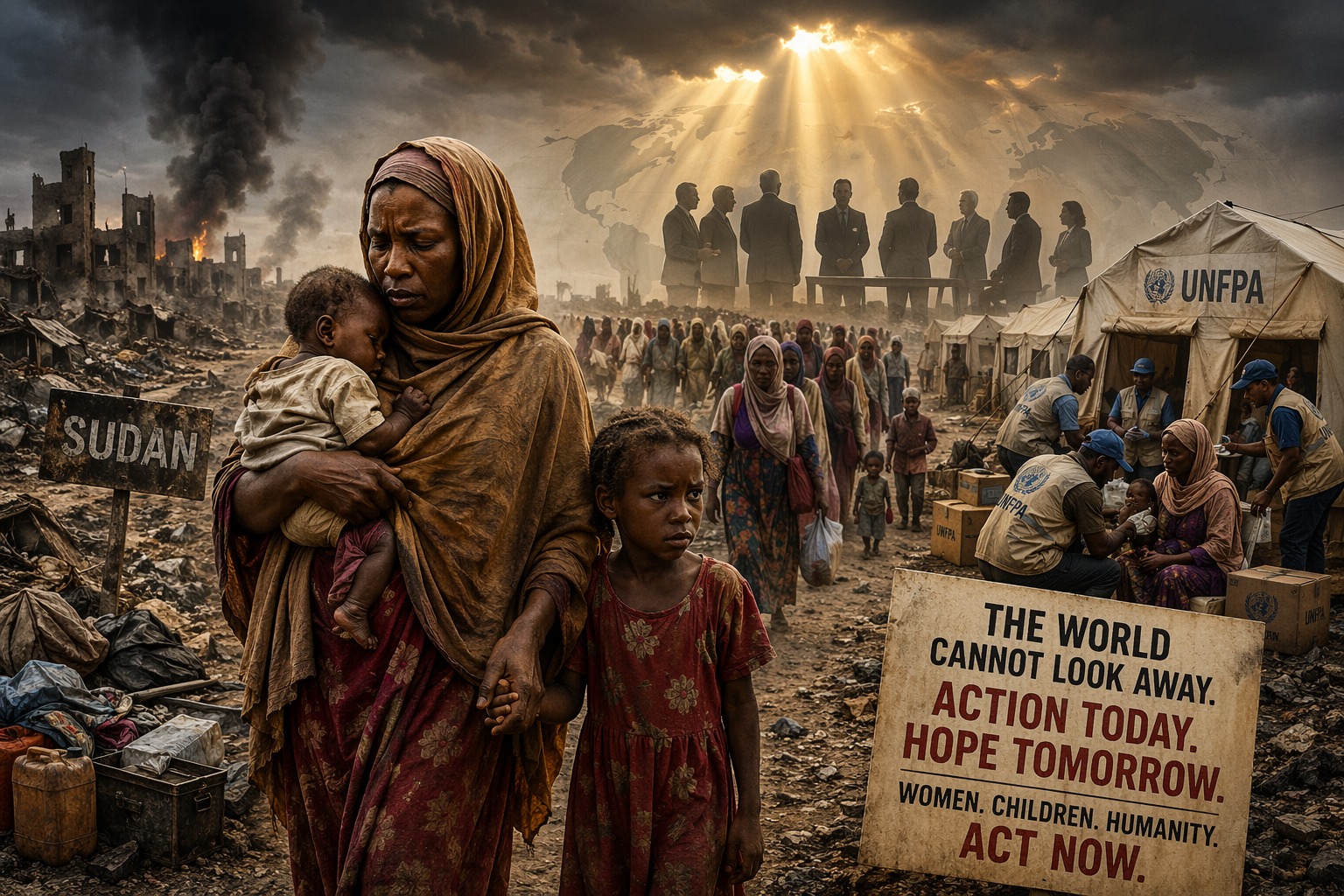
Among the most heartbreaking realities described in the statement is the scale of displacement. Women and girls are walking for days, sometimes weeks, in search of safety, only to arrive in overcrowded camps where even the most basic necessities are scarce.
As Keita explains: “Women struggle to access the basics for health and survival, and survivors of gender-based violence struggle to reach safe spaces and access the medical and psychosocial support they urgently need.”
This is not just a humanitarian emergency, it is a global moral failure.
To its credit, UNFPA continues to operate under some of the harshest imaginable conditions, deploying mobile health teams, delivering emergency obstetric care, and establishing safe spaces for women and girls. These efforts are lifesaving, but they are far from enough.
Keita issues a stark warning: “Funding gaps are severely limiting our ability to meet the scale of need. Without a significant increase in resources, hundreds of thousands of women will go without vital care and services.”
That warning demands immediate action.
What is unfolding in Sudan is not another distant crisis to be managed with routine statements and diplomatic formalities. It is a defining test of global leadership, humanitarian responsibility, and African solidarity.
UNFPA’s call is clear: unhindered humanitarian access, respect for international humanitarian law, and renewed efforts toward a lasting ceasefire and inclusive political dialogue.
Yet beyond these policy demands lies a deeper moral question: how much longer will the world stand by while millions suffer?
The women and girls of Sudan are not asking for pity. They are demanding visibility, protection, and decisive action.
They deserve nothing less.
As I finished reading the statement, one sentence stayed with me – simple, direct, and impossible to ignore: “The women and girls of Sudan deserve nothing less.”
The time for sympathy has passed. The time for action is now.