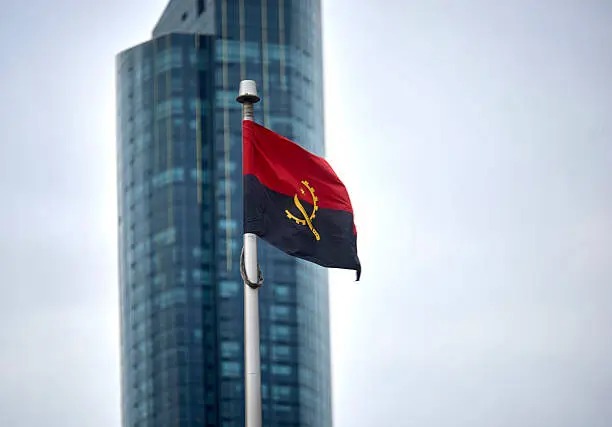
Indonesia, one of Southeast Asia’s largest economies, is exploring the possibility of increasing shipments through Kenya’s Port of Mombasa — a move that could deepen commercial ties between the two nations while strengthening East Africa’s position in global trade networks.
During a meeting with the Managing Director of the Kenya Ports Authority, Witjaksono Adji, Indonesia’s Ambassador to Kenya, praised the port’s efficiency and its critical role in regional trade. The ambassador’s remarks reflect Mombasa’s growing international stature as a logistics hub serving not only Kenya but also much of East and Central Africa.
READ ALSO: Dr Kelly Oluoch and the Institutional Politics of Health Workforce Development in Kenya
“The port has positioned itself as a reliable gateway for trade in East Africa, serving many neighbouring countries,” Adji noted.
If realised, increased Indonesian shipments through Mombasa would support Kenya’s ambition of becoming Africa’s premier maritime logistics hub, while strengthening trade connections across the Indian Ocean — linking two of the world’s most dynamic emerging regions.
Kenya’s Expanding Economic Weight
Kenya remains one of Africa’s most diversified economies and the commercial anchor of East Africa. In 2025, the country’s nominal GDP was estimated at between $125 billion and $130 billion, placing it among Sub-Saharan Africa’s largest economies.
Economic growth has averaged around 4.9%, driven by agriculture, financial services, technology, transport, and regional trade. The transport and storage sector alone expanded by approximately 5.4%, reflecting the growing importance of logistics infrastructure — particularly the Port of Mombasa.
East Africa’s Maritime Gateway
The Port of Mombasa is the largest and busiest seaport in East Africa, strategically located along major shipping routes connecting Asia, the Middle East and Africa.
Beyond Kenya, the port functions as the principal maritime gateway for Uganda, Rwanda, Burundi, South Sudan, eastern Democratic Republic of Congo, northern Tanzania, and parts of Ethiopia, supporting trade flows that sustain tens of millions of people across the region.
As a result, Mombasa is increasingly viewed not merely as Kenyan infrastructure but as critical regional economic infrastructure underpinning supply chains across East and Central Africa.
Record Performance in 2025
The port recorded its strongest performance on record in 2025, handling 45.45 million metric tonnes of cargo, representing a 10.9% increase from the previous year.
Container throughput reached 2.11 million TEUs, while 1,955 vessels called at the port during the year.
Transit cargo also expanded significantly, highlighting the port’s regional importance. Shipments destined for:
• Uganda increased by 25.2%
• Rwanda rose by 22.8%
• The Democratic Republic of Congo grew by 16.5%
Perhaps the most striking development was the surge in transhipment traffic, which rose by 132.9% to 491,666 TEUs. Analysts attribute part of this growth to shipping disruptions in the Red Sea, which prompted vessels to reroute cargo through alternative ports such as Mombasa.
These performance indicators have led industry observers to describe the port’s current trajectory as a “logistics renaissance.”
A Port With a Two-Millennia Trading Legacy
Mombasa’s prominence as a trading centre stretches back more than two thousand years, when East African kingdoms traded with merchants from Arabia, India and later Europe. Goods such as ivory, spices, gold and textiles passed through its harbours centuries before the emergence of the modern Kenyan state.
The port’s modern transformation accelerated under Omani influence in the nineteenth century, and later during British colonial rule. A defining moment came in 1896, with the construction of the Uganda Railway, which firmly established Mombasa as the gateway to East Africa’s interior.
Following independence in 1963, the port became central to Kenya’s economic strategy. The establishment of the Kenya Ports Authority in 1978 formalised its management and initiated decades of expansion and modernisation. Today, the facility operates as a 17-berth deep-water port capable of handling large container vessels and bulk cargo.
Expanding Trade With Indonesia
Indonesia’s interest in routing more cargo through Mombasa reflects a broader economic strategy to expand exports — including palm oil, textiles, machinery and consumer goods — to African markets while simplifying logistics.
For Kenya, the relationship is equally valuable. The country exports tea, coffee and agricultural commodities to Indonesia, making the partnership mutually beneficial.
Opportunities and Competitive Pressures
The Port of Mombasa currently handles approximately 90% of Kenya’s external trade, supporting thousands of jobs across logistics firms, freight forwarders, shipping agencies and transport companies. It also generates significant government revenue through handling fees, customs duties and storage charges.
However, the port faces growing competition. Tanzania’s Port of Dar es Salaam handled 27.7 million tonnes of cargo in 2025, while Kenya’s own Lamu Port is emerging as a complementary logistics hub.
Environmental concerns and infrastructure bottlenecks also present ongoing challenges.
Yet the long-term outlook remains strong. Opportunities lie in:
• Expanding trade with Asia
• Leveraging the African Continental Free Trade Area
• Deploying advanced logistics technologies
• Developing industrial zones such as the Dongo Kundu Special Economic Zone
Together, these developments could position Mombasa as one of Africa’s most important maritime gateways — linking the continent’s economies more closely with global markets across the Indian Ocean.