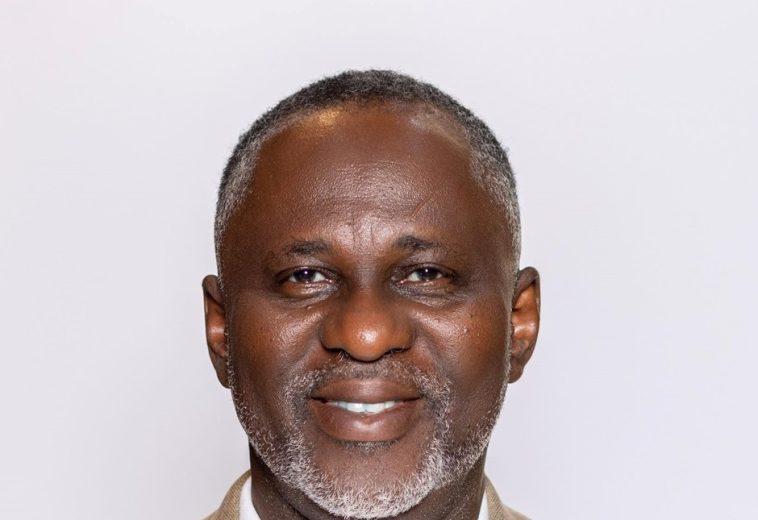
In Liberia’s evolving democratic landscape, the intersection between security expertise and political leadership remains both delicate and significant. Few lawmakers illustrate this convergence as clearly as Momo T. Cyrus, Chairman of the Defence, Security, Intelligence and Veteran Affairs Committee in the Liberian Senate.
Cyrus’s political trajectory stands out in a country where many national leaders traditionally emerge from legal, academic, or long-standing party structures. His path to influence began instead in the private security sector, where he spent several years running a security services company before transitioning into public office. That professional experience has significantly shaped both his policy priorities and his approach to debates surrounding Liberia’s national security governance.
READ ALSO: Dr. Bruno Linyiru, OGW Honoured with the African Regulatory Leadership Excellence Award (Agricultural Sector Development) at the 15th ALM Persons of the Year Ceremony
Before entering politics, Cyrus built a career in Liberia’s expanding private security industry—an important sector that has often filled gaps left by state institutions still rebuilding after the country’s long civil war. Through his work in private security operations, he managed large teams of personnel, protected industrial facilities, and coordinated with public law-enforcement agencies. These experiences gave him direct exposure to the practical challenges of maintaining security in a country balancing economic recovery with institutional reform.
Supporters argue that this operational background provides Cyrus with a practical understanding of Liberia’s security environment. Critics, however, occasionally question the overlap between his private-sector experience and his public responsibilities—an issue that frequently arises when professionals later assume regulatory or oversight roles in the same sectors where they once worked. Nevertheless, the experience has clearly informed his perspective on how Liberia should organise and supervise its security institutions.
Against this backdrop, Cyrus entered national politics through Lofa County, one of Liberia’s most politically influential regions. His victory in the senatorial race reflected strong grassroots mobilisation as well as growing voter interest in candidates who present themselves as independent-minded alternatives to traditional party figures. Once in the Senate, he quickly gravitated toward issues related to defence policy, security governance, and legislative oversight.
His appointment as chairman of the Senate committee responsible for defence, intelligence, and veterans affairs placed him in a role carrying considerable institutional responsibility. The committee oversees key security agencies, reviews policies affecting national defence institutions, and scrutinises government decisions with potential national security implications. As a result, Cyrus has become one of the more visible voices in parliamentary discussions on security policy.
In this role, he has consistently emphasised the importance of legislative oversight in national security decision-making. On several occasions, he has questioned government agreements involving sensitive national systems or services. His concerns often centre on whether such arrangements receive sufficient parliamentary scrutiny and whether Liberia retains adequate control over strategic infrastructure and national data systems.
For Cyrus, these debates extend beyond administrative procedure. They reflect a broader concern about state sovereignty in a country that continues to rely on international partnerships for development and technical capacity. Observers note that his interventions mirror a growing awareness among Liberian lawmakers that modern security challenges increasingly involve digital systems, infrastructure management, and transnational networks rather than conventional military threats alone.
At the same time, Liberia’s security challenges cannot be separated from the wider West African environment. The region has experienced rising instability in parts of the Sahel, increasing transnational crime, and persistent maritime security threats along the Gulf of Guinea. Within this context, Cyrus has occasionally used parliamentary discussions and public commentary to emphasise the importance of regional cooperation in addressing shared risks. In his view, Liberia’s stability depends not only on domestic reforms but also on effective collaboration with neighbouring states and regional organisations.
Like many legislators, however, Cyrus must balance national policy responsibilities with local expectations from his constituents. In Lofa County, development priorities such as infrastructure improvement, employment opportunities, and youth engagement remain central concerns for voters. Managing these local demands while participating in national legislative debates represents a common challenge for many senators.
Supporters maintain that he has remained actively engaged with his constituency while sustaining a visible presence in national discussions on security policy. Critics, however, argue that Liberia’s broader security reforms require deeper institutional transformation than individual lawmakers alone can deliver. Both perspectives reflect the realities of Liberia’s political environment, where reforms often proceed gradually and depend on sustained consensus across multiple government institutions.
Ultimately, whether viewed as a security professional turned politician or simply another legislator navigating Liberia’s complex political landscape, Cyrus has become a notable participant in the country’s ongoing debates on national security governance. His presence in the Senate also reflects a broader trend across African politics, where individuals with professional backgrounds in sectors such as security, technology, and business are increasingly entering public office.
The success of such transitions, however, depends largely on how effectively professional experience translates into legislative outcomes. For Liberia—where strengthening democratic institutions remains a long-term national priority—the contributions of lawmakers like Momo T. Cyrus will ultimately be judged not by rhetoric alone, but by the durability of the policies and oversight mechanisms they help shape within the Liberian Senate.
In that sense, his political journey remains a work in progress—one unfolding within the larger story of Liberia’s continuing effort to build stable, accountable governance after decades of political upheaval.