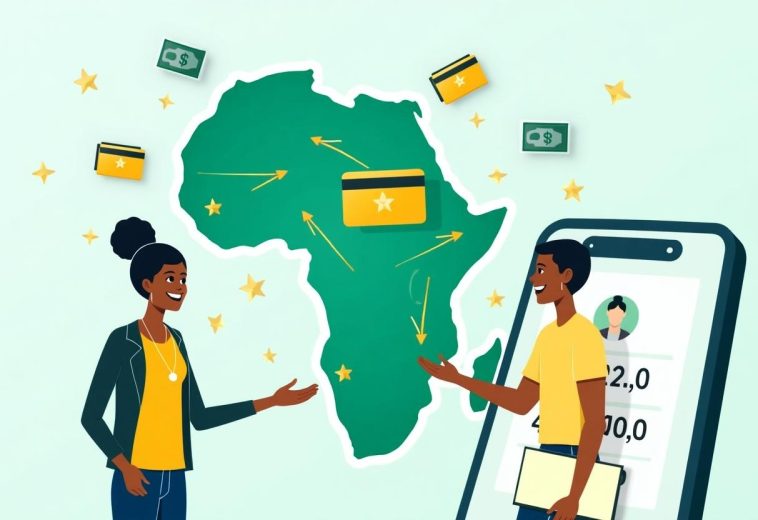
In recent years, mobile money platforms have emerged as powerful tools for expanding financial inclusion and providing a safety net for unemployed and underserved populations across Africa. These digital ecosystems have bridged major infrastructure gaps, enabling millions of previously unbanked people to access financial services, generate income, and better withstand economic shocks. As a result, mobile money is not only encouraging entrepreneurship but also serving as a vital lifeline that supports livelihoods during periods of unemployment and financial hardship.
Africa’s position as the global leader in mobile money adoption is strongly supported by data. The GSMA’s 2023 report recorded more than 469 million registered mobile money accounts across Sub-Saharan Africa. That leadership has continued to grow. According to the GSMA’s 2024 State of the Industry Report, the region processed more than $1.6 trillion in mobile money transactions by the end of 2023, representing around 70% of the global total. This growth extends far beyond person-to-person transfers. Mobile money platforms now provide access to credit, insurance, savings, and merchant payments, making them an integral part of everyday commercial activity in ways that traditional banking infrastructure has never fully achieved.
READ ALSO: How Mobile Money Is Transforming Africa’s Financial Future: Banking Beyond Borders
The role of mobile money agents as the human infrastructure behind this success cannot be overstated. Tanzania’s M-Pesa ecosystem, for example, supports more than 250,000 jobs through its extensive agent network. This system functions as a distributed micro-franchise model, bringing financial services directly into local communities. Research by the Consultative Group to Assist the Poor (CGAP) shows that mobile money agents often outnumber bank branches by more than 20 to one across many African markets. Each agent serves customers who might otherwise have little or no access to formal financial services. Beyond earning commissions, many agents generate additional income by selling airtime, groceries, solar products, and other everyday goods, transforming their businesses into important community retail centres.
Mobile money has also significantly lowered the barriers to entrepreneurship. In many cases, starting a business requires little more than a basic mobile phone and a modest amount of working capital. A 2023 study published in The Review of Economics and Statistics found that access to M-Pesa in Kenya encouraged many people, particularly women, to move from subsistence farming into self-employment by making it easier to receive payments and access working capital. The World Bank’s Global Findex 2021 report further highlights this trend, showing that the proportion of women in Sub-Saharan Africa with mobile money accounts nearly doubled between 2014 and 2021, reaching 37%. For many women, these accounts provide a secure and independent way to manage business income while reducing financial dependence within the household.
Mobile money has also become an essential tool for responding to emergencies, particularly among vulnerable communities with limited access to formal insurance. A landmark study published in Science by Jack and Suri (2014) found that households living within five kilometres of an M-Pesa agent were able to maintain their consumption during severe droughts, while non-users experienced declines of between 7% and 10%. The technology allows family members in cities or unaffected regions to send financial support instantly when crises occur. During the COVID-19 pandemic, the World Bank reported that mobile money platforms were used to distribute emergency cash transfers in more than 40 countries worldwide. In Africa, Togo’s Novissi programme became a leading example by using mobile money and voter registration data to deliver financial assistance quickly to informal workers.
One of mobile money’s greatest innovations has been its ability to extend credit to people traditionally excluded from the banking system. Conventional banks often require collateral, formal employment, or established credit histories, conditions that automatically exclude many Africans. Mobile money platforms have introduced alternative credit scoring models based on transaction histories instead. Products such as Safaricom’s M-Shwari and KCB M-Pesa demonstrated that consistent mobile money activity can provide a reliable measure of creditworthiness. Research from MIT’s Sloan School of Management found that these small, digitally issued loans often achieved repayment rates exceeding 95%. For many unemployed young people, small business owners, and single parents, instant collateral-free loans of between $5 and $20 provide timely financial support that conventional banks are rarely able to offer.
The story of Juliana Shilatu illustrates the wider impact of the mobile money economy. After graduating in health sciences but struggling to find formal employment, she invested 600,000 Tanzanian shillings, approximately $250, to become an M-Pesa agent in Shinyanga, Tanzania. Her business eventually enabled her to purchase both a house and a car, demonstrating how mobile money can create genuine pathways to financial independence. Her experience reflects broader findings from GSMA Intelligence, which estimates that more than 75% of mobile money agents operate owner-managed micro-businesses. Across Africa, millions of similar entrepreneurs are creating livelihoods through the expanding agent economy, helping absorb underemployed youth at a time when formal employment opportunities remain limited.
Despite its remarkable success, the mobile money ecosystem continues to face significant operational challenges. Maintaining a reliable and well-funded agent network is both expensive and complex. CGAP research identifies liquidity management, ensuring agents have enough cash and electronic value to process customer transactions, as one of the sector’s biggest operational difficulties. Managing this balance can consume as much as 40% of an agent’s weekly profits. Many agents must travel regularly to banks or master agents to replenish cash or electronic balances, adding transport costs and security risks, particularly in rural areas. Limited electricity access compounds these challenges. According to the International Energy Agency (IEA), more than 570 million people across Sub-Saharan Africa still lack electricity, forcing many agents to depend on diesel generators or solar charging systems to keep their businesses operating.
Regulation presents another important challenge. As mobile money platforms expand beyond payments into lending, insurance, and savings products, governments face the difficult task of promoting innovation while protecting consumers. The collapse of several digital lending platforms in Kenya highlighted the risks associated with poorly regulated algorithm-based lending, leaving many borrowers with damaged credit records. Data from the Central Bank of Kenya’s FinAccess survey showed that unpaid digital loans contributed significantly to negative listings at credit reference bureaus. These experiences have strengthened calls for clearer regulations governing interest rate disclosure, consumer protection, responsible lending practices, and data privacy.
Competition within the financial sector is also evolving. Rather than viewing mobile money as a threat, many traditional banks are increasingly partnering with telecommunications companies to expand digital financial services. At the same time, African telecommunications operators continue to debate the role of large global digital platforms such as Netflix, YouTube, and Meta. Telecom companies argue that while they invest billions of dollars in the broadband infrastructure that supports digital payments and online services, these global platforms benefit from that infrastructure without contributing directly to its cost. According to the World Bank, African network operators invest between $6 billion and $7 billion annually in telecommunications infrastructure, raising important questions about the long-term sustainability of digital connectivity.
Looking ahead, sustaining mobile money’s growth will require stronger digital public infrastructure alongside greater investment in digital literacy. The GSMA estimates that Sub-Saharan Africa still has a mobile internet usage gap of 44%, meaning millions of people live within broadband coverage but do not use mobile internet because of limited digital skills or a lack of relevant content. Governments can accelerate financial inclusion by promoting interoperability between mobile money providers, allowing users on different networks to transfer funds seamlessly. Expanding the use of mobile money for public services, maintaining fair tax policies that encourage small-value transactions, and treating digital connectivity as essential infrastructure will help ensure that mobile money continues to evolve beyond a social safety net into the financial backbone of an increasingly integrated African economy under the African Continental Free Trade Area (AfCFTA).