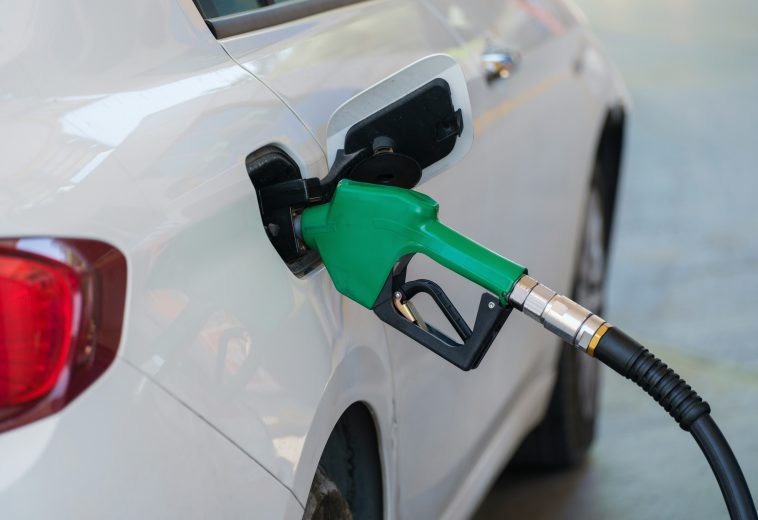
NNPC Limited has extended its N66 per litre petrol discount at NNPC Retail stations nationwide through October 31, 2026. Introduced for Nigeria’s 66th independence anniversary, the discount was originally set for October 1 to 7. Customers can access it via the NNPC Fuel App at NNPC Retail outlets only. NNPC calls it customer relief, not a fuel subsidy, funded from NNPC Retail’s own margin rather than the Federation Account.
The federal government’s intervention, announced in late September and launched October 1, initially framed the measure as a 30-day petrol discount with priority access for public transport operators. The actual implementation has narrowed: the N66 per litre discount applies only at NNPC Retail stations, requires payment through the NNPC Fuel App, and is funded from the company’s retail margin, not the federal budget. NNPC has reported pump prices of N1,355 per litre in Lagos and Rivers, and N1,370 in Abuja. The extension to October 14 effectively converts what was billed as a 30-day policy into a two-week promotion.
READ ALSO: ENERGY TRANSFORMATION: Nigeria’s Gas Milestone Strengthens Industrial Growth
The intervention responds to a severe crisis. The Citadel Centre for HR Research found that for entry-level workers in Lagos, Abuja, and Port Harcourt, transport now consumes as high as 66% of monthly pay, up from 44% in February. The National Bureau of Statistics reported intra-city bus fares jumped 38.63% year-on-year to N1,431.25 in May 2026, while motorcycle fares surged 52.45%. Intercity bus fares rose 21.89% to N9,699.55.
Food inflation reached 20.31% in July 2026, its sixth consecutive monthly increase, driven by higher prices of crayfish, pepper, onions, rice, and tomatoes. The SBM Jollof Index shows the cost of cooking a pot of jollof rice for a family of five rose from N25,798 in July 2025 to N29,578 in June 2026, a 14.6% increase in one year and 624% over a decade. The Southwest recorded the sharpest decade-long increase at 708.2%.
Finance Minister Taiwo Oyedele disclosed that subsidy reforms generated N15.8 trillion for the Federation between June 2023 and December 2025. However, federal incremental expenditure totalled N30.64 trillion over the same period. Of this, N9.39 trillion went to wage adjustments, N9.37 trillion to external debt service, and N6.5 trillion to infrastructure. The N9.39 trillion spent on wages alone exceeded the Federal Government’s N5.4 trillion share of subsidy savings.
Oyedele acknowledged that savings were “largely absorbed by higher debt-servicing costs”. Federal borrowing rates climbed from around 8% before the reforms to 24%, significantly increasing debt servicing expenses. Borrowing accounted for 58% of the N20.4 trillion in incremental resources mobilised, while subsidy savings contributed only 27%. The Central Bank maintained its benchmark interest rate at 26.50%.
The critical uncertainty is whether the N66 discount reaches passengers. Transport fares also reflect vehicle costs, maintenance, road conditions, financing, and route demand. The government would need to measure pump prices at participating versus non-participating stations, public transport fares on selected routes, and retail prices of key foods in affected markets. Without those measurements, the intervention’s effect on household budgets cannot be quantified.
The App-only payment requirement creates an access barrier: customers without smartphones or data cannot benefit from the discount. The limitation to NNPC Retail stations, which represent a fraction of Nigeria’s fuel retail network dominated by independent marketers, restricts reach. The discount is “not a subsidy” because it does not lower the price below NNPC’s cost of supply; it merely waives the retail margin. The opportunity cost of foregone revenue that could support investment remains unquantified.
Nigeria’s experience resonates across Africa, where many economies face similar tensions between fuel-price changes, transport costs, and food inflation. The IMF has consistently argued that “cash transfers to households should be prioritised over implicit fuel and electricity subsidies”. The policy’s temporary, targeted design one company, one payment channel, two weeks contrasts with the broad, open-ended subsidies removed in 2023, but it does not address the structural challenges of imported fuel dependence and inefficient public transport.
The current intervention must be understood against the 2023 subsidy removal, when NNPC raised pump prices from N184 to N488 per litre in Lagos—an almost tripling. The IMF subsequently reported that Nigeria had “partially reversed” the removal by capping retail fuel and electricity prices, with fiscal costs potentially reaching 3% of GDP in 2024. The N66 discount represents a narrower, more explicitly temporary form of price moderation than the implicit subsidies that followed the 2023 reform.
The NNPC discount is best understood as a limited, measurable experiment in targeted price relief. Its success should be judged by specific outcomes: actual discount per litre, litres sold, changes in fares on high-volume routes, and food price movements in affected markets. The World Bank’s warning that transport and food costs are eroding reform gains suggests the intervention addresses a real pain point. But a N66 discount on one company’s retail margin, accessible only through a smartphone app, cannot resolve Nigeria’s dependence on imported petrol, the inefficiency of its public transport system, or the vulnerability of household budgets to global fuel price shocks.