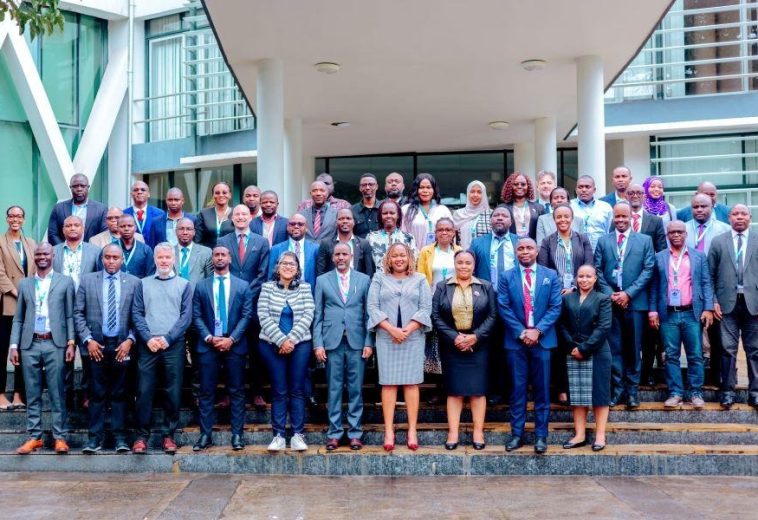
Can West Africa turn its agricultural potential into a regional rice industry capable of meeting its growing food demand? A new regional initiative launched by the Economic Community of West African States (ECOWAS), in partnership with the African Development Bank (AfDB), is seeking to strengthen rice production, processing and trade, with the ambition of achieving sustainable regional rice self-sufficiency by 2035.
The Project for the Development of Resilient Value Chains for Rice in West Africa, known as REWARD, was officially launched on 11 November 2026 at the ECOWAS Commission headquarters in Abuja. The programme forms part of the ECOWAS Regional Rice Roadmap for 2025–2035 and the organisation’s broader agricultural transformation agenda under Vision 2050.
READ ALSO: Nigeria’s West African Capital Market Proposal: Unlocking Cross-Border Investment
The initiative has an estimated financing envelope of 500 million Units of Account. Its initial ECOWAS-led component has received a US$12 million grant from the AfDB, alongside an in-kind contribution valued at US$1.2 million from the ECOWAS Commission. Separately, the AfDB says the wider REWARD investment platform aims to mobilise US$850 million across 14 countries and benefit more than one million farmers, particularly women and young people.
The programme is built around a challenge that extends beyond the amount of rice harvested. West Africa needs stronger agricultural systems that can connect farmers to reliable inputs, modern processing facilities, storage, transport networks and regional markets. Without these links, increased production may not translate into competitive prices, higher farmer incomes or reduced dependence on imports.
REWARD therefore focuses on three strategic priorities. The first is climate resilience and technological innovation, including improved irrigation, sustainable agricultural practices and access to high-yielding rice varieties. The second is economic empowerment through investment in processing, storage, skills development and entrepreneurship, with particular attention to women and young people. The third is regional market integration through harmonised policies, improved cross-border trade and efforts to remove non-tariff barriers.
These priorities are important because the region’s rice value chain faces persistent constraints. Limited access to quality seeds, climate variability, inadequate mechanisation, post-harvest losses and insufficient private-sector investment continue to affect productivity and competitiveness. Addressing these challenges requires coordinated action from governments, agricultural research institutions, financial partners and businesses.
The programme also presents opportunities beyond primary agriculture. Greater investment in milling, packaging, logistics, equipment supply and distribution could create commercial opportunities for local enterprises while strengthening the links between rural producers and urban consumers. For women and young people, stronger value chains could open pathways into agribusiness, processing, technology and other areas of the food economy.
The AfDB has also emphasised the need for participating countries to move beyond domestic rice production towards developing the capacity to supply regional markets. This ambition is closely connected to the African Continental Free Trade Area, which offers a framework for expanding trade in agricultural products when infrastructure, standards and border procedures support the movement of goods.
The launch of REWARD and the inauguration of its Regional Steering Committee establish an institutional framework for oversight and coordination. However, the programme’s success will depend on effective implementation, national ownership, transparent management and the ability to attract the investment required across the value chain.
West Africa’s food security challenge cannot be addressed by production targets alone. It requires an agricultural economy in which farmers are productive, processors are competitive and regional markets are accessible. If REWARD translates its commitments into practical improvements, it could help make rice production a stronger source of livelihoods, enterprise development and regional economic resilience.