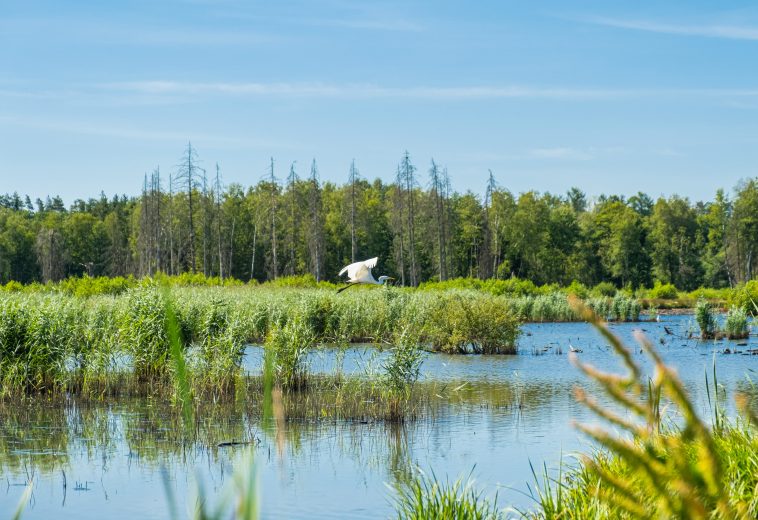
Africa’s forests, rivers, wetlands and wildlife are more than natural wonders. They support livelihoods, sustain agriculture, protect communities from environmental shocks and contribute to economic growth. Yet the continent faces a pressing challenge: how can it turn its extraordinary natural wealth into lasting prosperity without destroying the ecosystems on which that prosperity depends?
Africa’s natural capital is estimated at $7.6 trillion, while natural resources and ecosystem services contribute approximately 60 per cent of its GDP. This wealth supports millions of livelihoods, particularly in communities dependent on farming, fishing and forestry. Protecting biodiversity is therefore not separate from economic development; it is essential to sustaining it.
READ ALSO: CLIMATE RESILIENCE: Africa’s Early Warning Push
The consequences of environmental degradation are already evident. Africa loses close to four million hectares of forest annually, while soil erosion and declining land quality threaten agricultural productivity. The World Wide Fund for Nature’s Living Planet Report 2024 also recorded a 76 per cent decline in monitored vertebrate wildlife populations in Africa between 1970 and 2020. This measures changes in monitored populations, not the percentage of species that have disappeared, but it illustrates the scale of pressure on the continent’s ecosystems.
For communities living closest to nature, these changes have immediate consequences. Degraded forests can weaken water supplies, declining soil quality can reduce harvests, and damaged wetlands can leave settlements more exposed to flooding. Conservation must therefore be understood not simply as protecting wildlife, but as safeguarding the economic foundations of everyday life.
The challenge is gaining renewed international attention as the United Nations Biodiversity Conference, COP17, opens in Yerevan, Armenia, from 19 to 30 October 2026. Countries are reviewing progress towards the Kunming-Montreal Global Biodiversity Framework, which aims to conserve at least 30 per cent of the world’s land and sea by 2030 and restore 30 per cent of degraded ecosystems. For Africa, the priority is ensuring that global commitments translate into practical action, adequate financing and measurable results.
Financing remains a significant obstacle. Conservation requires sustained investment in ecosystem restoration, protected areas, research and community-led initiatives. The African Development Bank has committed up to $6.5 billion towards the Great Green Wall initiative, which seeks to restore degraded land across the Sahel while supporting livelihoods and resilience. Such programmes demonstrate how environmental protection can be linked to employment, agricultural recovery and climate adaptation.
Innovative financing could further expand these opportunities. Park Bonds, being discussed at COP17, offer a potential way to mobilise capital-market investment for protected areas in West Africa. Their effectiveness, however, will depend on credible financial safeguards, transparent management and clear evidence that the money delivers conservation benefits.
Equally important is the role of local communities. Conservation efforts are unlikely to endure when people bear the costs of protecting natural resources without sharing in the benefits. Communities need meaningful participation in decisions affecting their land, alongside opportunities to earn income through sustainable tourism, responsible forestry, fisheries and nature-based enterprises. Traditional knowledge can also strengthen conservation strategies when it is respected and incorporated into decision-making.
Governments must reinforce these efforts by integrating natural capital into economic planning. Understanding the value of forests, water resources and healthy soils can help policymakers make better decisions about infrastructure, agriculture and public spending. Environmental protection should be considered when assessing the long-term costs and benefits of development projects, rather than treated as an afterthought.
Africa’s biodiversity offers an opportunity to build an economy that values both prosperity and resilience. The task is not to choose between protecting nature and improving living standards, but to make the two mutually reinforcing. Success will depend on whether investment reaches communities, ecosystems recover, and conservation becomes part of the continent’s development priorities. Africa’s natural wealth can support generations to come, but only if protecting it becomes a shared economic responsibility.