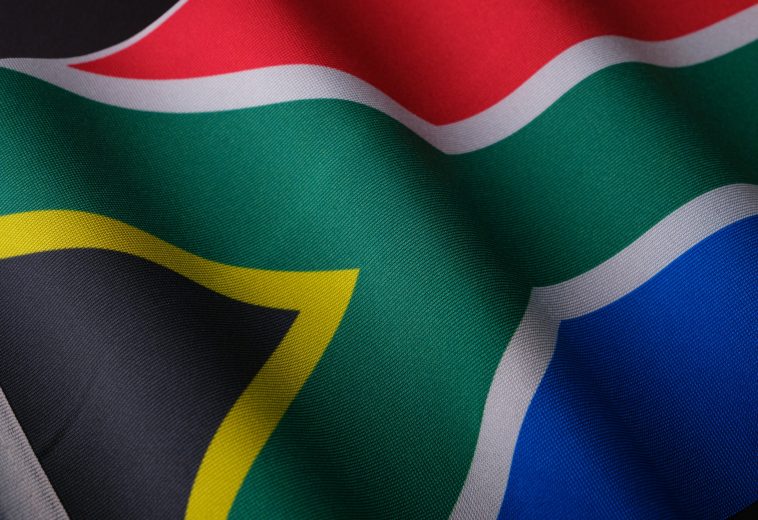
As South Africa prepares to host the G20 Leaders’ Summit in Johannesburg on 22–23 November 2025, it is not merely presiding over a global economic forum; it is seizing what may be a defining moment for Africa’s long-term development. For the first time in history, an African nation leads the G20, and this presidency is being framed as a potential game-changer: one that could reorient global economic power, champion intra-African trade, and catalyse a new industrial and creative economy on the continent.
Yet, as with every historic opportunity, the stakes are high. While the rhetoric is bold, there is reason to ask: can this presidency deliver structural transformation, or will its legacy be symbolic?
READ ALSO: G20 Summit on African Soil Continues Despite U.S. Boycott
To appreciate the significance of South Africa’s G20 presidency, one must first understand the demographic and economic shift underway in Africa. The United Nations projects that by 2050, a quarter of the global population will live on the continent, rising to 40 percent by the end of the century. Over the next 25 years, Africa is expected to account for 85 percent of the growth in the world’s working-age population.
These are not just numbers; they are a signal. The world’s future workforce, its entrepreneurial energy, and its consumer markets will increasingly come from Africa. Yet today, despite abundant natural resources, the continent remains under-industrialised and only loosely integrated into global value chains.
South Africa’s presidency could therefore serve as a pivot: an inflexion point where Africa’s demographic potential begins to translate into economic power rather than just promise.
At the heart of South Africa’s vision is industrial transformation rooted in both traditional assets and exponential technologies. Africa holds approximately 30 percent of global mineral reserves, 65 percent of the world’s arable land, and large shares of oil, gas, and freshwater reserves. Yet, much of this wealth today leaves the continent as raw materials, rather than manufactured goods.
South Africa’s G20 agenda argues that the time has come to reshape this extractive model. By leveraging technologies such as artificial intelligence, advanced manufacturing, data science, and next-generation supply chains, the continent can build a future-ready industrial base.
The United Nations Development Programme is backing this push: under South Africa’s leadership, the G20 is placing digital public infrastructure and artificial intelligence at the centre of its development agenda. This includes investments in deep-learning clusters, sustainable data centres, and continental compute capacity that could enable Africa to leapfrog traditional phases of industrialisation.
There are already private-sector signals. Cassava Technologies has announced a US$720 million investment in AI infrastructure, while industrial groups such as the Dangote Group are expanding their assets across multiple African countries. In parallel, nations such as Rwanda are pushing for near-universal electricity access by 2030, a fundamental precondition for manufacturing at scale.
Still, ambition will demand more than capital, it requires policy frameworks that support skills development, cross-border regulation, and public-private partnerships. In this regard, Business 20 South Africa is playing a critical role. At the Africa CEO Forum in May 2025, B20 leaders stressed the need for clear partnership models, improved governance, and faster approval processes for company registrations and mergers.
The Power of Creative Economy
Transformation is not only industrial, it is cultural. South Africa’s G20 presidency is placing the creative economy front and centre, arguing that storytelling, media, and the arts are strategic economic assets, not soft add-ons.
Through initiatives like the African Export-Import Bank’s Creative Africa Nexus, backed by US$2 billion, African creatives are being empowered to produce, export, and monetise African narratives on their own terms. The philosophy is clear: economic transformation is inseparable from identity and narrative control. As many African leaders believe, the stories that Africans tell about themselves shape the flow of investment, diplomacy, and innovation.
This narrative capital could also strengthen cultural diplomacy, attract global investment, and nurture talent in sectors that traditional economic models often marginalise.
AfCFTA: The Hidden Engine of Continental ProsperityArguably the most structural lever for Africa’s transformation lies in the African Continental Free Trade Area. Although the continent boasts increasing wealth and connectivity, intra-African trade remains limited. Estimates place this at only 16 percent of Africa’s total trade.
Yet, if fully realised, AfCFTA could unlock dramatic economic gains. Some analysts project that by 2035, deeper trade integration could add as much as US$500 billion to Africa’s GDP, create 30 million jobs, and substantially reduce dependency on external markets.
The G20 platform offers a once-in-a-generation opening to secure the political and financial backing needed for this vision. South Africa is pushing not just for rhetoric but for real action: harmonised regulation, barrier removal, and support for value-added production across borders.
Moreover, continental investment is not limited to Africa. The African diaspora, particularly in frontier sectors such as green energy, artificial intelligence, and digital infrastructure, is being tapped as a critical force for knowledge transfer and capital flow.
Institutional Innovation and Inclusion
South Africa’s G20 presidency is not just about economic ambition; it is building institutional bridges. One significant development is a task force to investigate global wealth inequality, convened under Nobel laureate Joseph Stiglitz. The findings, to be presented during the G20 summit, could shape policy debates on debt, fiscal fairness, and multilateral equity.
At the continental level, parliaments are mobilising. In July 2025, the Pan-African Parliament and South Africa’s Parliament held a high-level symposium on trade justice and sustainability under the banner of the G20 presidency. Their message was clear: Africa must assert its voice in global governance not merely as an observer, but as an active architect.
On the business front, the South Africa Business Initiative for Impact has been launched by the United Nations in partnership with the private sector. This initiative is designed to drive sustainable investment in gig economies, green energy, human capital, and food systems, aligning private capital with Africa’s development priorities.
Risks on the Road: Symbol or Substance?
Despite the scope and ambition, the G20 presidency carries real risks. The first is implementation. Many of the policies being floated, from digital infrastructure to value-chain industrialisation, depend not only on capital but on political will, regulatory coherence, and strong institutions. Without durable African-led platforms, the risk is that plans remain confined to summit declarations.
Second, geopolitical headwinds are already evident. At the G20 Finance Ministers’ meeting in Durban in mid-2025, tensions emerged under the weight of global trade disputes. Protectionist pressures, tariff risks, and geopolitical fragmentation threaten to undermine the cooperative spirit needed to deliver on Africa’s agenda.
Third, inequality and debt vulnerabilities remain obstacles. While South Africa is proactively addressing wealth disparity through its Stiglitz-led task force, many African nations still carry heavy debt burdens, limiting their capacity to invest in infrastructure and human capital.
Moreover, the energy transition is a double-edged sword. While South Africa is calling for fairer climate finance, the continent’s vast renewable potential remains underfinanced. If clean energy does not scale affordably, industrial ambitions could become constrained by power shortages or ecological trade-offs.
A Strategic Bet: Can South Africa Deliver?
South Africa’s G20 presidency marks a turning point, but whether it becomes a turning tide depends on more than grand vision. The real test lies in aligning multiple levers: financing, regulation, innovation, and governance. If the agenda translates into concrete infrastructure projects, cross-border industrial investments, and meaningful policy reforms, the G20 presidency could indeed catalyse a new industrial-economic era for Africa.
On the other hand, if rhetoric trumps action, the moment may pass as another symbolic exercise in global diplomacy. The challenge for African leaders and their global partners is to seize this presidency as more than a milestone: to use it as a foundational pivot for their shared future.
A High-Stakes Opening Act
South Africa’s G20 presidency is more than a diplomatic first. It is a strategic moment, a rare opening for Africa to champion its development agenda on the world stage. Its vision stretches across industrialisation, creative economy, digital infrastructure, and trade integration. But ambition does not guarantee execution.
The opportunity is enormous: to turn Africa’s demographic dividend into an industrial powerhouse, to harness its creative potential for global influence, and to transform the conditions of intra-continental trade in a way that lifts millions. But if the presidency fails to deliver structural outcomes, it may be remembered not as a turning tide but as a brief flourish.