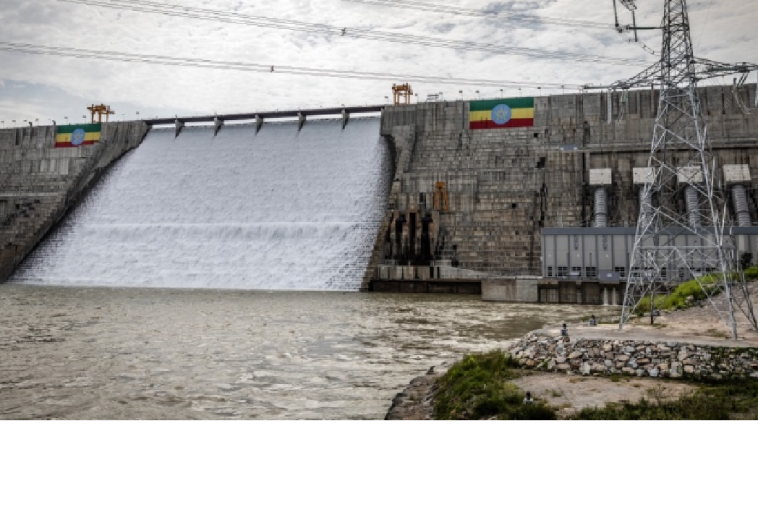
According to a new report by Power Shift Africa, titled African Energy Leadership: The Case for 100% Renewable Energy, Africa could save between $3 trillion and $5 trillion, an average of $150 billion annually by transitioning to a fully renewable energy system by 2050. This shift would not only deliver the cheapest source of energy but also unlock millions of new jobs, accelerate development, and dramatically improve energy access.
Decarbonising Africa’s energy sector, while simultaneously boosting economies and ensuring universal access to electricity, will require a monumental expansion of clean energy capacity. Installed renewable energy capacity would need to rise to around 3,500 gigawatts (GW) by 2050, up from just 80 GW in 2023. This transformation, however, promises more than energy security; it offers a pathway to trillions of dollars in savings and the creation of millions of jobs.
READ ALSO: Morocco’s Gold Discovery and Its Impact on Africa’s Mining Economy
A full transition to renewables, modelled to be consistent with a 1.5°C carbon budget, requires an installed capacity of roughly 3,500 GW by 2050 of which about 2,600 GW is expected from solar photovoltaics. The up-front investment to reach that target is estimated at $7.3 trillion. On the other side of the ledger, the long-term operating cost savings, chiefly from avoided fuel imports and fuel price exposure are projected at approximately $8.3 trillion. The arithmetic is blunt: fuel savings alone would cover the required capital expenditure and still leave a margin (the report shows a roughly 2.2x return on the additional investment compared with business-as-usual).
Where the jobs and industry come from
The transition also reframes the labour market. Business-as-usual would see roughly 3.2 million energy-sector jobs by 2050 (about 2.1 million of them in renewables); a 100 per cent renewable pathway expands that to about 5.4 million jobs, a net increase of 2.2 million roles. These openings are not only installers and technicians. They include manufacturing assembly, local content in supply chains, operations and maintenance, grid expansion and the services that support household electrification and e-cooking markets. In short, the shift promises not just employment but movement up the value chain, from raw-material exporter to producer of finished energy goods and services.
Technical resource estimates in the report make the feasibility plain. Africa’s solar photovoltaic potential is placed at 482,261 GW and onshore wind at 71,778 GW. Meeting the continent’s needs under the 100 per cent scenario requires less than 1 per cent of that potential. Even when constrained to areas within 10 km of transmission lines, available solar potential remains orders of magnitude larger than projected demand. These figures convert an ideological debate into a practical question of planning, finance and governance rather than feasibility.
Access, Equity and the Politics Of Distance
Yet technical potential is not the same as social access. The report estimates roughly 720 million people living more than 10 km from existing transmission infrastructure. For these communities, centralised grid expansion is often slow and costly. The pragmatic response the report advances is a two-track approach: rapid deployment of decentralised, off-grid and mini-grid solutions to widen access in the short and medium term, combined with strategic national grid investments to integrate these islands over time.
Equally pressing is the cooking challenge. Some 970 million people rely on wood, charcoal and waste for cooking, fuel sources responsible for considerable health and environmental harm and which account for around 70 per cent of fuel-based cooking and heating energy demand. Electrifying cooking is integral to the 100 per cent renewables vision. It will improve indoor air quality, free up household time previously spent collecting fuel, and reduce pressure on forests, provided that the shift is supported by targeted subsidies, appliance financing and culturally aware awareness programmes.
Why Africa Has a Unique Chance
Africa’s relative scarcity of entrenched fossil-fuel infrastructure is an enabling condition. Many regions elsewhere must wrestle with stranded assets as they pivot away from coal and gas. Africa, by contrast, can largely build new capacity around renewables, avoiding the economic drag that stranded assets cause. This “clean slate” advantage shortens the pathway to higher per-capita electricity consumption without locking in decades of fuel expenditure.
Where Policy Must Focus
The chief obstacle remaining is finance. The model in the report is clear that the gross investment needs are substantial; the question is not whether the money exists globally, but whether it can be mobilised at the right cost and with the right terms for African countries. The policy agenda implied by the report is focused and actionable.
First, reduce the cost of capital. Concessional finance, credible guarantees and blended instruments will lower debt servicing burdens and improve project bankability. Second, deploy country-tailored de-risking vehicles to attract private capital into distributed and utility-scale projects alike. Third, leverage debt relief and international finance architecture including reallocation of SDRs, catalytic climate funds, and innovative debt-for-green swaps to free fiscal space for investment in renewable infrastructure and local manufacturing. Fourth, pair finance with industrial policy: incentives and support for local assembly, quality control and skills development will capture more value domestically and reduce future import dependence.
Policy alone will not suffice; implementation demands skills, regulation and sustained institutional capacity. The report highlights the need for domestic manufacturing capacity for solar panels, inverters and storage, and for robust standards to avoid low-quality imports undermining longevity and public trust. Equally, large investment in vocational training and certification will be necessary to sustain operations, maintenance and expansion, creating durable careers, not ephemeral construction spikes.
Transition sequencing matters. Rapid deployment of distributed solutions must be accompanied by measures that protect low-income households from cost shocks and ensure that the employment benefits accrue locally and equitably. Social safety nets, targeted appliance subsidies, and public procurement set-asides can help ensure the energy transition is a just one. Governance reforms, including transparent procurement, competitive tendering and anti-corruption safeguards, will determine whether public resources deliver resilient assets or leakage.
Practical, Profitable, And Political
The Power Shift Africa modelling yields a simple, consequential proposition: Africa can credibly aim for a 100 per cent renewable energy system by 2050 that both decarbonises the continent and generates net economic benefit. The figures you provided 3,500 GW of installed capacity, $7.3 trillion of investment yet $8.3 trillion in fuel savings, and 2.2 million extra jobs are not rhetorical flourishes; they are the basis for a policy agenda that is practical, financially coherent and morally compelling.
The choice ahead is not technical feasibility but political will and financial design. With the right instruments, cheaper capital, strategic public investment, manufacturing incentives, and workforce development, Africa can convert sunlight and wind into not only electricity but also sovereign wealth, industrial jobs and improved public health. That is the argument your report makes, and it is an argument African policymakers, financiers and international partners can no longer afford to ignore.