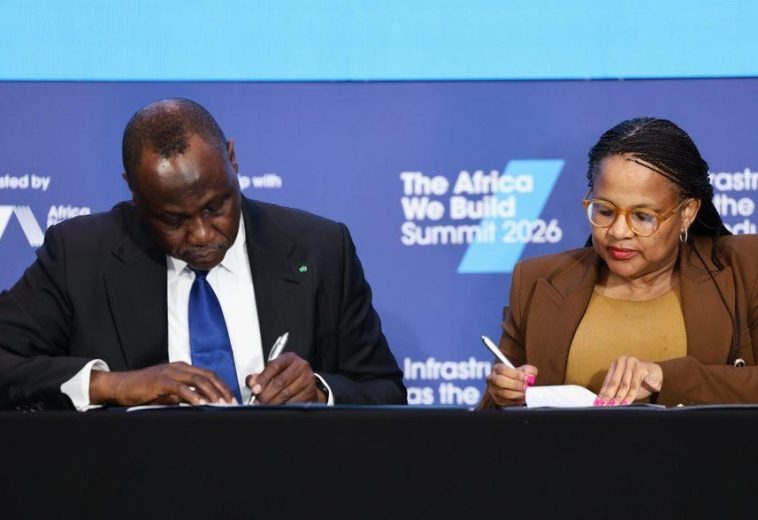

How can African countries strengthen their economies against climate change without slowing their development ambitions? A US$690 million financing partnership between the Africa Finance Corporation (AFC) and the Green Climate Fund (GCF) is seeking to address this challenge by directing investment towards climate-resilient infrastructure, clean energy, food systems and water security.
Launched on 30 October 2026 at a signing ceremony in Seoul, South Korea, the Africa Sovereign Climate Facility represents a significant effort to connect climate financing with Africa’s infrastructure and economic development priorities. Its first phase will focus on Angola, Benin, Côte d’Ivoire and Nigeria, countries facing climate vulnerabilities alongside substantial infrastructure investment needs.
READ ALSO: Blended Finance Solutions: Bridging Africa’s Climate Capital Gap for Growth
The facility combines concessional financing, technical assistance and commercial capital to help participating governments develop projects that can withstand climate pressures while supporting economic productivity. The Green Climate Fund is contributing US$280 million, while the AFC will arrange a parallel commercial financing facility of up to US$260 million, with a repayment period of up to ten years. The wider programme is valued at US$690 million.
The initiative comes at a time when climate change is placing increasing pressure on African economies. Changing rainfall patterns, rising temperatures, flooding and prolonged dry periods threaten agricultural production, water availability, infrastructure and livelihoods. These pressures can increase public expenditure, disrupt business operations and undermine development gains, particularly in communities dependent on climate-sensitive economic activities.
For Africa, climate resilience is therefore not simply an environmental priority. It is an economic necessity. Investments in reliable energy systems, resilient transport infrastructure, sustainable agriculture and water management can protect productive assets while strengthening the capacity of communities and businesses to withstand environmental disruptions.
The facility’s first phase reflects this interconnected approach. In Angola, investment opportunities can support infrastructure resilience and economic diversification. Benin and Côte d’Ivoire can benefit from stronger agricultural and water systems, while Nigeria’s large population and infrastructure requirements make climate-resilient development particularly important.
A key feature of the initiative is its blended-finance structure. By combining concessional resources with commercial financing, the facility seeks to reduce investment barriers and encourage additional capital towards projects that might otherwise struggle to secure affordable funding. Technical assistance and capacity building will also help governments integrate climate considerations into national development planning and identify viable investment opportunities.
AFC President and Chief Executive Officer Samaila Zubairu emphasised the importance of ensuring that infrastructure investments support both economic growth and resilience to climate pressures. The institution’s approach recognises that infrastructure developed today must remain productive and reliable under changing environmental conditions.
The Green Climate Fund’s involvement also strengthens the international financing dimension of the programme. Its Regional Director for Africa, Catherine Koffman, highlighted the facility’s potential to help participating countries translate national climate priorities into investable projects across clean energy, food systems, water security and resilient infrastructure.
The programme is expected to reach approximately 4.5 million people and avoid 3.4 million tonnes of greenhouse gas emissions through its planned interventions, according to the GCF’s announcement.
However, the effectiveness of the facility will depend on implementation. Governments must establish transparent project selection processes, maintain strong financial oversight and ensure that investments address the needs of communities and productive sectors. Equally important is the ability to mobilise additional private-sector capital and maintain infrastructure beyond the initial financing period.
For Africa, the partnership offers an opportunity to approach climate finance as an instrument of economic transformation rather than an isolated environmental intervention. By connecting resilience with infrastructure development, agricultural productivity and energy access, participating countries can strengthen their ability to manage climate risks while expanding economic opportunities.
The lasting measure of the facility’s success will be whether its financing produces reliable infrastructure, stronger communities, sustainable businesses and greater economic resilience. Its significance lies in demonstrating how climate investment can become part of Africa’s wider development strategy.