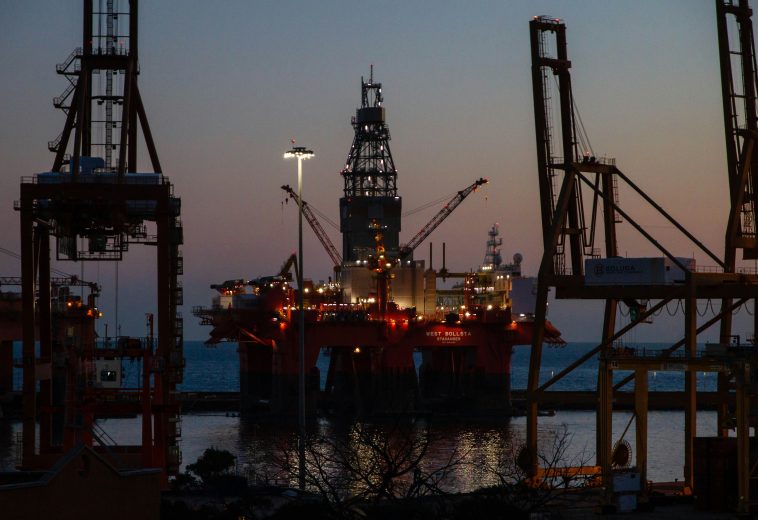
Egypt is advancing its energy strategy with renewed momentum, awarding six new natural gas exploration blocks to a consortium of international oil and gas firms. The latest agreements—comprising four offshore blocks in the Mediterranean and two onshore blocks in the Nile Delta and North Sinai—are poised to unlock over $245 million in exploration investments and the drilling of at least 13 exploratory wells in the coming years.
This move reflects Egypt’s long-term commitment to expanding its natural gas production capacity, attracting global energy capital, and reinforcing its status as a leading energy hub in the Eastern Mediterranean.
READ ALSO: Inside Russia’s Proposal for a Tri-Continental Oil and Gas Partnership
Strengthening Partnerships to Unlock New Reserves
The six awarded blocks were part of an international bidding process facilitated through the Egypt Upstream Gateway (EUG)—a digital platform designed to modernise the country’s exploration landscape and improve transparency in its licensing regime. This initiative is part of Egypt’s wider effort to position itself as an attractive destination for upstream investment amid growing regional demand for gas and declining domestic output.
Several global industry leaders have emerged among the awardees:
• Chevron Egypt and BG (Shell) have secured the North Samian and Northwest Atoll offshore blocks, with plans to drill two wells in each.
• IEOC Production (Eni) was awarded the North Ras El Tin Offshore Block and will drill three exploratory wells.
• Cheiron Egypt will undertake three wells in the East Alexandria Offshore Block.
Onshore, in a parallel effort to sustain domestic production:
• IPR will drill two wells in the North Tanta Block (Nile Delta).
• Perenco has been granted the El Fayrouz Block in North Sinai, where it will carry out a 3D seismic survey and drill one exploratory well.
These developments are part of Egypt’s larger ambition to extend the life of its natural gas reserves, unlock new offshore basins, and build upon the success of monumental finds such as the Zohr field, which has already reshaped the region’s energy narrative.
A Long-Term Strategy for Energy Sovereignty and Investment
The newly awarded contracts complement a wider policy by Egypt’s Ministry of Petroleum and Mineral Resources to deepen its upstream footprint and attract consistent international investment. Through the EUG platform, the government continues to offer additional opportunities—including access to undeveloped offshore discoveries.
Future licensing rounds are ongoing, with bid submission deadlines approaching. These efforts are helping Egypt sustain a diversified pool of investors and build out its energy production portfolio in an increasingly competitive market.
Earlier in the year, Egypt also awarded seven new exploration and production blocks under the Egyptian General Petroleum Corporation (EGPC) framework. These blocks are expected to lead to the drilling of 17 new exploratory wells, further contributing to long-term energy security and resilience.
Responding to Production Challenges with Exploration Growth
Egypt’s push for new exploration has become increasingly urgent in light of declining output. According to data from the Joint Organisations Data Initiative (JODI), the country’s natural gas production fell to 3,485 million standard cubic metres by April 2025, down significantly from its peak of 6,133 million in March 2021.
This drop—coupled with rising domestic consumption and export commitments, particularly to Europe and regional allies—has placed renewed pressure on Egypt to replenish its reserves and avoid potential supply shortfalls.
The latest round of exploration awards is designed to address these challenges, with a focus on both replenishing reserves and sustaining export capacity, particularly via Egypt’s well-established liquefied natural gas (LNG) infrastructure.
Building a Resilient and Integrated Energy Ecosystem
Egypt’s broader energy roadmap continues to evolve beyond exploration. Core pillars of the country’s long-term energy strategy include:
• Modernising upstream exploration and drilling technologies
• Expanding midstream and downstream processing capabilities
• Integrating infrastructure with regional gas networks and pipelines
• Strengthening export routes through LNG terminals and international agreements
Situated at the crossroads of Africa, the Middle East, and Europe, Egypt’s geographic position amplifies its strategic value as a regional gas conduit. With deepwater exploration activity expanding and production infrastructure receiving upgrades, the country is well-positioned to navigate future energy market shifts while serving as a reliable supplier to domestic and international partners.
An Evolving Role in Regional and Global Energy
Egypt’s upstream expansion is more than a domestic priority—it is integral to regional energy dynamics. The country’s proactive exploration policies, combined with digital auction models like the EUG, are redefining how resource-rich states can modernise their industries and attract capital in a rapidly transitioning energy world.
As the energy transition accelerates globally, Egypt remains committed to balancing sustainability with resource development, focusing on high-efficiency, lower-emission projects, while still ensuring reliable gas supply for economic growth.
Looking Ahead
Egypt’s approach to energy development—combining international collaboration, digital bid platforms, and aggressive exploration—demonstrates resilience and adaptability in a shifting global energy landscape. The country’s ongoing efforts to expand exploration and production are poised to strengthen its economic stability, enhance regional energy security, and position Egypt as a key player in the Eastern Mediterranean.
With additional blocks available for development and infrastructure projects underway, Egypt is building a robust foundation for future growth, ensuring it remains a vital hub for energy resources and a model for resource-driven development in the region.