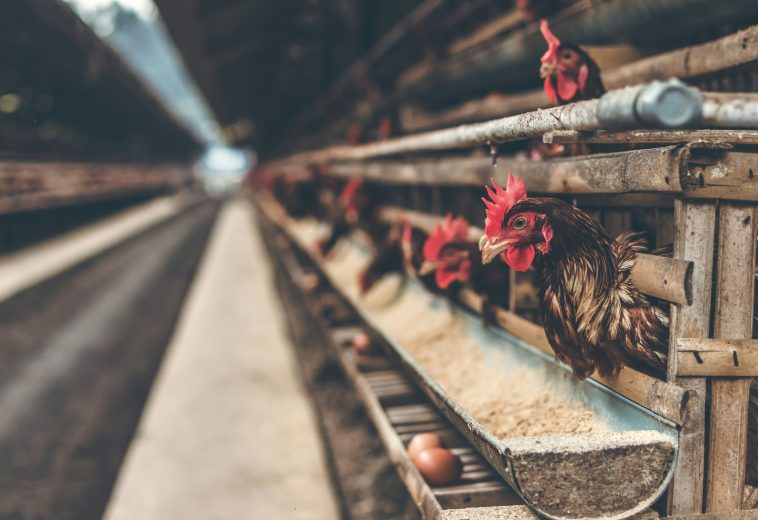
The renewed cooperation between Gabon and Senegal marks a strategic pivot towards self-sufficiency in poultry production. At its core is a clear objective: to replace long-dominant imports with a competitive and resilient domestic industry.
Gabon’s Agriculture Minister, Pacôme Kossy, describes the partnership as a practical learning mission. Senegal’s success following its 2005 poultry import ban offers a tested blueprint. More broadly, the initiative reflects Gabon’s ambition to advance economic sovereignty, scale up industrial agriculture, and reduce dependence on extractive sectors.
READ ALSO: Kenya’s Agriculture Secures Landmark China Trade Deal
The urgency of reform is underscored by Gabon’s heavy reliance on imports. Between 2019 and 2023, poultry imports averaged nearly 85,000 tonnes annually, while domestic production exceeded just 4,000 tonnes—less than 5% of national consumption. With an import bill of $104 million in 2024, this dependency exposes the country to foreign exchange pressures, supply chain disruptions, and food security risks. The planned 2027 import ban is therefore not symbolic, but structural.
Senegal’s transformation was built on three key pillars: a firm import ban, the development of an integrated value chain from feed production to processing, and strong industry coordination. Over two decades, this approach delivered a fivefold increase in output. For Gabon, replicating this success will require more than policy alignment. It must simultaneously invest in feed production, veterinary and biosecurity systems, farmer financing, and cold-chain logistics. Building a competitive poultry industry is not a single reform—it is a system-wide undertaking.
Gabon has begun translating policy into action through targeted investments and partnerships. An $83 million collaboration with Groupe Graine International aims to develop farms, hatcheries, and an industrial slaughterhouse. Additional partnerships with Turkish firms are expected to strengthen feed production capacity. A training programme targeting 40,000 workers and financing schemes offering between 250 and 400 million CFA francs to local producers are also underway. At the centre of this ecosystem is Société Meunière Agricole du Gabon, which already produces around 40 million eggs annually—evidence that scaling is achievable with the right infrastructure.
The strategic importance of poultry extends beyond agriculture, which contributes approximately 6.15% to Gabon’s $20.39 billion GDP. While economic growth is projected at 2.8% in 2025, the real value of this sector lies in its multiplier effects. A stronger domestic poultry industry can reduce import dependence, conserve foreign exchange, create jobs across the supply chain, stimulate allied industries, and enhance food security through greater price stability. In this sense, poultry is not just an agricultural activity—it is an economic catalyst.
Gabon’s push for self-sufficiency follows decades of stagnation. Cheap imports from Brazil, the United States, and Europe, combined with weak protective policies and underdeveloped infrastructure, left local producers unable to compete. Previous reforms failed because they addressed isolated segments rather than the system as a whole. The current approach marks a departure—embracing a coordinated, industrial strategy and selective protectionism, while mirroring successful agricultural transformations elsewhere in Africa. It also positions poultry as a strategic lever for economic resilience and regional influence, particularly within the Economic Community of Central African States (ECCAS).
The strategy rests on five interconnected pillars: large-scale import substitution driven by the 2027 ban; development of industrial infrastructure, including farms and feed mills; strategic partnerships with countries such as Senegal, Algeria, and Turkey; human capital development across the sector; and eventual expansion into regional markets.
However, significant challenges remain. High production costs—especially for feed, energy, and logistics—pose a structural constraint. Biosecurity risks, highlighted by the 2024 H5N1 outbreak, remain a concern. Infrastructure gaps in cold-chain and transport systems persist, while financing limitations could restrict smallholder participation. Gabon’s relatively small domestic market also presents scale constraints. As one observer aptly notes, policy can create opportunity, but only infrastructure can sustain it.
Ultimately, Gabon’s poultry reform represents a critical test of its ability to execute complex economic transformation. The partnership with Senegal provides a roadmap, ongoing investments offer momentum, and the impending import ban creates urgency. Yet success will depend on delivering results across every link of the production system.
Looking ahead, opportunities in vertical integration, regional exports within ECCAS, agri-tech adoption, and value-added processing could accelerate progress. If effectively implemented, Gabon’s strategy could redefine its agricultural landscape—and position the country as a model for food sovereignty in Central Africa.