Africa is beginning to rethink one of its most persistent development assumptions: that spending on health is primarily a social cost rather than an economic investment.
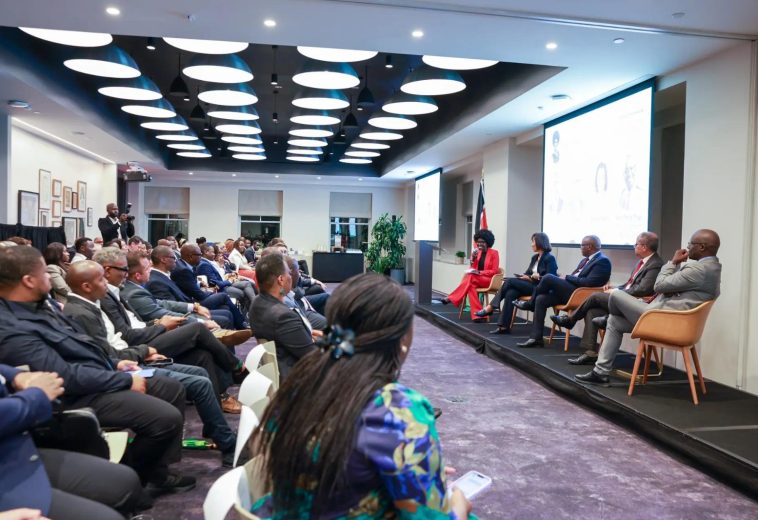
That shift was highlighted in late August when the United Nations Economic Commission for Africa (ECA) launched a new initiative to help governments measure the wider economic value of health spending. Officials from Botswana, Ethiopia, Sierra Leone and Togo participated in a five-day workshop designed to help health ministries and statistical offices demonstrate how investment in health affects employment, households, businesses and the wider economy.
READ ALSO: Rethinking Healthcare: Africa’s New Engine of Economic Resilience
The initiative is significant because health systems are closely connected to economic productivity. Healthy workers are more likely to remain in employment, children who receive adequate healthcare are better positioned to learn, and families protected from high medical bills have more resources available for food, education and investment.
The cost of failing to make these investments is substantial. Across Africa, out-of-pocket payments remain a major source of health financing. The WHO African Region reports that household payments account for an average of 35% of current health expenditure, well above its 20% benchmark. Around 385 million people are pushed into or deeper into poverty each year because of out-of-pocket health spending.
This makes health financing an economic issue as much as a public-health concern. When families are forced to sell assets, borrow money or reduce spending on essentials to pay medical bills, the consequences extend beyond the household and weaken broader economic resilience.
The ECA initiative is therefore focused on developing health-focused Social Accounting Matrices. These tools can help governments trace how health spending moves through an economy—from government budgets and health providers to households, businesses and employment. Better measurement can strengthen the case for treating health as productive infrastructure rather than a competing budget priority.
Prevention provides a particularly strong example of this economic logic. Immunisation, for instance, reduces healthcare costs, protects household incomes and enables parents to remain economically active. Gavi estimates that every US$1 invested in immunisation programmes in supported countries during 2021–2030 generates about US$21 in savings from healthcare costs, lost wages and productivity losses. When the broader value of lives saved and healthier lives is included, the estimated return rises to US$54.
Africa also has an opportunity to improve the efficiency of the money already being spent. Stronger procurement systems, better health data, digital financial management and transparent budgeting can help governments identify waste and direct scarce resources towards areas with the greatest impact.
The financing challenge is becoming more urgent as external assistance declines and debt pressures increase. ECA has warned that rising debt payments are crowding out health spending in some of Africa’s poorest countries. The WHO has similarly called for stronger domestic resource mobilisation and more efficient use of existing resources as part of its new 2026–2035 strategy for sustainable health financing in Africa.
For governments, the message is clear: health spending should be judged not only by what it costs today, but also by what it enables tomorrow.
A stronger health system can support a healthier workforce, protect household incomes, improve educational outcomes and strengthen national resilience against future crises.
Africa therefore needs to move from asking how much health costs to asking what health investment returns.
If governments can measure those returns more accurately and direct funding towards high-impact interventions, health budgets can become instruments of economic transformation. The emerging approach is not simply about spending more on health. It is about understanding health as an investment in Africa’s people, productivity and long-term prosperity.