

Every year, vast quantities of food are lost before reaching consumers. Across Africa, crops often spoil because farmers lack reliable refrigeration, adequate storage facilities and efficient transport networks. In the United States, food waste occurs throughout the supply chain, from farms and supermarkets to restaurants and households. Practical technologies and international cooperation offer opportunities to preserve food, protect the environment and improve farmers’ incomes.
One promising solution is solar-powered cold storage. Small, modular cooling units installed near farms and markets can help growers preserve fruits, vegetables, dairy products and fish without relying entirely on unreliable electricity supplies or expensive diesel generators. Where inadequate refrigeration contributes significantly to post-harvest losses, these systems can help farmers retain more of their produce for sale. In the United States, solar-powered refrigeration can also support small farms, food banks and local distribution networks while reducing dependence on conventional energy sources.
The most effective systems are designed around local needs. Farmers’ cooperatives can share cold-storage facilities, pay affordable fees and coordinate transportation to markets. American engineers, African entrepreneurs and development organisations can collaborate to produce durable equipment that is easy to maintain and suitable for local climatic conditions. Training local technicians would create employment, strengthen technical capacity and reduce dependence on distant service providers.
Better packaging offers another opportunity to reduce food loss. Produce can be bruised, crushed or exposed to excessive heat and moisture during transportation, making it unsuitable for sale or consumption. Affordable crates, breathable bags and reusable containers can protect food while reducing reliance on single-use plastics. Researchers are also developing plant-based coatings that slow spoilage and extend the shelf life of selected fruits and vegetables.
Developing effective packaging requires cooperation between manufacturers, researchers and farmers. A container designed for apples in California, for example, may not adequately protect tomatoes transported over rough roads in Kenya or Ghana. Farmers understand the practical challenges of harvesting, handling and transporting produce, while researchers can assess packaging performance, cost and environmental impact. Manufacturers can then scale up solutions that demonstrate clear benefits.
Food preservation and processing are equally important. Drying, fermenting, smoking and canning can extend the usability of food, while processing surplus crops into sauces, juices and flour can create additional sources of income. Affordable solar dryers, for instance, can help farmers preserve mangoes, tomatoes, herbs and fish without relying on costly fuel. These methods must be supported by appropriate hygiene, moisture control and food-safety standards to ensure that preserved products remain safe for consumption.
Small food-processing businesses can also extend selling periods, reduce seasonal losses and create jobs, particularly for women and young people. Partnerships between American food companies and African producers could support access to technology, finance, training and wider markets. Such arrangements should offer fair commercial terms, strengthen local businesses and ensure that the benefits of innovation reach the farmers and communities involved.
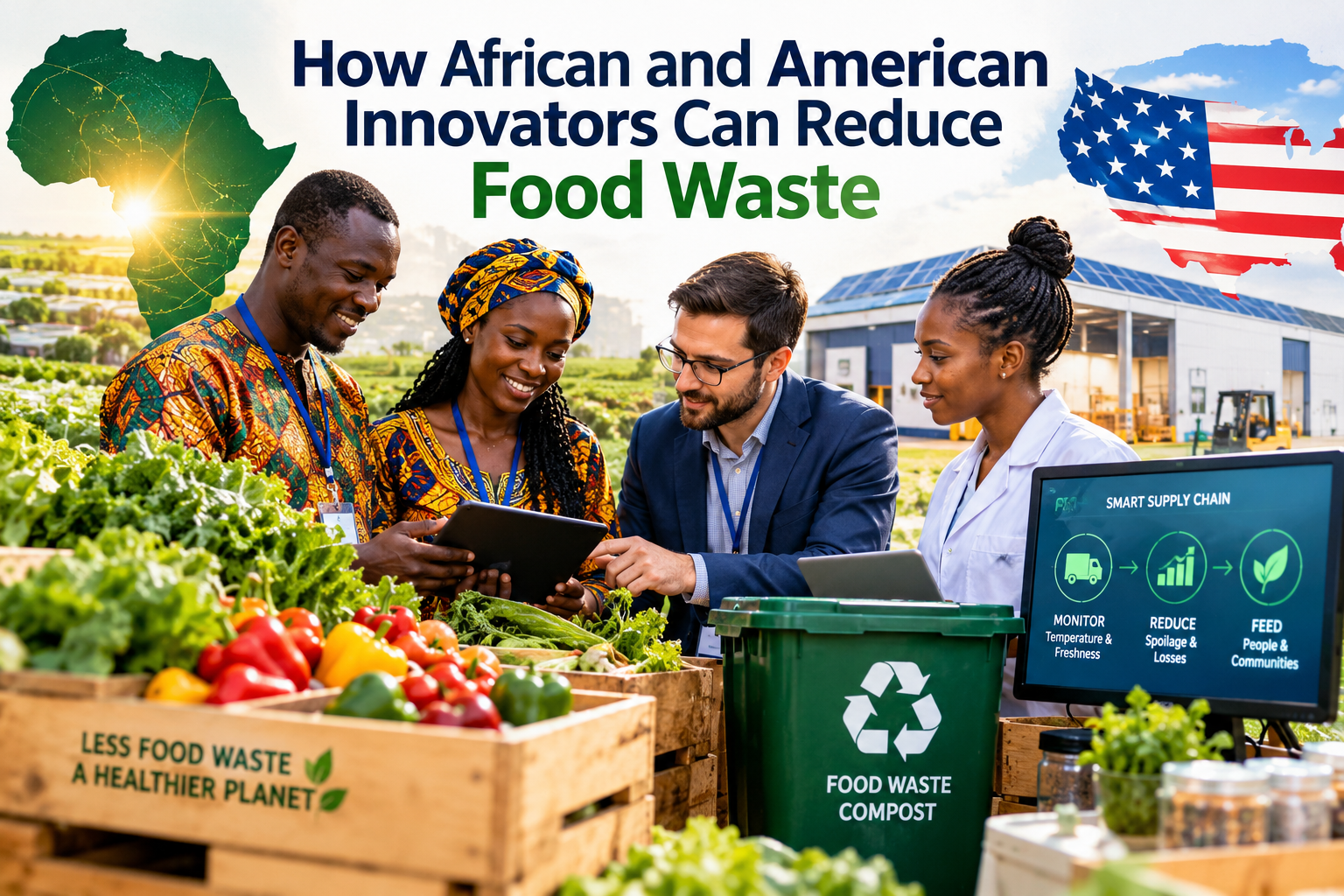
Governments have an important role to play. Better roads, reliable electricity, accessible financing and effective food-safety standards can make it easier for farmers and small businesses to invest in preservation technologies. Universities and research institutes can help develop and test affordable solutions, while supermarkets and food distributors can expand their purchases of cosmetically imperfect produce that remains safe and suitable for consumption.
Reducing food waste also requires changes in consumer behaviour. Clearer date labels, appropriate package sizes and public education can help households distinguish between quality-related dates and food-safety warnings. However, consumers must follow relevant food-safety guidance because the meaning of date labels varies by product and jurisdiction. Restaurants, supermarkets and food manufacturers can also work with food banks and community organisations to redistribute suitable surplus food before it becomes waste.
Also read: How Maps Reshape American Politics In World
The benefits extend beyond environmental protection. When less food is lost, farmers can sell more of what they produce, households can make better use of their food budgets, and communities become more resilient to supply disruptions and climate-related shocks. Preventing avoidable food loss can also reduce the resources wasted in producing, transporting and disposing of food that is never consumed.
African and American innovators already have practical approaches to build on, from solar-powered cooling and improved packaging to safe preservation and food redistribution. The priority is to adapt these solutions to local conditions, invest in infrastructure and measure their results. Through fair partnerships, applied research and sustained investment, both continents can strengthen their food systems, improve livelihoods and ensure that more of the food they produce reaches the people who need it.