As diesel and petrol prices surged across global markets, the Ethiopian government moved swiftly to shield its economy from inflationary fallout. Authorities introduced emergency fuel subsidies aimed at protecting households, businesses, and the country’s transport networks from rising energy costs.
Finance Minister Ahmed Shide confirmed that the government had expanded price support to stabilise domestic fuel markets despite escalating global prices. “To shield citizens from skyrocketing global prices, the government has significantly increased subsidies,” Shide said.
READ ALSO: Oil Price Rally Gives Algeria Fiscal Breathing Space for Investment
The move highlights a core dilemma in Ethiopia’s economic policy: balancing fiscal discipline and reform commitments with the immediate need to maintain economic stability. Energy policy has increasingly become a central pillar of the country’s development strategy, intersecting with industrialisation, inflation control, and regional economic stability across the Horn of Africa.
The latest intervention was triggered by a sharp escalation in geopolitical tensions following military exchanges involving the United States, Israel, and Iran. The conflict disrupted shipping routes through the Strait of Hormuz, a critical artery through which a significant share of global crude oil and refined products flows.
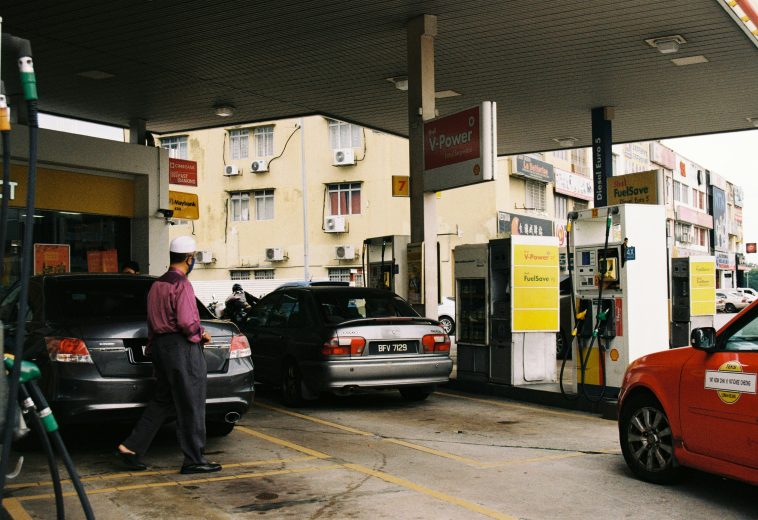
For Ethiopia, which imports nearly all of its refined petroleum products, disruptions along this corridor quickly translate into higher import costs. As global fuel prices surged, diesel prices rose from $0.34 to $1.53 per litre. To contain the domestic impact, the government introduced substantial subsidies, capping diesel at $0.90 per litre and petrol at $0.85. By absorbing part of the price increase, authorities sought to shield transport costs and food prices from the inflationary pressures of international markets.
Fuel subsidies have therefore become a crucial fiscal tool for cushioning economic shocks. In 2025 alone, the government allocated roughly 70 billion birr to maintain price stability. Yet with Ethiopia’s annual fuel import bill exceeding $4 billion, keeping pump prices below international levels has widened fiscal pressures.
This policy reflects a delicate balancing act. International institutions such as the IMF have repeatedly urged Ethiopia to scale back subsidies to improve fiscal sustainability. However, officials remain cautious, aware that sudden subsidy removal could trigger inflation spikes and social unrest in a country of more than 120 million people. As a result, the government has often expanded subsidies during crises rather than rapidly phasing them out.
Despite these fiscal pressures, Ethiopia’s economy continues to demonstrate strong momentum. GDP grew by 7.2% in 2023 and 8.1% in 2024, with growth projected at about 7.2% in 2025. Under Prime Minister Abiy Ahmed, the government has been pursuing a wide-ranging reform agenda aimed at opening the state-dominated economy, liberalising sectors such as telecommunications and logistics, adjusting exchange rates, and encouraging greater private investment in infrastructure.
International support for this reform trajectory was reaffirmed in early 2026 when the IMF approved $261 million in financing assistance. Against this backdrop, fuel subsidies encapsulate the broader challenge facing Ethiopia’s economic strategy: advancing structural reforms while maintaining social protection in a rapidly growing but vulnerable economy.
Historically, fuel subsidies have played a stabilising role in Ethiopia’s economic management. Following the civil war in the 1990s, controlled fuel pricing helped contain inflation and maintain affordable transport costs in a country heavily dependent on road logistics. During the developmental-state era of the 2010s, subsidies also helped stabilise input costs for large infrastructure projects and supported the competitiveness of emerging manufacturing sectors.
Yet the system also carries significant long-term costs. Fuel subsidies place pressure on government finances, strain scarce foreign currency reserves, and often disproportionately benefit higher-income households. In response, authorities have begun pursuing a dual-track approach: gradual subsidy reform alongside a long-term shift toward energy independence.
Recent measures include incremental fuel price increases in 2025 to ease fiscal pressure, policies discouraging fossil-fuel vehicle imports in favour of electric vehicles, and major investments in renewable energy. Projects such as the Grand Ethiopian Renaissance Dam are central to Ethiopia’s ambition to become a regional power exporter.
Ultimately, Ethiopia’s ability to navigate this transition will shape its economic future. Success in domestic oil exploration or transport electrification could significantly reduce vulnerability to global price shocks. By leveraging its vast renewable energy potential and introducing more targeted digital subsidy systems, Ethiopia hopes to transform itself from a fuel-importing economy into a regional energy hub.
The country’s effort to balance immediate social protection with long-term fiscal reform offers a compelling case study for how developing economies can manage energy volatility while pursuing structural transformation.