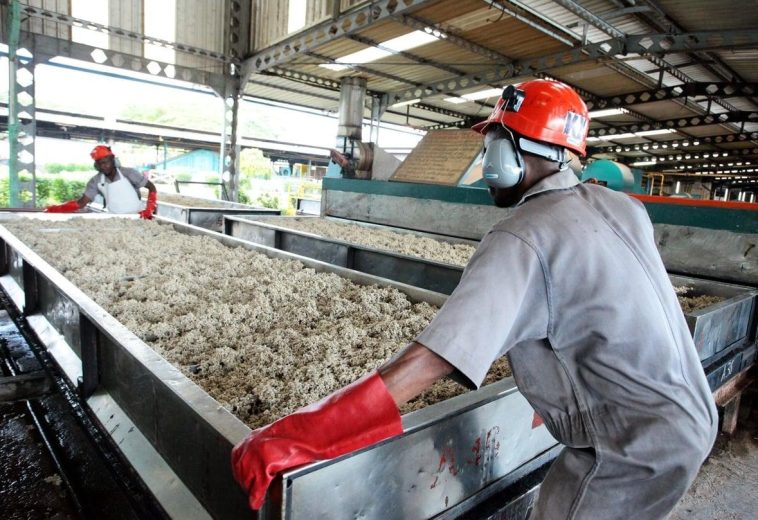
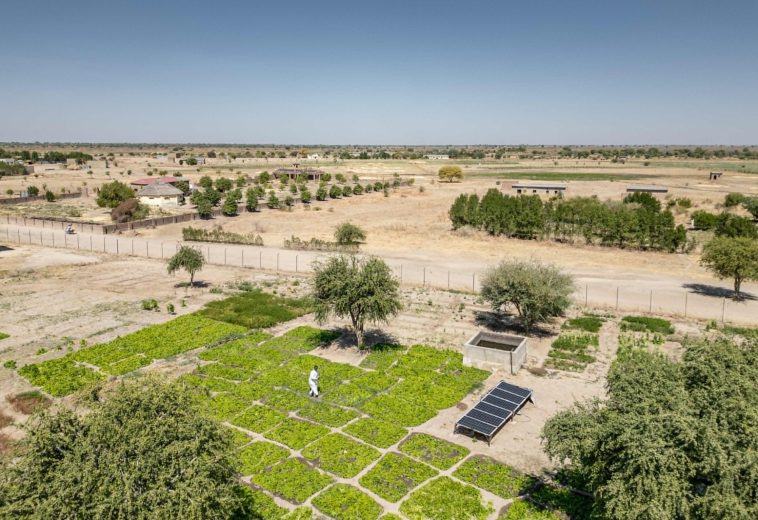
Africa stands poised for extraordinary economic transformation, abundantly blessed with critical minerals such as lithium, cobalt, copper, manganese and rare earth elements. The continent is helping to power the world’s transition to green energy, electric mobility and advanced technology. With over 60% of global reserves, Africa holds the key to tomorrow’s industries. By shifting boldly from raw exports to in-country value addition, the continent can unlock significant opportunities for industrial growth, job creation and technological self-reliance.
The DRC produces over 70% of the world’s cobalt but earns only $1 billion from this trade, while the lithium-ion battery market that depends on cobalt exceeds $60 billion annually. This extraction without beneficiation represents a major loss of potential value for African economies, with much of the wealth created further along the supply chain being captured outside the continent.
READ ALSO: Africa’s Mineral Advantage: Building Regional Processing and Manufacturing Capacity
UNCTAD documents that African nations export lithium concentrate at approximately $1,500 per tonne, then import processed lithium carbonate at $15,000 per tonne, and the final EV battery at over $150,000 per tonne equivalent. This represents a 100-fold increase in value occurring largely outside the continent. Africa supplies many of the essential minerals needed for the global energy transition, yet remains one of the regions least able to afford the products that transition produces.
When the DRC suspended cobalt exports in 2025, global prices spiked briefly but adjusted within months as stockpiles and alternative sources absorbed the shock. The IMF confirms that African nations collectively control a significant share of critical minerals and have the potential to influence global markets, but that power remains largely untapped because coordination mechanisms are weak. The formation of the Africa Minerals Strategy Group is therefore an economic necessity: the difference between being a price-taker and a price-maker could come down to greater unity.
Zimbabwe’s lithium export ban has attracted over $3 billion in processing-plant investments, including Chinese-funded concentrators and a lithium carbonate plant, according to the country’s Ministry of Mines. However, Indonesia’s earlier nickel ban, while helping to create a $30 billion downstream industry, required five years of sustained government support and also triggered WTO complaints. Brookings warns that without simultaneous investment in energy, regulatory clarity and workforce training, export restrictions could simply shift mining activity elsewhere.
Smelting and refining are extraordinarily energy-intensive. Producing one tonne of refined copper requires approximately 6,000 kilowatt-hours of electricity. McKinsey calculates that full beneficiation of DRC and Zambian copper production would require 10 gigawatts of new power generation, equivalent to Kenya’s entire installed capacity. Renewable energy is therefore not simply an environmental preference but an economic necessity, offering a potentially faster route to the additional energy supply that mineral processing requires.
Mineral concentrate moving from the DRC to a potential processing facility in Zambia currently faces barriers that add 15–20% to costs, making domestic processing less competitive than shipping the material to China. The World Bank projects that AfCFTA implementation could reduce intra-African trade costs by 16%, helping make regional value chains more competitive. The ODI calculates that AfCFTA-enabled regional processing hubs could capture $50 billion annually by 2040.
Fewer than 5,000 African engineers hold advanced qualifications in metallurgy and mineral processing, compared with over 100,000 in China, according to the African Union’s Scientific, Technical and Research Commission. Africa’s universities produce graduates in geology and mining engineering, but specialised disciplines such as pyrometallurgy and hydrometallurgy remain limited in many curricula. Without skilled metallurgists and mineral-processing specialists, smelters and refineries cannot operate effectively, regardless of the level of investment.
Building processing capacity for just 25% of Africa’s critical mineral production would require $150 billion in investment, equivalent to the continent’s total annual foreign direct investment, according to the African Development Bank. Traditional commercial lending will not fund many of these projects without credit enhancement, sovereign guarantees or blended-finance structures. The proposed CIEAD financing mechanisms are therefore essential to closing this gap.
The US Inflation Reduction Act provides tax credits for electric vehicles using minerals from countries with US free-trade agreements, a status the DRC and Zambia are negotiating. China’s Belt and Road Initiative has invested heavily in African mining but has historically placed greater emphasis on extraction than local processing. This competition creates an opportunity for Africa: CIEAD processing hubs can seek financing and partnerships from whichever international partners offer the most favourable terms, while negotiating stronger commitments on technology transfer and local value addition.
Indonesia’s experience demonstrates that resource nationalism can work when backed by consistent policy, infrastructure investment and strategic patience. Africa’s challenge is maintaining that consistency across 54 nations. If successful, the continent could capture $100 billion annually in additional value by 2040, creating millions of high-skilled jobs and positioning Africa as a global centre of green industrial production.
The minerals themselves are not the constraint. The greater challenge is turning Africa’s resource advantage into lasting economic value through vision, unity and effective execution.