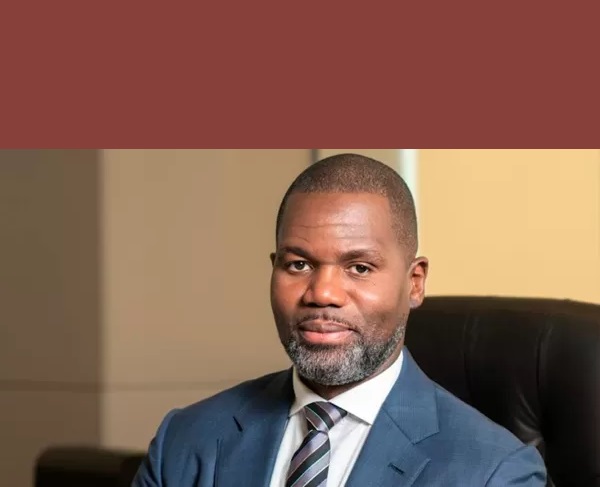
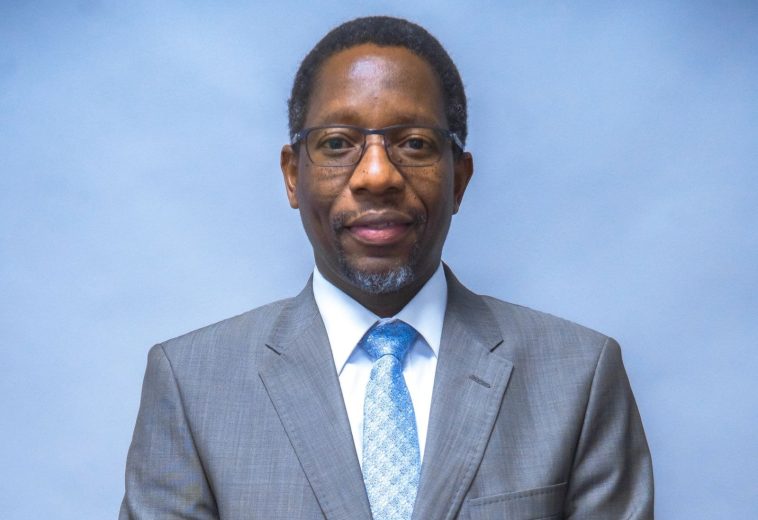
In capital-intensive economies, the individuals who shape outcomes are often not those associated with resource ownership, but those who control execution. In Mauritania, where energy, mining and maritime industries form the backbone of export revenue, logistics has become a decisive economic lever. Mohamed Abdellahi Ould Yaha has built his business relevance around that reality.
As president and founder of Maurilog Group and chairman of Maurinvest Group, Yaha operates in a segment of the economy where reliability, asset depth and standards compliance carry more weight than visibility. His companies sit behind some of Mauritania’s most significant industrial projects, providing the operational infrastructure that allows international capital to function locally.
READ ALSO: South Africa’s Business Unity Under Khulekani Mathe: Advocacy, Infrastructure, and Investor Confidence
Yaha’s business formation reflects a technically grounded approach rather than a speculative one. Trained at France’s École Nationale Supérieure de Mécanique, he returned to Mauritania and entered the fisheries sector at a time when local participation in international export markets was limited.
Through the establishment of MIP Seafood, he led the first Mauritanian company to meet European Union standards for processed seafood exports, enabling direct access to European markets. Backed by financing from the European Investment Bank, the venture required early adoption of traceability systems, quality controls and cold-chain logistics that exceeded domestic norms.
That experience would inform later investments. It demonstrated that in smaller markets, competitiveness is less about scale and more about institutional alignment with international standards.
Maurilog and the Economics of Industrial Reliability
The launch of Maurilog marked a structural shift in Yaha’s business strategy, from exporting products to enabling industrial systems. In extractive and offshore industries, logistics is not a support service; it is an economic determinant.
Maurilog has developed into Mauritania’s leading integrated logistics provider for oil, gas and mining operations, offering end-to-end project freight management, marine logistics, heavy lifting, customs brokerage and supply-base operations. Its client portfolio has included international energy and mining operators active in offshore gas exploration and large-scale mining.
Central to this positioning is asset ownership. Maurilog operates a fleet of over 120 modern pieces of equipment, most of which are under five years old and fully certified. This includes cranes capable of heavy industrial lifts, forklifts, mafi trailers, tug masters, tankers, tractors and a range of industrial trucks and vehicles. The ability to deploy and control this equipment internally reduces operational risk and dependency on third-party contractors, a key consideration for multinational operators working to tight timelines.
Complementing the fleet is a logistics footprint of 126,268 square metres of yards and facilities, including 16,000 square metres of warehouse space and 3,000 square metres of office infrastructure. Located within the port, with direct access to the jetty and dedicated berths, the site enables faster cargo turnaround and direct offshore support. A training centre embedded within the facility reinforces operational continuity by aligning workforce development with active projects.
Positioning Within West Africa’s Energy Expansion
Mauritania’s emergence as a gas producer, particularly through the Greater Tortue Ahmeyim LNG project, has raised the strategic importance of domestic logistics capacity. The project’s first LNG exports in 2025 placed Mauritania on the global gas map, introducing long-term industrial and fiscal implications.
While upstream ownership attracts headlines, project execution determines viability. Maurilog’s role in supporting offshore exploration and production activities reflects how local companies can integrate into global energy value chains without holding equity in the resource itself.
Its exclusive partnership with DB Schenker further connects Maurilog’s domestic operations to an international freight network, allowing it to meet the procurement, safety and compliance expectations of global operators. Triple ISO certification across quality, environmental and occupational safety standards reinforces this alignment.
Local Content Through Capability, Not Mandate
Across Africa, local content policies often struggle to translate into meaningful participation. Maurilog’s model addresses the issue from a commercial rather than regulatory angle.
By investing in equipment, certified systems and trained personnel, the company offers international clients a local service provider that meets global standards by default. This reduces the cost and risk of operating in Mauritania while anchoring more industrial value domestically.
The approach has allowed Maurilog to sustain relevance across oil, gas and mining projects, including logistics support for major mining operations, without relying on policy protection or preferential treatment.
Education as Workforce Strategy
Yaha’s more recent focus on education and vocational training reflects a recognition of labour constraints rather than a shift in mission. Through edUKate Mauritania, he has supported the development of a training platform offering internationally recognised certifications in health, safety and environment, alongside business English programmes tailored to industrial employment.
By situating the academy within Maurilog’s operational ecosystem, training remains directly linked to market demand. This reduces the skills mismatch that has historically limited local participation in capital-intensive sectors and supports the long-term sustainability of Mauritania’s industrial workforce.
Regional Reach and Strategic Optionality
Maurilog’s expansion into Senegal and its logistical links through the Canary Islands point to a regional strategy aligned with the cross-border nature of modern energy and infrastructure projects. As West African supply chains become more integrated, logistics providers capable of operating across jurisdictions gain structural advantage.
Looking forward, Mauritania’s positioning as a potential green hydrogen hub introduces new variables. While large-scale hydrogen projects remain capital- and policy-dependent, Maurilog’s early positioning to support renewable and hydrogen logistics suggests an effort to maintain relevance as energy systems evolve.
Measured Influence in a Capital-Driven Economy
Mohamed Abdellahi Ould Yaha’s business record reflects a form of influence built on assets, execution and standards rather than public narrative. By focusing on infrastructure that enables investment rather than on ownership of resources, he has positioned Maurilog as part of the machinery that allows Mauritania’s energy and industrial ambitions to function.
In economies where execution risk is high and operational credibility matters, that positioning carries enduring value. It is a quieter form of business leadership—one measured less by visibility than by whether projects move, ships dock and capital stays productive.