“We need strong leadership from our governments. We need serious investment from the private sector as well as multilateral institutions. And we need catalytic philanthropy.” — Crystal Rugege, Managing Director, Rwanda Centre for the Fourth Industrial Revolution
Fourth Industrial Revolution
Africa stands at a defining moment in its digital journey. Artificial intelligence is increasingly influencing healthcare, education, agriculture, finance, public administration and entrepreneurship. But the question is not simply whether Africa will adopt AI. It is whether the continent will have the infrastructure, talent and institutions required to shape it.
READ ALSO: Africa’s Data Economy: Building the Infrastructure for an AI-Powered Future
Rugege’s observation captures the challenge. Africa’s AI transformation cannot depend on government alone or be left entirely to private capital. It requires governments to create enabling policies, businesses to invest in innovation, universities to develop talent and philanthropy to provide catalytic capital.
Africa’s digital economy is projected to reach $1.5 trillion by 2030, while AI could add another $1.5 trillion if Africa captures 10% of the global AI market. Yet opportunity without investment can quickly become another development gap.
For African leaders, the message is simple: AI must be treated as a development priority, not simply a technology trend.
From Charity to Catalytic Capital
Traditional philanthropy has focused on immediate social needs such as healthcare, education and poverty reduction. AI is expanding that mandate.
Foundations are increasingly providing catalytic capital to unlock systems, markets and capabilities. Africa could require 230 million new digital jobs by 2030, while more than 650 million Africans may require digital skills training or retraining. At the same time, nine out of ten African businesses report shortages of AI expertise.
This creates an opportunity for philanthropy to finance areas where commercial investment may initially be too risky or where public resources are insufficient.
The question for modern philanthropy is therefore no longer simply how much can be given, but how effectively capital can be deployed to create lasting systems of opportunity.
Investing in the People Behind Technology
Africa’s AI transformation will ultimately depend on people. Developers, engineers, researchers, entrepreneurs, teachers and policymakers must be equipped to build technology for African realities.
The $275.7 million partnership between Carnegie Mellon University and the Mastercard Foundation is expanding advanced engineering and technology education in Africa. Such investments strengthen universities, research ecosystems and innovation pipelines while helping produce African solutions.
Africa needs AI systems capable of understanding its languages, economies, health systems, agricultural realities and cultural contexts. That requires African researchers and entrepreneurs to have the skills and resources to participate meaningfully in the development of these technologies.
Taking AI Where It Can Change Lives
Philanthropy’s greatest opportunity may be supporting applied AI that addresses problems affecting millions.
In January 2026, the Gates Foundation and OpenAI launched Horizon1000, a $50 million initiative using AI to strengthen healthcare across African countries. Beginning in Rwanda, it aims to reach 1,000 primary healthcare clinics and surrounding communities by 2028.
Education is another frontier. ADQ and the Gates Foundation announced a four-year, $40 million partnership focused on responsible AI and education technology across sub-Saharan Africa.
These investments demonstrate how philanthropy can help move AI from experimentation to practical solutions in healthcare, education and other critical sectors.
Building the Infrastructure Africa Cannot Ignore
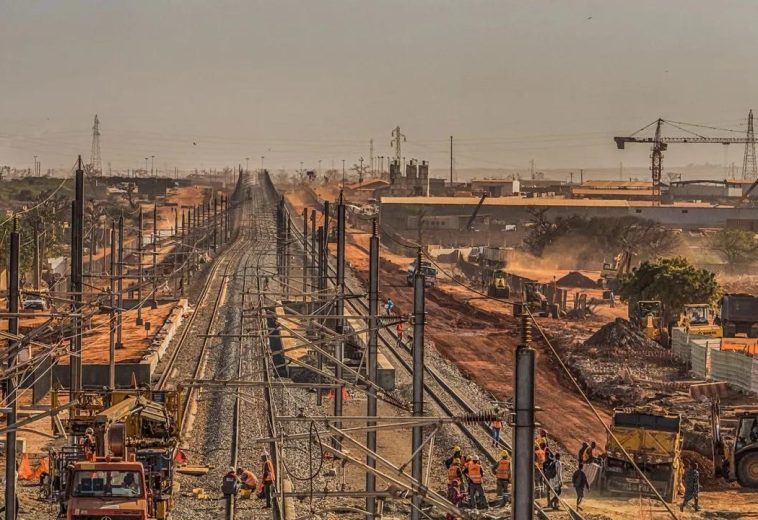
AI requires more than software. It needs reliable electricity, connectivity, cloud infrastructure, data centres and computing capacity.
Africa’s limited data centre capacity remains a significant constraint on its digital ambitions. Philanthropy can help reduce the cost and risk of infrastructure development, enabling African innovators to access the computing resources they need.
The Rockefeller Foundation’s partnership with Cassava Technologies, for example, provides AI computing capacity to African organisations supporting agriculture, healthcare and education.
Without infrastructure, Africa risks having the talent and ideas but not the systems required to scale them.
Closing the Digital Divide
The transformation cannot be inclusive while millions remain offline. Although mobile broadband coverage has expanded across sub-Saharan Africa, internet usage remains substantially lower than network coverage.
Digital inclusion requires investment in affordable connectivity, devices, electricity and digital literacy. The gender dimension is equally important. If women are excluded from digital skills, AI entrepreneurship and technology leadership, existing inequalities could simply be reproduced in the digital economy.
An inclusive AI future must therefore ensure that women, young people and underserved communities have opportunities to participate as creators, entrepreneurs and decision-makers.
Philanthropy as Africa’s Strategic Accelerator
The IMF estimates that AI could increase sub-Saharan Africa’s economic output by around 4% over the next decade if electricity, internet connectivity and digital skills improve.
Foundations cannot build Africa’s digital economy alone. Governments must establish enabling policies and infrastructure. Businesses must invest and create markets. Universities must produce talent. African innovators must lead solutions.
Philanthropy, however, can occupy an important space between these actors. It can fund experimentation, strengthen institutions, finance research and support solutions before commercial capital is ready to enter.
A Call to Build Africa’s AI Future
The next phase requires more than isolated projects. African governments must create policy environments that encourage responsible AI investment. Philanthropic organisations must direct more capital towards digital infrastructure, research, skills and African-led innovation. Businesses must build partnerships that turn promising technologies into scalable enterprises. Universities must strengthen AI education and research.
Most importantly, African leaders must ensure that philanthropy does not simply finance solutions for Africa but helps finance solutions from Africa.
The continent has an opportunity to shape an AI ecosystem that reflects its own priorities, languages, markets and development realities. That opportunity requires patient capital, strategic partnerships and long-term leadership.
Africa Must Shape Its Own AI Future
Africa’s AI future should not be defined by how quickly the continent consumes technologies developed elsewhere. It should be measured by how effectively Africans use AI to solve African problems, create African businesses and build African knowledge.
The next generation of philanthropy must therefore move from funding programmes to building systems: investing in talent, infrastructure, responsible governance, local innovation and inclusive access.
The question is no longer whether Africa can participate in the AI revolution. The question is whether Africa will have the ambition, capital and leadership to shape it.
The time to invest is now. The opportunity is African. And Africa’s digital future must be built with Africans, for Africa and by Africans.