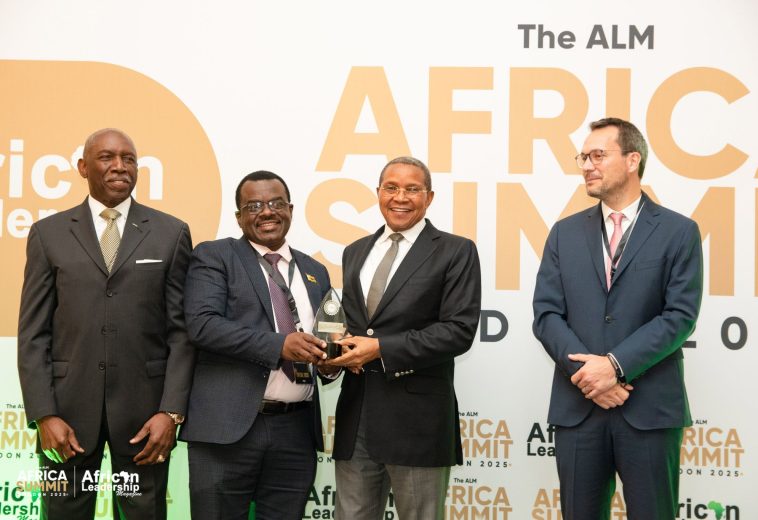
ABUJA — In Nigeria’s Presidential Villa, Aso Rock, more than policy was being shaped—it was a reimagining of Africa’s future. Dr. Ken Giami, CEO of the African Leadership Organisation and founder of African Leadership Magazine, didn’t simply moderate the closing panel of the AfINIS Forum—he set the stage for a transformative vision that may define a new era of African development.
Gathered under the theme “Harnessing Local Resources for Sustainable Development,” top officials, technocrats, energy experts, and development leaders listened as Giami issued a challenge: Africa must stop seeing its worth as buried beneath the ground and start recognising what’s above it.
“Let me put it plainly: Africa’s richest resource is not under its soil—it is above it,” Giami declared. “It is in our people, our biodiversity, our creativity, and our untapped ecosystems of value.”
His remarks cut through the standard development rhetoric to touch something deeper: a continent’s collective conscience. For many in the room, that single line captured one of the most compelling calls to action heard at any development forum in recent years.
Giami, drawing on the African Leadership Organisation’s long-standing mission to transform Africa’s narrative, systematically dismantled the outdated view that prosperity depends solely on oil, gold, or minerals. In its place, he introduced a bold 21st-century development agenda rooted in five transformational pillars:
- Human Capital over Commodities
With the youngest population in the world, Africa must stop exporting raw resources while neglecting digital education and innovation.
“We are exporting our future,” Giami warned.
- Communities as Co-Creators
He challenged governments to see local communities not as beneficiaries of development, but as partners in designing and implementing it. - Local Content as Strategy
Giami advocated for moving beyond compliance-based local content laws, urging governments to focus on value chain ownership, skill development, and equity. - Tech Meets Tradition
From Ethiopia’s AI-enabled agriculture to Tanzania’s mobile pastoralist platforms, the fusion of modern tools with indigenous knowledge was presented as a path to resilient innovation. - Climate Survival as Imperative
Rejecting externally-driven green agendas, he called for climate policies born of African urgency, owned and led by Africans themselves.
Giami didn’t stop at ideas. He presented six bold, practical policy innovations he believes can radically change Africa’s trajectory:
- Local Innovation Quotas (LIQs): Mandating a portion of major sector procurement be reserved for startups and Small and Medium-sized Enterprises (SMEs).
- Innovation-Linked Licensing (ILL): Compelling extractive industries to co-develop solutions with local entrepreneurs.
- Green Sandbox Zones: Special regulatory environments allowing rural innovators to test climate-smart technology.
- Mandatory Innovation Hubs in Resource Zones: Transforming oil and mining regions into hubs of innovation.
- Local Innovation Sovereign Funds: Allocating a portion of natural resource royalties for investment in climate-smart ventures.
- Inclusive Certification Policies: Simplifying standards to integrate informal and community-based innovators into formal value chains.
These proposals, Giami emphasised, are not theoretical. They are based on proven models from Kenya, Rwanda, Botswana, and Saudi Arabia. The challenge, he noted, is not conception—it is scale and strategic implementation.
One of the most piercing moments in his speech came when Giami addressed Africa’s need to own its narrative.
“Africa often launches resource policies without global communication plans. If you don’t tell your story, others will tell it for you—inaccurately,” he said.
He pointed to Botswana’s diamond branding and Saudi Arabia’s Vision 2030 campaign as examples of how strategy and storytelling go hand in hand in nation-building.
The impact of Giami’s remarks was further amplified by a high-level panel that brought his ideas to life. Bankole Oloruntoba of the Nigeria Climate Innovation Center, Madhurii Sarkar of Segilola Resources, and Dr Ibrahim Buba spoke passionately on translating policy into impact. Mr Omomehin Ajimijaye Silas of the Nigerian Content Development and Monitoring Board highlighted the gap between lofty legislation and grassroots delivery. Partha Ghosh of African Natural Resources emphasised that inclusive development is not just corporate responsibility—it’s a business imperative.
The conversation revealed a common theme: without local leadership and community participation, even the most visionary policies will fall flat. Sustainability must be built—not imposed—and it must be embedded in Africa’s own innovation ecosystems.
In his closing reflections, Giami struck a tone that was both philosophical and urgent:
“The sustainability we seek for Africa will not be imported—it must be cultivated from within.”
He called on leaders to abandon extractive governance and embrace generative governance—one that doesn’t merely issue permits, but unlocks possibilities.
While the AfINIS Summit came to a formal close, Giami’s remarks left many with a renewed sense of purpose. This was not a speech for applause—it was a call to action.
“Africa will not be respected for what it extracts,” Giami concluded. “It will be respected for what it creates.”