South Africa, Africa’s most industrialised economy, is entering a decisive phase in its global trade posture. The imposition of 30% tariffs on South African exports by the United States in April 2025 has rattled Pretoria’s access to one of its long-preferred markets, threatening jobs, GDP growth, and decades of preferential trade built under the African Growth and Opportunity Act (AGOA).
Yet even as relations with Washington sour, South Africa is being courted elsewhere. From Tokyo to Moscow, Beijing to New Delhi, global powers are moving swiftly to deepen ties with Pretoria. This recalibration underscores both the vulnerabilities of overreliance on Western markets and the opportunities that lie in South Africa’s strategic role as a gateway to Africa’s billion-strong consumer base.
READ ALSO: Kenya and Uganda Deepen Trade Ties as U.S. Tariffs Reshape Africa’s Global Position
The outcome of this turning point will ripple far beyond Pretoria, shaping the trajectory of Africa’s global economic prominence.
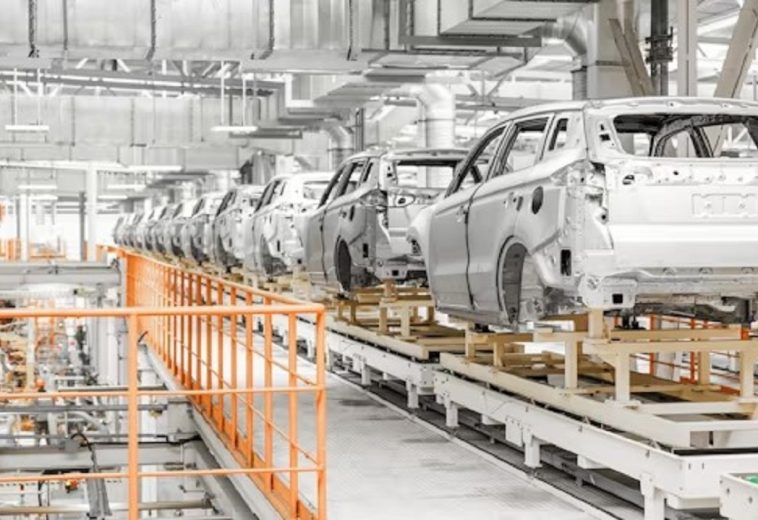
The United States’ imposition of 30% reciprocal tariffs on South African exports marks a significant rupture in what was once a cornerstone trade relationship. The measures, the steepest leveled against any Sub-Saharan African economy, directly target South Africa’s automotive, agricultural, and manufacturing sectors — industries central to its industrial base. The impact is already showing in key indicators: the Absa Purchasing Managers’ Index slipped into contraction at 49.5 in August 2025, reflecting weakened production and diminished competitiveness in one of Pretoria’s most vital markets.
The shock is rippling through corporate South Africa, with firms issuing profit warnings and scaling back outlooks. Bell Equipment has forecast earnings declines of up to 32%, while global automakers such as BMW and Ford South Africa face reduced access and eroded market share in the U.S. At the same time, order books are thinning, with new sales collapsing and overall activity levels softening. The tariffs have effectively unraveled the stability once underpinned by preferential trade terms, shaking business confidence and creating widespread uncertainty.
Beyond immediate corporate losses, the macroeconomic stakes are profound. Economists warn the tariffs could shave 0.2 percentage points off GDP growth in 2025, with knock-on effects for investment, job creation, and fiscal stability. With unemployment stubbornly above 30% and structural constraints in energy and logistics weighing on competitiveness, the added pressure is acute. Most worrying is the potential erosion of South Africa’s preferential access under AGOA, which currently supports nearly 7.5% of its exports to the U.S. If strained ties persist, Pretoria faces not only reduced market access but also the strategic imperative of pivoting toward Asia, BRICS partners, and Africa’s own continental free trade framework to safeguard its economic future.
While Washington closes doors, others are opening them wider.
At TICAD 9 in Tokyo, Japanese executives framed South Africa as indispensable to Africa’s industrial future. Toyota Tsusho highlighted Pretoria’s automotive ecosystem, linking it to AfCFTA’s continental trade potential. As Toyota’s Toshi Imai affirmed: “South Africa is a brand for Africa.”
Moscow hosted a South African delegation led by Deputy President Paul Mashatile, seeking collaboration in energy, logistics, healthcare, and agriculture. South Africa’s Transnet emerged as a key partner for Russia in port and rail upgrades. The pitch was simple but powerful: South Africa is the gateway to Africa’s billion-strong market.
Beijing’s draft protocol allowing the export of five stone fruits (apricots, peaches, nectarines, plums, and prunes) marks a breakthrough. For Pretoria, agricultural diversification through access to China’s vast consumer base helps offset the U.S. tariff blow, while strengthening South Africa’s role as Africa’s agricultural export leader.
Bilateral trade between India and South Africa has grown from $8 billion to $13 billion in five years. With $10 billion invested by more than 150 Indian companies in IT, mining, and autos, India’s private sector sees South Africa not only as a bilateral partner but as a launchpad to the wider continent.
South Africa’s positioning within BRICS+ adds another layer to this pivot. With Egypt, Ethiopia, Iran, Saudi Arabia, and the UAE joining the bloc in 2025, the group now represents nearly 25% of global GDP and two-fifths of world trade.
For Africa, South Africa’s leadership in BRICS means more than diplomatic symbolism. It provides a platform to shift the continent’s trade away from raw commodities toward value-added goods, ensuring that Africa captures a greater share of the profits from its resources.
This aligns with the AfCFTA agenda, where South Africa’s industrial base is expected to serve as an anchor for continent-wide manufacturing and export integration.
Why This Turning Point Matters for Africa
1. Diversification of Trade Partnerships
South Africa’s pivot shows the danger of overdependence on Western markets. For Africa as a whole, diversification is not optional—it is the path to resilience. By leaning into Asian, BRICS, and intra-African trade, Pretoria is modeling a continental strategy of hedging against geopolitical shocks.
2. Strengthening Africa’s Bargaining Power
Africa has often entered global trade as a fragmented actor. South Africa’s recalibration demonstrates that when one gateway economy asserts its leverage, others listen. Whether with Japan’s auto sector, Russia’s energy ambitions, or China’s agricultural imports, Pretoria is negotiating from a position of strategic value.
3. Gateway Role to a Billion Consumers
What makes South Africa indispensable is not just its own market but its role as the industrial entry point to Africa. As global players recalibrate, South Africa’s ports, logistics, and automotive plants become continental assets, ensuring that Africa’s economic story is told on its own terms.
Africa’s Trade Map is Being Redrawn
South Africa’s confrontation with U.S. tariffs may appear as a setback, but at a continental level, it reflects a broader trend: Africa is no longer defined by Western access alone.
By deepening ties with Asia, Russia, India, and BRICS+, South Africa is accelerating a structural shift in Africa’s trade geography. It is not just hedging against Washington’s tariffs—it is positioning Africa as a central node in multipolar trade flows, where no single power dominates.
For Africa’s future prominence, this turning point matters profoundly. It signals a continent steadily claiming its place as a partner of choice, not a passive participant, in the reshaping of global commerce.