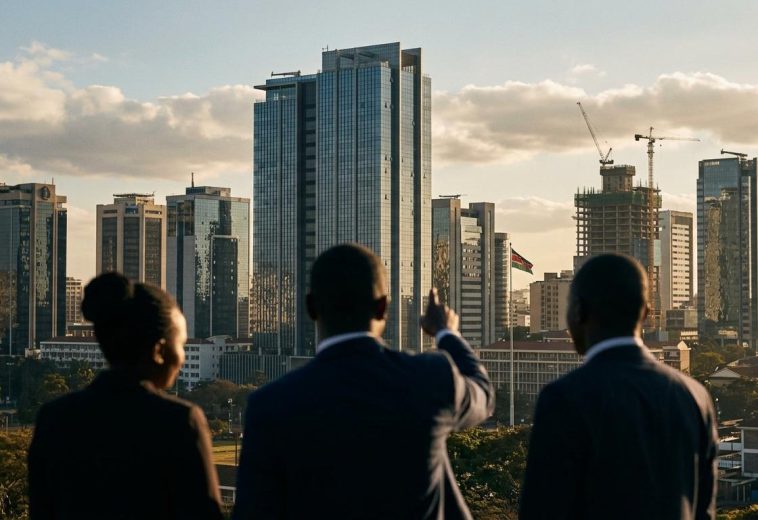
Africa is undergoing one of the fastest urban transformations in the world, reshaping the continent’s economic landscape and creating unprecedented opportunities for businesses, investors, and governments. As cities expand and incomes gradually rise, a growing middle class is driving demand for better housing, modern retail, financial services, healthcare, education, and digital technologies. This demographic shift is not only transforming consumer behaviour but also positioning Africa as one of the world’s most promising growth markets.
Today, more than 600 million Africans live in urban areas, and the continent’s cities are expected to welcome hundreds of millions more residents over the coming decades. According to United Nations projections, Africa’s urban population is set to nearly double by 2050, making it the fastest-urbanising region globally. Cities such as Lagos, Nairobi, Kigali, Accra, Addis Ababa, Johannesburg, Cairo, and Dar es Salaam are evolving into dynamic centres of commerce, innovation, and entrepreneurship, attracting investment from both domestic and international businesses.
READ ALSO: Resource to Resilience: Kenya’s Sovereign Fund Transforming Africa’s Economy
This rapid urbanisation is giving rise to an expanding middle class with greater purchasing power and changing consumption patterns. As household incomes improve, consumers are increasingly spending on quality housing, healthcare, education, transportation, entertainment, insurance, and financial products. Demand for branded goods, modern shopping centres, digital payment platforms, and e-commerce services continues to rise, encouraging businesses to expand operations across the continent.
The retail sector is among the biggest beneficiaries of this transformation. International and African brands alike are investing in supermarkets, shopping malls, convenience stores, and online marketplaces to serve increasingly sophisticated consumers. Digital commerce is also experiencing remarkable growth as smartphone adoption and internet connectivity enable millions of Africans to shop online, compare products, and access services that were previously unavailable.
Financial services have similarly evolved to meet the needs of Africa’s growing urban population. Mobile money platforms, digital banking, microfinance institutions, and fintech companies are providing convenient and affordable financial solutions to individuals and small businesses. Greater access to banking services has enabled more people to save, invest, access credit, and participate in the formal economy, strengthening financial inclusion across the continent.
Housing and infrastructure development have become critical priorities as urban populations continue to expand. Governments and private developers are investing in residential estates, commercial properties, transport networks, water systems, and energy infrastructure to accommodate growing cities. Large-scale infrastructure projects, including roads, railways, airports, and smart city developments, are improving connectivity while supporting industrialisation and regional trade.
Africa’s youthful population further strengthens this economic momentum. With the continent possessing the world’s youngest population, urban centres are becoming hubs for entrepreneurship, innovation, and creative industries. Young professionals are establishing startups, developing digital solutions, launching manufacturing businesses, and contributing to rapidly growing sectors such as fintech, agritech, renewable energy, logistics, healthcare, and artificial intelligence.
The continent’s creative economy also reflects the influence of a growing middle class. Nollywood films, Afrobeats music, fashion, gaming, digital media, and content creation are attracting expanding audiences with increasing disposable incomes. As demand for entertainment and lifestyle products grows, creative industries are generating employment, boosting exports, and enhancing Africa’s cultural influence globally.
Urban growth is also encouraging stronger regional integration. The implementation of the African Continental Free Trade Area (AfCFTA) is creating larger markets for businesses, enabling companies to scale operations across borders and reach millions of new consumers. Improved transportation networks, digital infrastructure, and harmonised trade policies are making it easier for goods, services, and investments to flow throughout the continent.
While the opportunities are significant, rapid urbanisation also presents important challenges. Affordable housing shortages, transport congestion, pressure on public services, and infrastructure gaps remain common across many cities. Addressing these issues will require sustained investment, effective urban planning, and policies that promote inclusive growth while ensuring environmental sustainability.
Fortunately, governments, development finance institutions, and private investors are responding with innovative solutions. Smart city initiatives, public-private partnerships, green infrastructure projects, affordable housing programmes, and investments in public transport are helping cities become more resilient, efficient, and attractive for both residents and investors.
The rise of Africa’s middle class represents far more than a demographic trend; it is a powerful economic force that is reshaping industries, attracting investment, and driving long-term growth. As urban populations continue to expand and incomes rise, businesses will find new markets, entrepreneurs will discover greater opportunities, and governments will benefit from stronger domestic economies.
Africa’s cities are becoming engines of innovation, productivity, and prosperity. Supported by a growing middle class, increasing digital adoption, and continued investment in infrastructure, the continent is building an economic future defined by expanding opportunity, stronger consumer markets, and sustainable urban development.