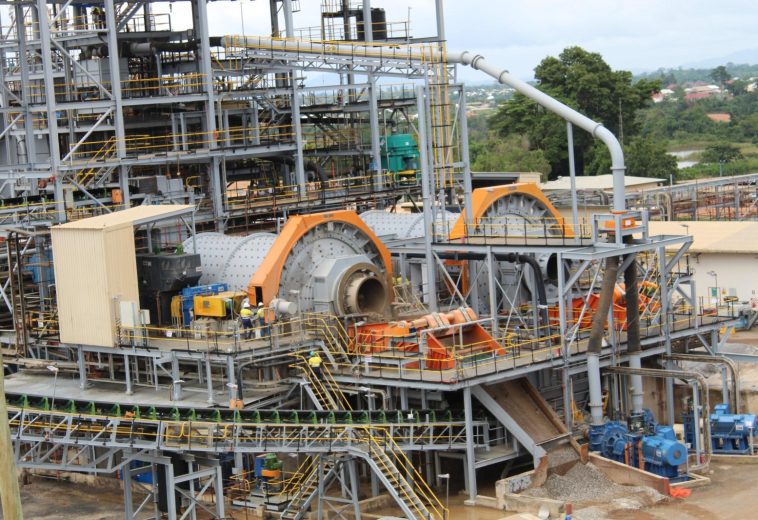

Ghana is seeking to reshape its mining industry by turning mineral wealth into a stronger foundation for domestic manufacturing, skilled employment and industrial growth. On 19 October 2026, President John Dramani Mahama set a 2030 target for ending exports of unprocessed mineral ores, signalling a shift from extracting resources for overseas industries towards retaining more economic value at home.
Speaking at the Mining in Motion Summit in Accra, Mahama outlined plans for a phased prohibition covering minerals including bauxite, manganese, iron and lithium. The proposed restrictions will be supported by legislation, mineral-specific requirements and implementation timelines. The government has also emphasised the need for infrastructure, technical skills and financing to make domestic processing commercially viable.
READ ALSO: Ghana’s 2026–2030 Clean Energy Plan: Solar, Wind and Mini-Grids
For Ghana, the ambition addresses a longstanding challenge across Africa: countries endowed with valuable natural resources often export raw materials and import finished products made from them. This arrangement limits opportunities to develop manufacturing industries, acquire technical expertise and create skilled jobs around domestic resources.
Mahama’s plan seeks to change that relationship by connecting mineral extraction to local industrial development. Ghana’s bauxite industry, for example, could support domestic alumina refining and aluminium production, while investment in iron and steel could supply construction, transport and mining businesses. Greater manganese processing could also strengthen the country’s participation in industrial supply chains.
The government has identified the modernisation of the Volta Aluminium Company as part of its broader ambition to develop an integrated aluminium industry. Such investments could create opportunities for engineering firms, equipment suppliers, logistics companies and technical professionals, extending the economic benefits beyond mining operations themselves.
However, the transition will require more than export restrictions. Mineral processing is capital-intensive and depends on reliable electricity, transport infrastructure, access to finance and a skilled workforce. Investors must also be confident that regulatory requirements will be predictable and that processing facilities can compete in regional and international markets.
Ghana’s approach therefore places responsibilities on both government and the private sector. While investors are expected to contribute to domestic processing and technology development, the government must help establish the conditions necessary for competitive production. Without adequate infrastructure and commercially viable projects, restrictions on raw mineral exports could create uncertainty without delivering the intended industrial gains.
The strategy also has implications beyond Ghana. African countries collectively hold significant deposits of minerals needed for construction, manufacturing and emerging technologies. Developing regional processing and manufacturing networks could enable countries to share infrastructure, build complementary industries and supply larger markets under the African Continental Free Trade Area.
The ultimate test will be implementation. Ghana must demonstrate that its 2030 target can produce functioning processing facilities, stronger local businesses and sustainable employment rather than simply change the rules governing exports.
For Africa, the opportunity is to move beyond measuring mineral wealth by extraction volumes and export receipts. By linking natural resources to domestic capabilities, technology and manufacturing, countries can build economies that retain more value from what they produce. Ghana’s proposed reforms represent an important step towards that ambition, provided policy commitments translate into productive investment and measurable results.