Africa is attracting renewed attention from international investors, with capital increasingly flowing towards strategic sectors capable of shaping the continent’s next phase of economic development.
Foreign direct investment into Africa reached about $70 billion in 2025, according to UN Trade and Development (UNCTAD), making it the third-highest annual level since 1990. Although the figure was below the exceptional $94 billion recorded in 2024, the investment landscape is becoming increasingly focused on strategic industries, including energy, minerals, infrastructure and manufacturing.
READ ALSO: Inclusive Africa: Bridging the Gap Between Growth and Everyday Prosperity
The shift is significant because Africa’s investment story is gradually moving beyond traditional resource extraction. Countries are seeking to attract capital into sectors that can strengthen domestic production, create jobs and connect economies to global value chains.
Critical minerals are particularly important. Africa possesses substantial reserves of minerals needed for batteries, renewable energy technologies, electric vehicles and advanced manufacturing. This presents an opportunity for African countries to move beyond exporting raw materials and develop processing and manufacturing industries closer to the source.
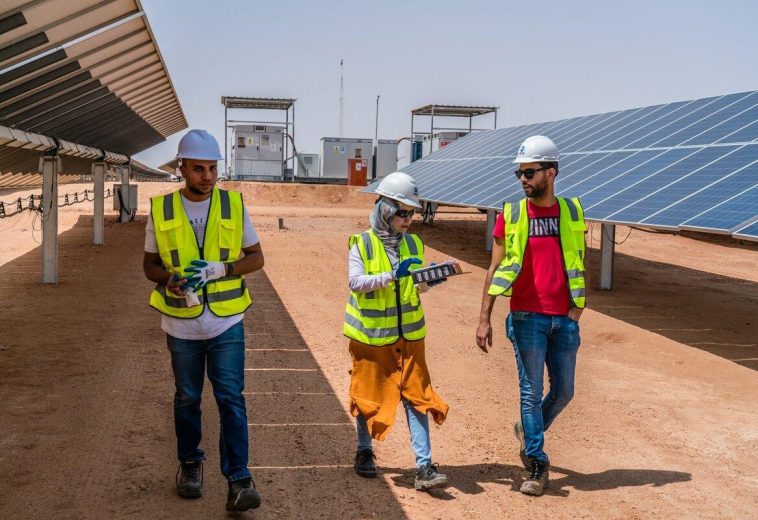
The investment expansion is also visible in energy. Renewable power is attracting growing interest as governments seek to address electricity shortages while building more resilient energy systems. In Zambia, for example, strong investor interest has contributed to the country becoming an increasingly attractive market for solar investment.
Infrastructure remains another major investment opportunity. Roads, ports, railways, digital networks and power systems are essential to reducing the cost of doing business and facilitating trade under the African Continental Free Trade Area.
The challenge, however, is ensuring that rising investment produces broader economic benefits.
UNCTAD has warned that Africa must convert investment into wider industrial development rather than simply increasing the volume of capital entering the continent. This requires stronger local supply chains, technology transfer, skills development and greater participation by African businesses.
Governments therefore have an important role to play in creating investment environments that are predictable, transparent and competitive. Investors need reliable infrastructure, efficient institutions, clear regulations and access to markets.
The African Continental Free Trade Area can strengthen this proposition by giving companies access to a continental market of more than one billion people. A larger integrated market can encourage investors to establish production facilities in Africa not only to serve individual countries but also to build regional and continental supply chains.
There are encouraging signs across the continent. Countries such as Egypt, Nigeria and Morocco continue to attract investment into sectors ranging from energy and infrastructure to manufacturing, logistics and technology.
Africa’s investment opportunity is therefore about more than attracting capital. It is about using capital strategically to build productive economies.
The next phase should focus on turning foreign investment into factories, processing facilities, technology hubs, skilled employment and stronger African companies.
If Africa can combine its natural resources and growing markets with better infrastructure, stronger institutions and ambitious industrial policies, the continent can transform today’s investment expansion into lasting economic growth.
The opportunity is not simply to attract the world’s capital, but to ensure that global capital helps build Africa’s industrial future.