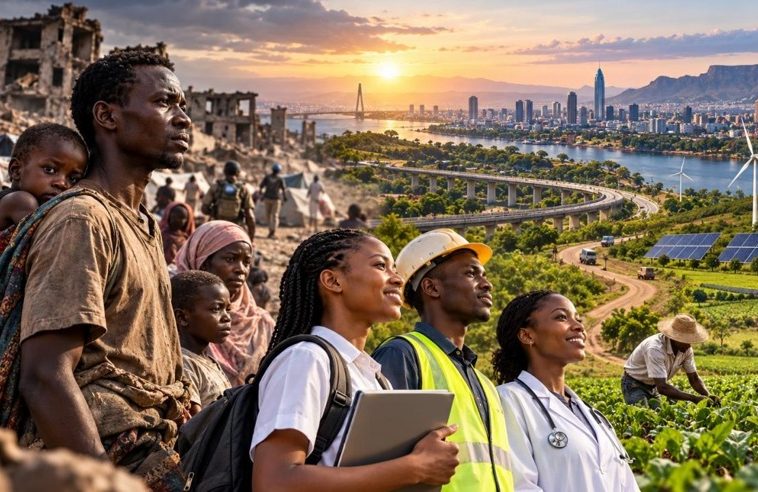
Africa enters the 2026 International Day of Peace facing a difficult contradiction. Across the continent, economies are expanding, digital industries are emerging and investment in infrastructure, energy and manufacturing is growing. Yet conflict and displacement continue to place a heavy burden on communities and constrain the development gains that countries are working to build.
The latest conflict data underline the scale of the challenge. In 2025, 65 state-based armed conflicts were recorded globally across 37 countries, the highest number since records began in 1946. Africa accounted for 29 of those conflicts, more than any other region. The data, compiled by the Uppsala Conflict Data Program (UCDP) and analysed by the Peace Research Institute Oslo, also show that 2025 was one of the most violent years of the post-Cold War period.
READ ALSO: Conflict to Construction: African Leadership Lessons for Sustainable Peace
The human consequences extend far beyond the battlefield.
A joint African Development Bank and UNHCR assessment found that Africa had 45 million refugees, asylum seekers and internally displaced people in 2024, up from 9.1 million in 2009. The report describes forced displacement as a major development challenge affecting not only displaced populations but also the communities receiving them.
This is the context in which the United Nations marks the International Day of Peace on 21 September 2026 under the theme “Invest in Peace: For Everyone, Everywhere, Every Day.” The UN is placing particular emphasis on the “everyday architects of peace” — people working in communities, schools and civil society to build trust and resolve divisions.
For Africa, that message has an important development dimension.
Peace Is an Economic Asset
Conflict does more than threaten lives. It disrupts agriculture, closes businesses, damages infrastructure, interrupts education and weakens public institutions.
In Sudan, the war that began in April 2023 has produced one of the world’s largest displacement crises. In eastern Democratic Republic of the Congo, prolonged insecurity continues to affect communities and economic activity. Across parts of the Sahel and the Horn of Africa, conflict interacts with poverty, displacement, food insecurity and climate pressures.
Yet Africa’s story should not be defined solely by these crises.
Across the continent, governments, regional institutions and communities continue to develop mechanisms for mediation, reconciliation and conflict prevention. The African Union’s peace and security architecture, alongside regional organisations such as ECOWAS, IGAD and SADC, provides channels for diplomacy and regional responses to crises.
At the community level, the work is often less visible but equally significant. Traditional leaders, religious organisations, women’s groups, youth organisations, civil society groups and local mediators frequently operate closest to the people affected by conflict.
Their contribution reflects a central lesson of peacebuilding: agreements signed at the highest political level can create openings for peace, but lasting stability depends on whether communities can rebuild trust and livelihoods afterwards.
Displacement Is a Development Challenge
The scale of displacement makes this connection particularly clear.
When people are forced from their homes, the effects follow them into classrooms, farms, hospitals and markets. Host communities can also face additional pressure on housing, healthcare, education, employment and infrastructure.
This is why development responses cannot stop at humanitarian assistance. A displaced farmer needs the means to restore a livelihood. A displaced child needs continued access to education. Host communities need investment capable of supporting both existing residents and newcomers.
The AfDB–UNHCR assessment argues for precisely this kind of development-oriented approach, recognising that displacement affects the economic and social resilience of entire communities.
Prevention Must Become an Investment
The 2026 International Day of Peace offers an opportunity to broaden the conversation from responding to conflict towards preventing it.
That means strengthening institutions, expanding access to justice, improving governance, creating economic opportunities for young people and addressing grievances before they escalate.
It also means investing in areas where economic and environmental pressures can contribute to instability. Better agricultural systems, climate resilience, education, infrastructure and employment cannot guarantee peace, but they can strengthen the foundations on which peaceful societies are built.
The UN’s 2026 message similarly connects peace with investment in sustainable development, education, health, nutrition, social protection, human rights and trusted institutions.
For the private sector, the role extends beyond corporate philanthropy. Businesses can contribute to stability by creating jobs, developing local supply chains and investing in communities where economic opportunity is limited.
Regional institutions can strengthen early-warning and mediation systems, while development partners can support African-led and community-based peacebuilding with longer-term financing.
Protecting Africa’s Development Opportunity
Africa’s development potential remains enormous. Its young population, natural resources, growing consumer markets, entrepreneurial communities and expanding digital economy create opportunities that could reshape the continent’s economic position.
But development gains are difficult to sustain when conflict repeatedly destroys infrastructure, displaces people and interrupts economic activity.
That makes peace more than a security objective. It is an economic and development asset.
The 2026 International Day of Peace therefore provides Africa with a timely question: what would change if prevention received as much strategic attention as crisis response?
The answer will require more than declarations. It will require investment in institutions, people, livelihoods, dialogue and the local actors who work every day to prevent disputes from becoming violence.
Africa does not need to wait for another crisis before investing in peace.
Peace is infrastructure. Peace is opportunity. Peace is the foundation on which Africa’s next generation of development can be built.