Africa is poised for a digital breakthrough. The African Development Bank (AfDB) estimates that artificial intelligence (AI) could add up to $1 trillion to the continent’s GDP by 2035. This potential highlights how digital technology can drive economic growth, improve public services and stimulate innovation. Realising this opportunity, however, will require investment in the infrastructure needed to support an inclusive and scalable digital economy.
The AfDB projects that AI-driven transformation could boost Africa’s GDP by approximately 4% by 2035. The International Monetary Fund’s (IMF) 2026 analysis suggests that current levels of AI readiness could deliver only a 0.2% GDP contribution over the next decade, while stronger foundations could raise the gains to around 4%. The GSMA estimates that AI could contribute as much as $2.9 trillion to Africa’s GDP by 2030 if fully embraced.
READ ALSO: DIGITAL AFRICA: Connecting One Billion People by 2030
Yet the continent’s digital infrastructure gap remains substantial. Africa accounts for just 0.6% of global data centre capacity despite representing around 20% of the world’s population, according to the Africa Data Centres Association. Its active capacity stands at 360 megawatts (MW), with another 238MW under construction and 656MW in the pipeline, compared with a global active capacity of 55 gigawatts (GW).
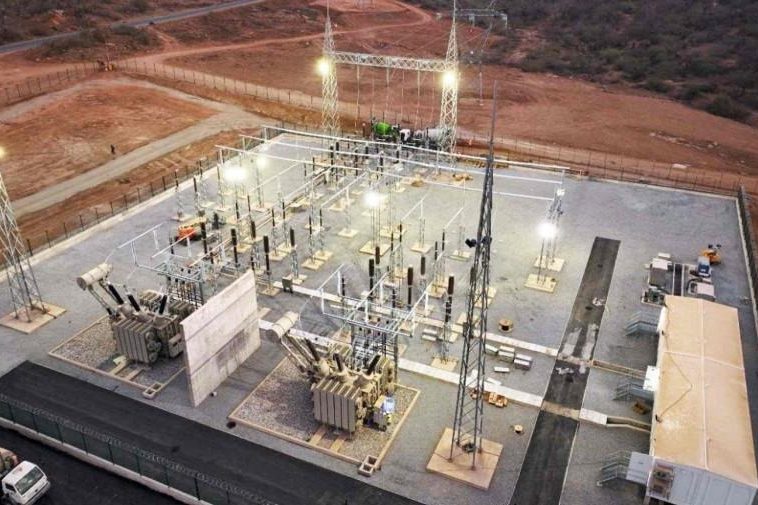
Expanding this infrastructure will require reliable electricity. Nearly 600 million Africans still lack access to electricity, creating a significant constraint on energy-intensive technologies such as AI and data centres. However, progress is underway. More than 50 million Africans gained electricity access between July 2023 and April 2026 through the World Bank-backed Mission 300 initiative, with Tanzania, Ethiopia and Nigeria recording significant gains. Nigeria connected more than 4.5 million people, largely through off-grid renewable energy projects.
Africa’s connectivity challenge is increasingly shifting from network coverage to internet adoption. The GSMA reports that only 9% of Africans remain outside mobile broadband coverage, down from 50% in 2014. However, 63% live within coverage areas without using mobile internet, with affordability remaining a major barrier. The median cost of a 2GB mobile broadband plan stands at 4.2% of gross national income per capita, more than double the 2% affordability target.
Digital financial services have already transformed access to banking across the continent. The GSMA’s 2026 Mobile Money Report shows that Sub-Saharan Africa accounted for approximately two-thirds of new mobile money accounts globally in 2025. Kenya’s M-Pesa platform has around 40 million users and an estimated 90% market share. In rural Kenya, mobile payment adoption among smallholder farmers rose from 15% in 2018 to 68% in 2024.
Modular data centres offer flexible solutions for expanding digital infrastructure in underserved regions. Investments by Microsoft and Meta in Kenya and Nigeria signal growing interest in local digital ecosystems. Beyond infrastructure, the priority is ensuring that these investments create engineering skills, technical jobs and opportunities for domestic application development.
Africa’s linguistic diversity, with more than 2,000 languages, also presents an opportunity to develop AI systems that reflect local needs. Yet many existing models remain poorly adapted to African languages and contexts. The Africa CEO Forum’s 2026 report identifies fragmentation across 54 economies, the migration of technology talent and reliance on imported proprietary systems as key constraints. It recommends open-source approaches and shared digital foundations, citing India’s Aadhaar identity system and Rwanda’s IremboGov platform as examples.
Digital identity is another critical component. The United Nations Development Programme (UNDP) reports that more than 500 million Africans lack a verifiable digital identity, while over 80% of workers remain in the informal economy. The African Continental Free Trade Area (AfCFTA) Secretariat has selected Kenya, Morocco and Nigeria to begin implementing the ADAPT initiative, which connects digital identity, trusted data exchange and interoperable payment systems to facilitate intra-African trade.
The mobile industry contributed $240 billion to Africa’s economy in 2025, equivalent to 7.8% of GDP, according to the GSMA. It supported approximately 13 million jobs and generated $45 billion in public revenue. By 2030, mobile technologies are expected to contribute $290 billion as digital adoption expands. Nevertheless, around 710 million Africans remain offline.
Africa’s digital economy ambitions will depend on strategic investment in data centres, reliable power, connectivity and locally relevant AI systems. Stronger data protection frameworks, affordable internet access and regional cooperation will also be essential. The central challenge is ensuring that Africa captures a meaningful share of the value generated by its digital transformation while building the skills and infrastructure needed for long-term technological independence.