Africa’s industrial opportunity is no longer simply about what lies beneath its soil. It is about what the continent can build around those resources.
From minerals and agricultural commodities to energy and manufacturing, Africa possesses the raw materials for globally competitive industries. Yet too much of that value is still created elsewhere. Raw materials leave African ports, are processed abroad and often return as finished products at higher prices. Breaking that cycle requires more than individual factories. It requires African economies to produce, process and trade together at continental scale.
READ ALSO: African SMEs Win: Afreximbank–EABC Partnership Expands Trade Access
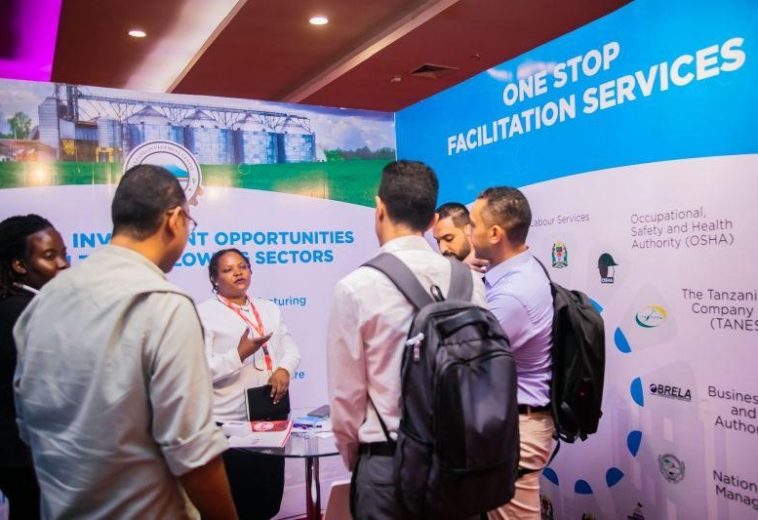
That challenge was at the centre of discussions at the inaugural Alamein Africa Forum, held from October 2–4, 2026, where business leaders, including Aliko Dangote and senior Afreximbank officials, called for action against what they described as Africa’s “scale penalty” — the additional cost created when fragmented markets, infrastructure gaps and inconsistent rules prevent businesses from operating at regional scale.
Dangote’s argument was particularly significant: AfCFTA should be understood not merely as a trade agreement, but as “continental economic infrastructure” capable of creating the scale required for serious industrial investment.
The forum, which brought together more than 1,500 business representatives, captured a fundamental shift in the African economic conversation. The question is increasingly not whether Africa has markets, resources or entrepreneurs, but whether it can connect them well enough to build competitive industries.
The Cost of a Fragmented Continent
Africa’s trade potential remains constrained by the costs of doing business across borders.
A World Bank report published in August 2026 found that roughly 60 per cent of Africa’s estimated trade costs arise unilaterally or behind national borders rather than from tariffs. Customs inefficiencies, weak logistics, fragmented standards and restrictions affecting services can make it expensive for businesses to use markets that are technically open to them.
This changes the industrialisation debate.
Reducing tariffs matters, but cheaper tariffs alone cannot create a competitive manufacturing ecosystem. A manufacturer also needs dependable electricity, efficient ports, predictable border procedures, affordable transport, reliable suppliers and access to a sufficiently large market.
That is where regional integration becomes an industrial strategy.
Intra-African trade currently accounts for only about 15–17 per cent of Africa’s total trade, compared with roughly 60 per cent in Asia and Europe. Yet what Africa trades within the continent is revealing: more than 60 per cent of intra-African trade consists of manufactured products, processed foods and textiles, while about 52 per cent of Africa’s exports to the rest of the world are primary commodities.
The implication is clear. African markets are already buying more value-added products from one another. The opportunity is to produce more of those products within Africa.
From Raw Materials to Regional Value Chains
The scale of the opportunity becomes clearer when Africa’s resources are viewed through the lens of value addition.
Uganda’s Deputy Speaker Thomas Tayebwa highlighted this challenge at the forum, citing estimates that Africa holds approximately US$29.5 trillion in mineral wealth, around one-fifth of the global total. Yet much of that wealth leaves the continent in relatively unprocessed form.
Coffee offers another illustration. Tayebwa pointed to a global coffee market estimated at about US$465 billion, while producing countries collectively capture only around US$25 billion, with Africa accounting for roughly 3 per cent of the market.
The lesson extends far beyond coffee. Africa can increase the economic value of its resources by building processing, manufacturing and distribution capabilities around them.
Cobalt provides one example of what that transition can look like. Increased processing of the Democratic Republic of Congo’s cobalt demonstrates the potential to capture more value before minerals leave the continent.
The same principle can apply to cocoa, coffee, cotton, lithium, copper, agricultural products and a wide range of other resources. The objective is not simply to export more. It is to process more, manufacture more and build industries around what Africa already produces.
Scale Requires Connected Production
There are signs of progress. Africa’s manufacturing value added increased from about US$285 billion in 2020 to US$351 billion in 2025. The African Development Bank’s 2025 Industrialisation Index also found that 41 of 54 African countries improved their industrialisation scores.
But the continent still accounts for less than 2 per cent of global manufacturing output and around 1.4 per cent of processed-goods exports.
The problem is therefore not a complete absence of manufacturing. It is insufficient scale and connectivity.
One country may have the minerals. Another may have the processing capacity. A third may provide components. A fourth may offer the consumer market. The industrial opportunity lies in connecting these capabilities into regional value chains rather than requiring every country to build every part of a production system independently.
This is where AfCFTA’s significance extends beyond tariff reduction.
A larger integrated market gives manufacturers a stronger incentive to invest because a factory is no longer limited to the purchasing power of its domestic market. A processor can source inputs from neighbouring countries and sell finished goods across a wider African market.
But that promise depends on whether goods can move predictably.
Infrastructure Is Part of Industrial Policy
Electricity remains one of the most immediate constraints.
World Bank Enterprise Surveys indicate that firms in Sub-Saharan Africa experience an average of 7.6 electricity outages each month, lasting about 1.9 hours, while 39.2 per cent of firms identify electricity as a significant obstacle — the highest regional share globally.
The cost is also significant. Average electricity prices are estimated at 18.5 US cents per kilowatt-hour, compared with 14.8 cents in China, 12 cents in Indonesia and 9.3 cents in Bangladesh.
For manufacturers, unreliable and expensive power is more than an inconvenience. It affects production schedules, equipment, costs and the ability to compete with factories elsewhere.
Transport networks create another challenge. World Bank research indicates that a 10 per cent improvement in “network time efficiency” — measuring travel time, reliability and procedural delays — can increase bilateral regional value-chain trade by an average of 3.4 per cent.
That finding carries an important message: predictability is itself an economic asset.
A manufacturer needs to know when inputs will arrive, when goods will cross borders and when customers will receive their orders. Without that certainty, regional production becomes harder to plan and more expensive to operate.
The Market Is Already There
The commercial opportunity is substantial.
Afreximbank estimates that unrealised intra-African export potential exceeded US$83 billion in 2025, with the potential to raise intra-African trade to about US$292 billion. Southern Africa alone represents approximately US$15 billion of that unrealised opportunity, including minerals, motor vehicle parts and machinery.
Machinery, electricity, motor vehicles, food products and chemicals are among the categories with significant potential.
These are not simply trade opportunities. They are potential building blocks for African industries.
If a mining economy can supply minerals to a neighbouring processing hub, which supplies components to a regional manufacturer, which then sells finished products across the continent, trade becomes part of an industrial ecosystem.
That is the scale Africa needs.
From Agreements to Industrial Capability
The AfCFTA provides the framework for a larger market. Its implementation could generate significant economic gains, with widely cited projections of up to US$450 billion in additional income and 30 million people lifted from extreme poverty by 2035 under effective implementation and trade facilitation.
But the market alone cannot manufacture the products.
The decisive task is building African productive capacity alongside market integration. Without sufficient local manufacturing, opening markets risks creating larger destinations for imported finished goods rather than larger markets for African producers.
The next phase of Africa’s economic transformation must therefore connect three ambitions: value addition, regional integration and industrial competitiveness.
Africa does not need every country to manufacture everything. It needs countries to build on their comparative strengths and connect them through reliable infrastructure, common standards, efficient borders, affordable finance and predictable trade routes.
That is the real promise of scale.
When African resources feed African factories, African factories supply African markets, and African businesses capture more of the value generated along the way, integration becomes more than a policy objective. It becomes an engine for jobs, investment, skills and industrial growth.
The decisive question is no longer whether Africa has enough resources to industrialise.
It is whether the continent can build the connected production systems, infrastructure and markets required to turn those resources into African prosperity.