Africa’s agricultural opportunity is often described in terms of what the continent could produce.
The more important question may be what Africa can build around what it produces.
READ ALSO: Africa Agribusiness Summit: Making Agricultural Advice Reliable Infrastructure for Farmers
From 13 to 16 October, 20 African countries will present government-led agrifood investment plans to global investors, development banks, foundations and private-sector partners at the 2026 Hand-in-Hand Investment Forum at the Food and Agriculture Organization’s headquarters in Rome.
It is the largest African participation in the forum since the initiative began.
The participating countries—stretching from Angola and Côte d’Ivoire to Nigeria, Rwanda, Zambia and Zimbabwe—will present investment opportunities across agricultural value chains, including food production, processing, livestock, fisheries, irrigation, mechanisation, seed systems and logistics.
The significance lies in the shift in language.
Africa’s agricultural conversation has traditionally centred on food insecurity, smallholder farmers and the need to increase production. Those challenges remain real. But agriculture is also one of the continent’s largest opportunities for industrialisation, employment and trade.
The Hand-in-Hand initiative is designed around that wider proposition.
According to the FAO, participating governments have spent the past year identifying value chains and territories where public and private investment could have the greatest impact on poverty, hunger and inequality. The investment cases are intended to provide investors with clearer financing needs, expected returns and implementation arrangements.
That approach matters because Africa does not necessarily need more agricultural ideas.
It needs more bankable agricultural projects.
Consider the diversity of opportunities being presented. Several countries are targeting staple food chains such as rice, maize, cassava and soybean. Others are developing export-oriented opportunities in coffee, cocoa, cashew, tea, avocado and honey. Livestock, poultry, dairy, fisheries and aquaculture also feature prominently.
Beyond production, governments are also identifying the infrastructure needed to unlock these markets.
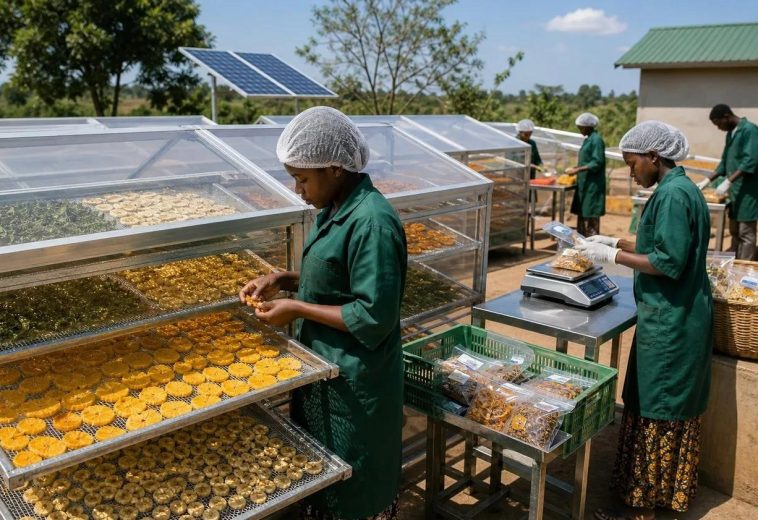
Mechanisation, irrigation, seed multiplication, agro-processing facilities and special economic zones can transform agriculture from a predominantly primary activity into a network of connected industries.
This is where the real economic opportunity lies.
A farmer who sells raw cassava captures only part of the value created by the crop. Processing that cassava into starch, flour, industrial inputs or other finished products creates additional businesses, skills, jobs and tax revenues.
The same logic applies across Africa’s agricultural economy.
Coffee can become roasted and packaged coffee. Cocoa can move towards processing and chocolate production. Milk can support dairy processing. Fish can generate cold-chain, processing and export industries.
The continent’s challenge is therefore not simply to produce more food. It is to capture more value from every tonne produced. Regional integration can make that opportunity even larger.
The 2026 forum will also showcase regional initiatives, including a Southern Africa programme covering 11 countries and an initiative focused on African Small Island Developing States. A special event will examine financing opportunities along the Lobito Corridor, connecting Angola, the Democratic Republic of Congo and Zambia and exploring how infrastructure can connect producers to regional and international markets.
This is precisely the type of thinking Africa needs.
Agriculture cannot be transformed by farmers alone. It requires roads, storage, electricity, irrigation, finance, technology, market access, processing facilities and predictable policies.
Private investors have a role, but governments must also create the conditions that make long-term investment possible.
The opportunity is enormous because food demand will continue to rise alongside Africa’s population and urbanisation.
If Africa can combine its land, farmers, technology, capital and expanding markets, agriculture could become much more than a food-security strategy.
It could become one of the continent’s defining industrial opportunities.
The Rome forum therefore presents a question that extends beyond the investment cases on display: Can Africa stop exporting agricultural potential and start exporting more agricultural value?
The answer will depend on whether today’s investment plans become tomorrow’s factories, processing centres, supply chains and competitive African brands.
That is where the real transformation begins.