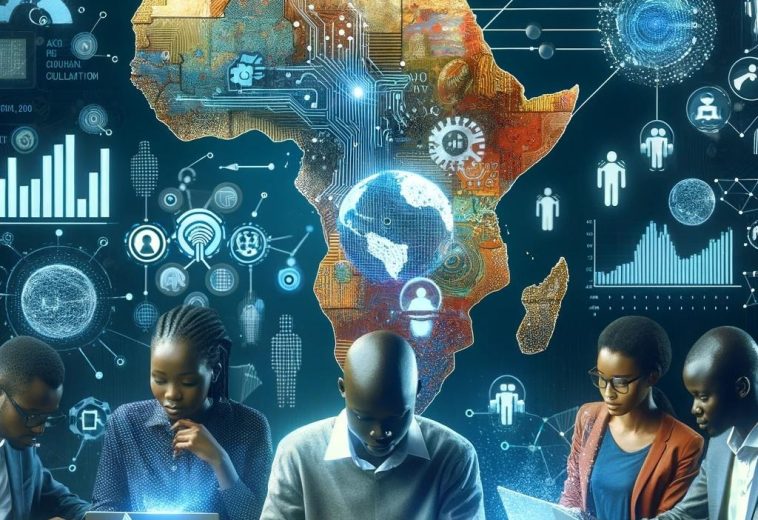
Africa possesses a remarkable combination of resources that could place it at the centre of the global clean-energy transition: vast deposits of critical minerals and some of the world’s strongest renewable energy potential. For decades, however, the continent’s economies have remained heavily reliant on extracting and exporting raw materials. The global shift towards clean energy is now beginning to change that equation. Africa is no longer simply a supplier of resources; it has an opportunity to become a major player in the race for energy security, industrialisation and a greener global economy.
The continent’s unique combination of solar potential, estimated at 60% of global capacity, and transition minerals including around 70% of the world’s cobalt and 60% of its manganese, alongside significant lithium reserves, gives Africa an important strategic position in the emerging green industrial economy. With World Bank projections indicating that demand for cobalt, lithium and copper could rise by 500%, 700% and 40% respectively by 2050, Africa’s mineral reserves are becoming increasingly important to global supply chains.
READ ALSO: Africa’s Energy Boom: Record Growth in Solar, Wind and Clean Power
Yet possessing these resources is only part of the opportunity. Africa currently captures less than 10% of the value generated across its mineral value chains. The African Development Bank’s 2024–2033 strategy aims to increase domestic value addition, with a target of reaching 40% by 2040 through greater processing within the continent. The Bank has committed $2 billion to processing infrastructure, recognising the substantial difference between exporting raw lithium at approximately $1,500 per tonne and selling processed lithium carbonate at around $15,000 per tonne.
The opportunity extends beyond minerals. Africa’s renewable energy resources could support the development of a major green hydrogen industry. The International Renewable Energy Agency (IRENA) projects that the continent could produce 50 million tonnes of green hydrogen annually by 2050, generating an estimated $120 billion in export revenues. Abundant solar and wind resources could give Africa a competitive advantage in production costs, while projects in Namibia and Mauritania are already moving from planning towards construction. The European Union has also committed €1 billion towards developing production capacity.
At the same time, competition for Africa’s critical minerals is intensifying. China has invested more than $200 billion and maintains a dominant position in the Democratic Republic of Congo’s cobalt sector. The European Union has pledged €150 billion while prioritising access to critical minerals, while the United States is developing alternative supply chains through initiatives such as the Lobito Corridor. This geopolitical competition presents African countries with an opportunity to negotiate more favourable terms, including technology transfer, local processing and greater participation in global value chains.
However, Africa cannot industrialise without reliable and affordable energy. Around 600 million Africans still lack access to electricity, while the continent’s overall electricity consumption remains comparable to that of France despite having roughly 20 times its population. The African Development Bank’s initiative to provide 300 million new electricity connections by 2030 will require an estimated $90 billion. Current progress suggests that only around 40% of the target may be achieved without a significant acceleration in investment.
Energy access and mineral processing are also closely connected. Processing minerals, particularly activities such as smelting and refining, requires substantial amounts of reliable electricity. Without adequate power generation and transmission infrastructure, Africa risks exporting its minerals while importing the processed products and technologies needed for the clean-energy transition.
Regional electricity integration could help address this challenge. The African Single Electricity Market has the potential to generate significant savings through greater integration of national and regional power pools. The East African Power Pool has already demonstrated the potential benefits of cross-border electricity trade, with trading increasing by 250% between 2019 and 2024 and power costs falling by 18%. A more integrated continental grid could allow countries to draw on complementary resources, from solar power in the Sahel to hydropower from the Congo Basin and geothermal energy in the Rift Valley.
Financing remains another critical piece of the puzzle. The Sustainable Energy Fund for Africa has achieved a reported 50:1 leverage ratio, using $300 million in catalytic funding to mobilise $15 billion in private investment. The Facility for Energy Inclusion has connected an estimated 10 million people across 15 countries, while the African Green Bank Initiative aims to establish green banks in 20 countries by 2030.
Despite these initiatives, Africa faces an estimated $90 billion annual infrastructure financing gap, with energy accounting for around 40% of the shortfall. The continent also has only about 25% of the transmission capacity required for effective regional integration. Governance challenges add another layer of difficulty. Regulatory unpredictability and weak institutions can discourage investors even where resource potential is considerable.
The employment potential is equally significant. Africa’s renewable energy sector currently employs approximately 350,000 people, with the potential to reach four million by 2050. Greater beneficiation of cobalt and lithium could create an estimated two million direct and six million indirect jobs. The continent’s labour-cost advantage could also strengthen its competitiveness in downstream manufacturing. Yet skills shortages remain a constraint, with only around 2% of tertiary students enrolled in engineering compared with approximately 15% in Asia.
Africa therefore stands at a historic inflexion point. Its mineral wealth and renewable energy potential are converging with a global demand for decarbonisation, creating an opportunity that extends far beyond the export of raw materials. The real prize is the development of industries that process African resources, manufacture clean-energy technologies, create jobs and retain a greater share of value within the continent.
The African Development Bank’s approach of linking energy access, mineral beneficiation and regional integration provides a potential pathway towards that transformation. Rising geopolitical competition can give African governments additional leverage to negotiate technology transfers, local-processing commitments and stronger participation in global supply chains.
If political will, transparent governance, infrastructure investment and technical capacity develop in tandem, Africa could emerge by 2050 as a major manufacturing and energy hub of the green industrial age. The opportunity is not simply to avoid repeating the resource-export model of the past, but to turn Africa’s mineral and energy advantages into the foundation for broad-based industrial growth and continental prosperity.