Africa is beginning to look at the sky differently. For decades, space exploration was largely associated with the world’s wealthiest and most technologically advanced countries. Today, African nations are steadily building their own place in the space sector, using satellites and space technology to address challenges much closer to home.
The progress is becoming increasingly difficult to overlook. By 2026, African countries had launched dozens of satellites, with nations including Egypt, South Africa, Algeria, Nigeria, Morocco and Kenya developing growing capabilities in space technology. Other countries are also investing in satellites and space-related research as they recognise the role the sector can play in national development.
READ ALSO: Africa’s Space Economy: How Satellites Are Transforming Agriculture, Climate Resilience and Connectivity
The growth is not simply about prestige or the desire to join an exclusive club of space-faring nations. There are practical reasons behind Africa’s increasing interest in space.
Satellites can help farmers monitor crops, track changing weather patterns and identify areas affected by drought. They can help governments map settlements, monitor forests and water resources, plan infrastructure and respond more quickly to floods and other natural disasters. In countries where climate conditions can change rapidly, access to reliable information from space can make a significant difference.
Senegal, for example, has been developing its space capabilities with a focus on using satellite technology for agriculture, environmental monitoring and infrastructure planning. Elsewhere, countries such as Botswana, Uganda and Angola are exploring satellite applications that can support communications, resource management and other areas of their economies.
This growing interest is also being supported by greater regional cooperation. The establishment of the African Space Agency has given the continent a platform for countries to work together, share expertise and coordinate their ambitions. The agency is expected to play an important role in developing Africa’s space economy and helping countries make better use of space technology.
The economic opportunity is considerable. The African space economy has been growing steadily, driven by demand for satellite communications, Earth observation, navigation services and other applications. The sector could become an important source of investment and employment as more countries develop the skills and infrastructure needed to participate.
For young Africans, this could be one of the most exciting aspects of the continent’s space ambitions.
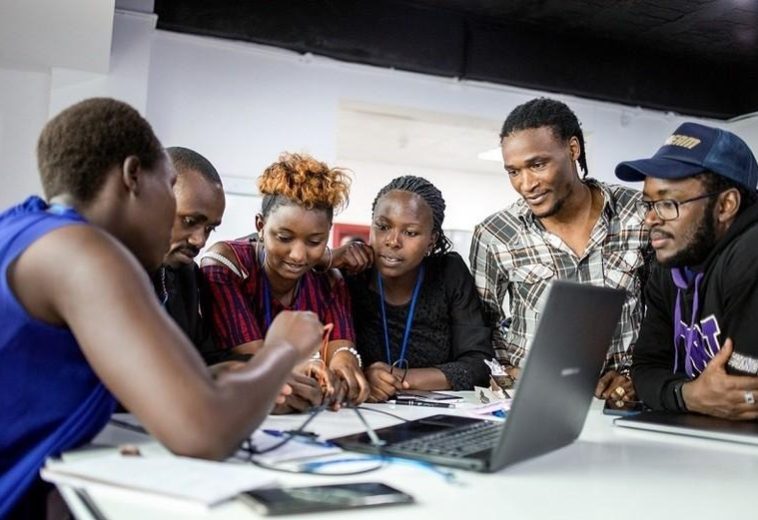
A growing space industry requires much more than astronauts. Engineers are needed to design and build satellites. Software developers are needed to create systems that process satellite data. Scientists and researchers are needed to interpret information gathered from space. Technicians are needed to maintain equipment and support ground operations.
These skills can also benefit other parts of the economy. Expertise in satellite technology, coding, electronics and data analysis can be applied to telecommunications, agriculture, transportation, environmental management and financial services.
There is another reason Africa’s growing space capabilities matter: control over information.
For many years, African governments and businesses have depended heavily on satellite data produced by organisations outside the continent. While international partnerships remain important, developing domestic capabilities gives African countries greater control over the information they use to make decisions.
That is particularly important in areas such as agriculture, mineral exploration, environmental protection and disaster management. Space technology can also help tackle one of Africa’s biggest development challenges: connecting people.
Satellite communications can reach remote communities that are difficult and expensive to connect through conventional infrastructure. As internet access expands across the continent, satellite technology could help bring digital services to areas that remain beyond the reach of traditional broadband networks.
The journey, however, is not without difficulties.
Developing satellites and space infrastructure is expensive, and many African countries still depend on international partners for launches, equipment and technical expertise. There is also a need for stronger investment in universities and research institutions so that African countries can train the scientists and engineers required to sustain the sector.
Governments will also need to create policies that encourage private companies to participate. The future of Africa’s space industry cannot depend entirely on public spending. Private investment, universities and technology companies will all have a role to play.
Despite these challenges, the direction is encouraging.
Africa is no longer simply watching the world’s space race from the sidelines. Countries across the continent are developing satellites, building research capacity and finding practical ways to use information from space.
The significance of this shift goes beyond the technology itself. It reflects a wider change in how African countries are approaching development: looking for homegrown expertise, investing in knowledge and finding new ways to use technology to solve longstanding problems.
The African space story, therefore, is not really about reaching the stars. It is about using what is learned from above to improve life below.
Better satellite information can help a farmer decide when to plant. It can help a government respond to a flood. It can help a city plan its expansion and help researchers understand environmental changes.
For a continent with a young population, enormous development needs and a growing technology sector, the possibilities are significant.
Africa’s space ambitions are still at an early stage, but the foundations are being laid. With sustained investment, stronger cooperation and greater support for African scientists and entrepreneurs, the continent could move from being mainly a consumer of space technology to becoming one of its important producers.
The sky, it appears, is no longer the limit. It is becoming part of Africa’s development frontier.