
Dangote Sinotruk West Africa Limited has taken an important step in Nigeria’s commercial-vehicle industry with the rollout of a locally assembled heavy-duty electric truck.
Unveiled at the company’s Ikeja, Lagos, facility on 15 November 2026, the vehicle extends local assembly beyond diesel and compressed natural gas models into battery-electric transport. It is a significant development for Nigeria’s automotive ambitions, although the longer-term opportunity will depend on whether the country can build the infrastructure and industrial capacity needed to support its adoption.
READ ALSO: Dangote Group: Exploring a Bigger Industrial Investment Footprint in Egypt
The commercial case for electric trucks in Nigeria rests largely on their potential to reduce fuel and maintenance costs. Unlike conventional vehicles, battery-electric trucks have no tailpipe emissions and can offer lower operating expenses on suitable routes. However, the savings will depend on electricity tariffs, charging arrangements, vehicle utilisation, battery performance and the cost of financing. Comparisons that place electric-truck energy costs substantially below diesel and CNG alternatives should therefore be treated as indicative estimates until supported by transparent, independently tested operating data.
Nigeria’s electricity supply remains a major consideration. The Nigerian Electricity Regulatory Commission reported average available generation capacity of 4,744 megawatts in October 2026, while average hourly generation stood at 4,047 megawatts. The regulator also reported that grid frequency and voltage remained outside prescribed operational limits during the month. These conditions underline the challenge of providing dependable power for commercial charging, particularly for fleets that operate on demanding schedules.
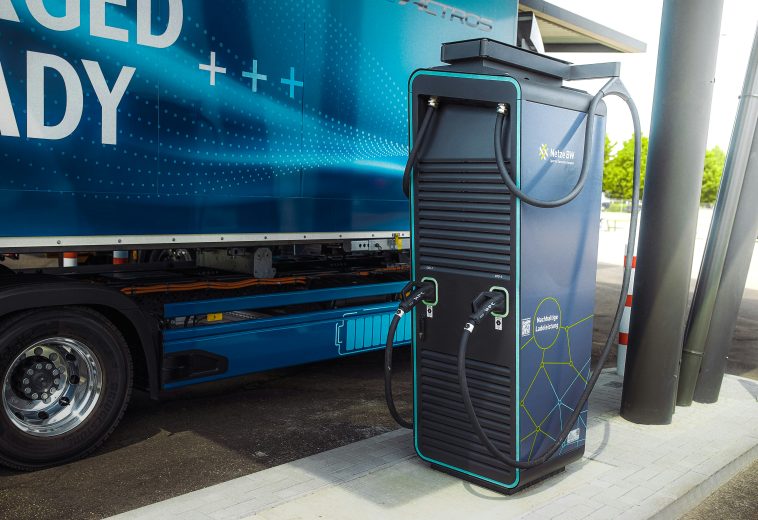
Charging infrastructure is another constraint. Public charging facilities remain limited and concentrated largely in major urban centres. For early adoption, depot-based charging may offer a more practical starting point than dependence on a widespread public network. Manufacturers, distributors and logistics companies with predictable routes and vehicles that return to base each day could install dedicated charging facilities and manage charging around their operating schedules. However, the economics would still depend on reliable electricity, suitable chargers and, where necessary, the cost of backup power.
The global market shows that the technology is advancing rapidly. BloombergNEF reported that worldwide sales of medium- and heavy-duty electric trucks reached a record 158,000 in the first half of 2026, representing a 75 per cent increase on the same period in 2025. More than nine out of ten were sold in China, where electric trucks accounted for about 20 per cent of total truck sales. Europe recorded a 5.5 per cent share. Nigeria’s entry is therefore part of a wider transition, although its market is at a much earlier stage.
For Nigerian fleet operators, the next requirement is detailed commercial information. The launch announcement did not establish the truck’s price, battery warranty, tested driving range at different payloads, charging time, energy consumption per kilometre or expected battery life. Information on production capacity, spare-parts availability and the locations and power sources of planned charging facilities will also be important. Without these details, businesses cannot reliably calculate payback periods or compare the vehicle with diesel and CNG alternatives.
The company has indicated that it is preparing charging infrastructure, technical support, spare parts and after-sales services to support adoption. These commitments will need to translate into accessible facilities, trained technicians and dependable maintenance arrangements. The joint venture’s existing record of assembling more than 8,000 vehicles locally, as reported at the launch, provides an industrial base on which further capabilities could be developed.
The deeper industrial question is how much value Nigeria will retain from the new technology. Local assembly is a useful starting point, but it does not automatically amount to broad-based manufacturing. Progress should be measured by the development of local component suppliers, engineering expertise, software capabilities, maintenance services and technical training. Greater local participation would help the country build skills, retain more value and reduce dependence on imported vehicle systems over time.
The environmental case also requires careful assessment. Electric trucks produce no exhaust emissions while operating, but their overall climate benefits depend partly on the electricity used to charge them and the emissions associated with manufacturing their batteries and components. As Nigeria improves its power supply and expands cleaner generation, the potential climate benefits of electric freight transport could become stronger.
The durable measure of success will be how many trucks enter regular commercial service, whether they can move goods reliably at competitive costs and how much of their value is produced locally. The Dangote Sinotruk launch is a welcome development for Nigeria’s automotive industry. Turning it into a lasting industrial and environmental asset will require dependable charging, transparent performance data, affordable financing, skilled technicians and a reliable supply of spare parts.