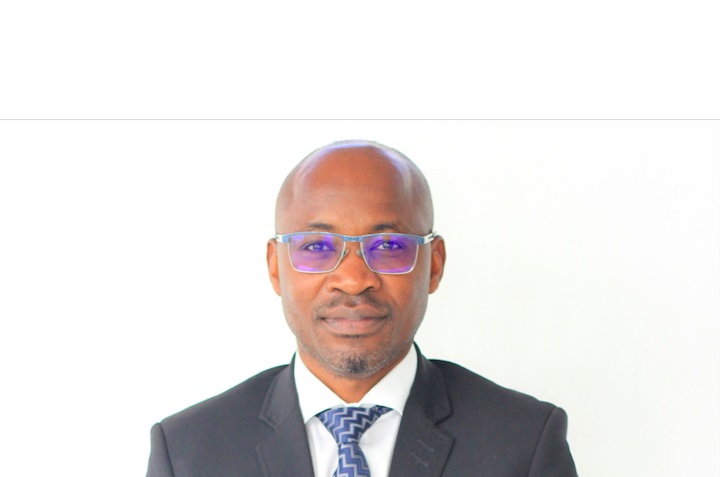
Few sectors expose the gap between political ambition and institutional capacity as starkly as healthcare. In Kenya, where Universal Health Coverage (UHC) remains a constitutional priority, the availability, distribution, and quality of trained health workers have become decisive constraints. According to the World Health Organisation, Kenya has approximately 13 health workers per 10,000 people, well below the WHO-recommended minimum of 44.5 required to deliver essential health services. Within this context, leadership in health training institutions is no longer administrative; it is structural. It is against this backdrop that Dr Kelly Oluoch, Chief Executive Officer of the Kenya Medical Training College (KMTC), has emerged as a consequential institutional actor rather than a symbolic figurehead.
KMTC is Kenya’s largest health training institution, operating 72 campuses nationwide and enrolling approximately 54,000 students annually. The scale alone makes its leadership central to Kenya’s health system sustainability. Dr Oluoch’s stewardship, first as Acting CEO from August 2020 and substantively confirmed in April 2022, coincided with a period of heightened pressure on health education institutions to expand capacity, improve quality assurance, and align training outcomes with national and global health priorities.
READ ALSO: Dr Eino Mvula and the Institutional Politics of Standards in Namibia’s Development Economy
Institutional Profile: Why KMTC Matters
Established in 1927, KMTC supplies an estimated 80% of Kenya’s mid-level healthcare workforce, including nurses, clinical officers, pharmacists, laboratory technologists, and community health professionals. Its graduates form the backbone of service delivery across county health systems, particularly in rural and underserved regions.
Kenya’s devolution framework has amplified the importance of KMTC’s role. County governments now depend heavily on a steady pipeline of trained personnel to meet UHC targets, manage disease surveillance, and expand community health services. Any systemic weakness at KMTC, therefore, translates directly into national health system strain.
Career Trajectory: From Practitioner to Institutional Leader
Dr Oluoch’s professional path reflects a steady progression through clinical practice, academic administration, and executive governance.
He began his public service career at the Ministry of Health, serving as Pharmacist-in-Charge at Marsabit District Hospital (2007–2008). This role placed him at the frontline of service delivery in one of Kenya’s most resource-constrained regions, offering early exposure to the operational realities of public healthcare.
Entry into KMTC and Academic Leadership
Joining KMTC in 2008 as a lecturer, he advanced through successive leadership roles:
• Head of Pharmacy, Machakos Campus (2008–2015)
• Deputy Principal, Kisumu Campus (2015–2016)
• Principal, Lake Victoria Campus (2017–2018)
• Principal, Kisumu Campus (2018–2020)
These positions involved curriculum development, quality assurance systems, campus-level budgeting, and regulatory compliance experience that later proved critical at the national executive level.
He was appointed Deputy Director, Administration & Finance (2019–2020) before assuming the role of Acting CEO in November 2020, at the height of the COVID-19 pandemic. This period required rapid institutional adaptation, including continuity of training, regulatory coordination, and financial stabilisation.
Academic and Technical Credentials
Dr. Oluoch’s academic profile reflects a blend of scientific specialisation and regulatory competence:
• PhD in Biotechnology, Innovation and Regulatory Pharmacy – Purdue University (2020–2023)
• MSc in Biotechnology, Innovation and Regulatory Pharmacy – Purdue University (2017–2019)
This background situates him at the intersection of health innovation, regulation, and institutional governance, increasingly important as healthcare training integrates digital learning, simulation technologies, and international accreditation standards.
Policy Outcomes Under His Leadership
During Dr Oluoch’s tenure, a major institutional shift occurred when KMTC secured access to HELB funding for its students, directly addressing financial exclusion and high dropout rates. In 2024 alone, this resulted in 10,000 new loan applications and support for 6,740 continuing students.
This intervention directly addressed dropout rates in a system where training costs disproportionately affect low-income students.
KMTC secured accreditation from the Kenya National Qualifications Authority (KNQA), strengthening the local and international recognition of its qualifications. Additionally, long-standing bottlenecks in student indexing with the Nursing Council of Kenya were resolved, an operational issue that had delayed graduate deployment into the workforce.
In a bid to position KMTC within global labour markets, the institution facilitated the placement of an initial cohort of 19 graduates in the United Kingdom in 2025. While modest in scale, the move signals a strategic shift toward exportable health skills, an area where African institutions often lag due to accreditation barriers.
Strategic Partnerships and Health Systems Strengthening
On 15 July 2025, Dr Oluoch participated in a high-level partnership meeting with Johnson & Johnson Global Health Equity, Aga Khan University, and Amref Health Africa, convened by Kenya’s Ministry of Health.
KMTC subsequently received a one-year grant supporting:
• Expansion of Higher National Diploma (HND) Psychiatric Nursing Scholarships to 110 students
• Scale-up of psychiatric nursing training from one to seven campuses
• Establishment of a Virtual Simulation Laboratory at Mathari Campus
• Digitalisation of psychiatric nursing curricula and faculty training
• Development of a standardised mental health course across KMTC programs
These initiatives align with Kenya’s growing mental health burden, where depression and anxiety disorders account for a rising share of non-communicable disease morbidity.
The African Leadership Award Recognition
Dr Oluoch is set to receive the African Health & Institutional Development Leadership Excellence Award at the African Persons of the Year (POTY) Awards 2026, organised by African Leadership Magazine (ALM) in Accra, Ghana.
Now in its 15th edition, the POTY Awards are widely regarded as Africa’s most prominent leadership recognition platform, attracting heads of state, ministers, CEOs, and institutional leaders. With an estimated 30 million readers across 35+ countries, ALM wields significant narrative influence over how leadership success is framed on the continent.
While the award acknowledges institutional leadership in health education, a domain often overshadowed by frontline service delivery, it invites careful scrutiny.
First, health training outcomes mature slowly. Expanding campuses, accrediting programs, and securing partnerships do not automatically translate into improved population health indicators. Kenya’s healthcare system is challenged by a chronic mismatch between health workers and population needs. The core issues are the uneven distribution of staff across counties, severe difficulties in retaining workers in rural areas, and limited county budgets that restrict the ability to hire more personnel.
Second, leadership awards risk conflating institutional effort with systemic impact. KMTC’s progress remains constrained by broader factors beyond executive control, including county budgets, regulatory fragmentation, and global health labour market dynamics.
In this sense, the award is best interpreted as recognition of institutional direction and governance competence, not as validation of completed reform.
Dr. Kelly Oluoch’s career reflects a methodical ascent through Kenya’s health education ecosystem, grounded in operational experience rather than political visibility. His leadership at KMTC has produced tangible administrative, financial, and quality assurance gains within one of Africa’s largest health training institutions.
The African Leadership Award he is set to receive underscores a growing appreciation for institutional leadership in health systems, a field where progress is incremental and rarely dramatic. Ultimately, however, the measure of success will lie not in awards ceremonies, but in whether Kenya’s health workforce becomes more equitably distributed, better trained, and sustainably financed.
In that regard, the recognition marks not an endpoint, but a checkpoint, one that places continued institutional delivery firmly under the spotlight.