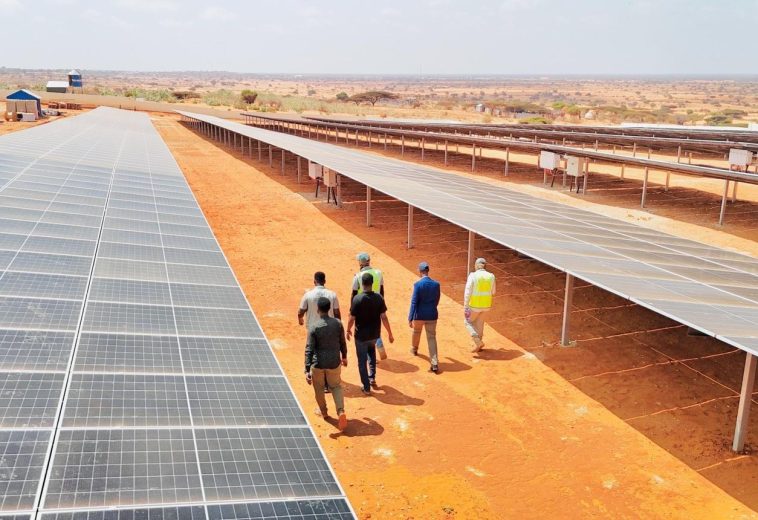
Chad is taking another step towards strengthening its electricity supply, with two hybrid solar power projects in the capital, N’Djamena, reaching financial close and receiving their first disbursement.
The Gassi and Lamadji projects will deliver a combined 30 megawatts-peak of solar generation and 8 megawatt-hours of battery storage, adding renewable capacity to Chad’s national electricity system. The projects are being developed by Qair under a 20-year power purchase agreement with Tchadelec, Chad’s national electricity utility.
READ ALSO: ENERGY TRANSFORMATION: Nigeria’s Gas Milestone Strengthens Industrial Growth
The development is backed by a €37.9 million financing package mobilised by the African Development Bank Group, with support from Proparco, the Sustainable Energy Fund for Africa and the Green Climate Fund. An additional €8 million partial risk guarantee from the African Development Fund and the Green Climate Fund is designed to strengthen the project’s financial structure and reduce investment risk.
For Chad, the significance extends beyond the amount invested. Reliable electricity is essential for businesses, healthcare facilities, schools, households and industrial activity, while battery storage can help improve the usefulness of solar generation beyond daylight hours.
The projects also represent a practical example of how blended finance can help unlock investment in markets where infrastructure projects can otherwise struggle to attract commercial capital.
The African Development Bank has linked the projects to its Desert to Power and Mission 300 initiatives, which seek to accelerate electricity access and renewable energy development across Africa. Desert to Power aims to develop 10,000MW of solar generation capacity across the Sahel.
The projects are among the first independent power producer developments in Chad and are expected to strengthen the national grid once completed. Their financing structure also demonstrates how development institutions can work with private investors to make renewable projects bankable in challenging markets.
For a country facing significant energy-access challenges, the move represents an important shift from ambition to implementation.
It also highlights a wider opportunity for the Sahel. The region possesses enormous solar potential, yet converting that resource into reliable electricity requires financing, infrastructure, storage and strong partnerships.
Chad’s latest projects bring those elements together.
As construction moves forward, Gassi and Lamadji could provide more than additional generation capacity. They could demonstrate how targeted investment and innovative financing can help countries with large energy gaps build cleaner, more reliable power systems.
For Chad and the wider Sahel, that is an important step towards turning Africa’s renewable-energy potential into tangible development.