Mission 300 is an unprecedented, time-bound push to halve Africa’s electricity deficit within six years. Led by the World Bank Group (WBG) in partnership with the African Development Bank (AfDB) and anchored by a coalition of governments, development partners, philanthropies and private financiers, the initiative aims to provide electricity to 300 million people in sub-Saharan Africa by 2030. The World Bank’s programme materials and partner statements make clear that the WBG will take primary responsibility for connecting 250 million people and the AfDB will lead on an additional 50 million, an allocation that underpins the scale and division of labour across the initiative.
Roughly six hundred million Africans live without electricity; to reach 300 million additional people by 2030 requires not just engineering but an immediate and sustained mobilisation of public, concessional and private capital, accompanied by concrete policy reforms in utilities, tariffs and market access. The World Bank has signalled significant financial backing, allocating and leveraging tens of billions in concessional resources while the AfDB has committed large supplementary financing and technical support.
READ ALSO: Sidi Ould Tah Assumes Office as Ninth AfDB President
The WBG has signalled a commitment of around thirty billion US dollars from concessional resources through to 2030 to accelerate the work across generation, distribution, regional integration and last-mile connections, while additional financing and guarantees are expected from the AfDB and other partners. Those public anchors are intended to unlock the far larger pools of private capital the initiative requires.
Momentum for Mission 300 moved from concept to coordinated action at the Mission 300 Africa Energy Summit in Dar es Salaam (January 2025), where African leaders endorsed the Dar es Salaam Energy Declaration and partners made substantial financial pledges. The summit yielded partner commitments that together exceeded fifty billion dollars in pledged support and stimulated public statements from multilateral banks and regional institutions about further injections of capital and risk-mitigation instruments.
At the same time, independent reporting and partner analyses estimate that achieving the full Mission 300 target will require broadly in the order of ninety billion dollars from a mix of development banks, national budgets, philanthropy and private investors, a funding envelope that the initiative’s architects recognise as demanding both speed and discipline in its deployment.
What separates Mission 300 from past pledges is the emphasis on country-owned, time-bound Energy Compacts. These compacts are not abstract commitments; they are reform blueprints that set sector targets, identify regulatory changes, quantify investment needs and sequence projects. Twelve countries, among them Nigeria, Senegal, Tanzania, Zambia, Côte d’Ivoire and the Democratic Republic of Congo have published detailed compacts that lay out connection targets and market reforms to crowd in private finance. The compacts are being used as the basis for structuring investment vehicles, prioritising grid densification in population centres, and creating credit-enhancing instruments for private developers. By design, the compacts convert high-level political commitments into bankable, monitorable project pipelines that can be packaged for institutional investors and for blended finance structures.
Grids, Distributed Renewables and the Last Mile
Mission 300 accepts that no single technological approach will suffice. Half of the additional connections are expected to come from grid extensions and densification; the other half from distributed renewable energy (DRE) solutions, solar home systems, mini-grids and productive-use microgrids which are cheaper and faster in many rural and peri-urban settings than decades of waiting for transmission lines.
Programmes such as ASCENT (Accelerating Sustainable and Clean Energy Access Transformation) are designed to provide a combined approach across Eastern and Southern Africa, targeting roughly 100 million beneficiaries across around twenty countries by scaling grid reinforcement, regional power trade and DRE deployment. That dual pathway recognises both the economies of scale of large transmission projects and the agility of decentralised renewables for remote communities.
DARES in Nigeria
Nigeria’s Distributed Access through Renewable Energy Scale-up (DARES) project exemplifies how an integrated national programme can contribute materially to Mission 300. DARES is structured to deliver new or improved electricity access to more than 17.5 million Nigerians through solar home systems, mini-grids and other decentralised solutions and to replace a substantial number of polluting, expensive generator sets that households and businesses currently rely upon. The initiative is designed to catalyse private developers, ease market entry barriers, and deploy innovative financing to make distributed renewables viable at scale. The DARES example underlines that national project portfolios, when coordinated with regional and multilateral programmes, are the muscle behind the continent-wide ambition.
Ethiopia Grid Gains and Public Services
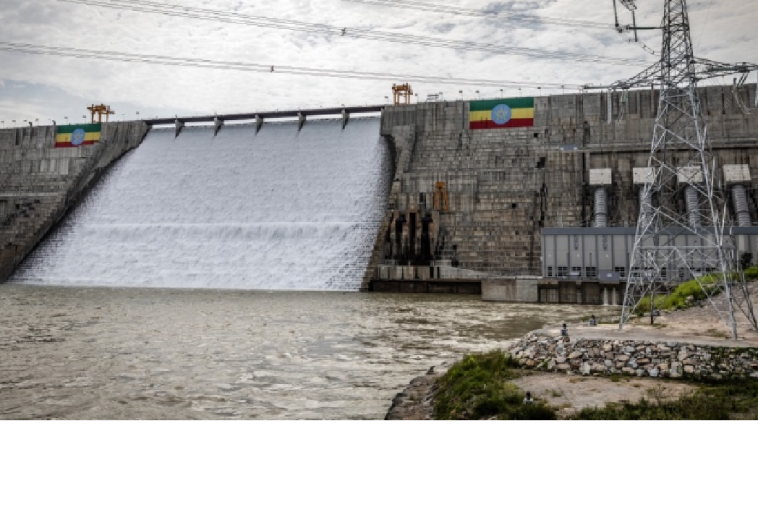
In Eastern Africa, a sequence of grid and off-grid investments in Ethiopia has demonstrated rapid gains in connections and public-service electrification. Programmes linking grid expansion, targeted last-mile connections and off-grid facilities have enabled more on-grid connections and brought electricity to thousands of clinics, schools and administrative centres measures that directly translate into better health outcomes and learning environments. These gains reflect the practical advantage of coordinated utility strengthening, targeted financing and demand modelling that prioritises social-service points alongside household connections.
Finance Architecture
To move from pledges to projects, Mission 300 brings together a layered financial architecture. Concessional public finance from IDA and the AfDB functions as the anchor; philanthropic grants reduce upfront technical and market risk; and de-risking instruments — guarantees, political-risk insurance and subordinated capital — are intended to make projects investible for institutional investors and commercial banks. Development institutions, multilateral investment guarantees, and the private arm of the WBG (IFC) and AfDB are coordinating to stack finance in ways that reduce currency, off-taker and regulatory risks for project developers. The approach aims to turn public money into leverage that multiplies the effect of donor commitments. Recent announcements from regional development banks and bilateral partners show concrete examples of such stacks being assembled.
Mission 300 explicitly links electricity access with clean cooking solutions. The rationale is straightforward: millions of households still rely on biomass, charcoal or kerosene for cooking and heating, with clear health and environmental consequences. Projects that pair electricity connections and distributed renewables with subsidised or market-based clean cooking alternatives reduce household air pollution, free up women’s time, and reduce pressure on forests. The initiative therefore advances a broader public-health and equity agenda alongside the purely economic case for connections.
Risks, Critiques and Governance Questions
Mission 300 has not been free of debate. Civil society organisations and some analysts have warned about an excessive tilt toward large centralised projects and gas-fuelled generation in some planning scenarios; they argue for a sharper emphasis on DRE, clearer safeguards for environmental and social impacts, and stronger mechanisms to ensure local participation and transparency. Questions about procurement, currency risk and the speed of regulatory reform are central: the plan must remain accountable to the communities it serves, and independent monitoring will be essential to guard against elite capture or poor project selection. These critiques are part of a necessary accountability dialogue that accompanies any venture of this scale.
Execution will depend on sequencing and speed. First, rapid completion of country Energy Compacts is required: they are the blueprints that investors and financiers will judge. Second, immediate scaling of the DARES-style instruments can deliver connections to remote communities faster than large transmission projects.
Third, targeted guarantee windows and blended finance facilities must be operationalised to attract pension funds and long-term institutional investors. Fourth, a rigorous monitoring and evaluation framework, independent, public and data-driven will be necessary to track commitments, measure social outcomes, and adapt course where projects underperform. The most successful national examples combine strong political leadership with technical planning and private-sector engagement; Mission 300’s architecture seeks to replicate that alignment at continental scale.
The Stakes: More than Lights On
Electrification transforms public health, education, productivity and gender equity. For a continent with the world’s youngest labour force, electricity is a precondition for industrialisation and the digital economy. If Mission 300 succeeds, it will demonstrate a model of fast, financeable, and country-led transformation that could alter Africa’s development trajectory. If it falters, the cost will be measured not only in stalled projects but in foregone jobs, prolonged health harms from polluting fuels, and missed opportunities for women, youth and small businesses.
The Practical Hope of a Large, Urgent Plan
Mission 300 is simultaneously bold and pragmatic: bold because its numbers demand exceptional mobilisations of capital and political will; pragmatic because it ties financing to discrete reforms, country compacts and bankable project pipelines. The coming years will test whether multilateral anchors, blended finance, private sector appetite and domestic reforms can synchronise at scale. For policymakers, donors and investors, the core question will be whether Mission 300 can be run as a disciplined investor-grade programme, transparent, data-driven and accountable rather than as a constellation of goodwill statements. For citizens across Africa, the measure of success will be practical: electricity to schools, lights in clinics, reliable power for businesses and an immediate reduction in daily hardship.