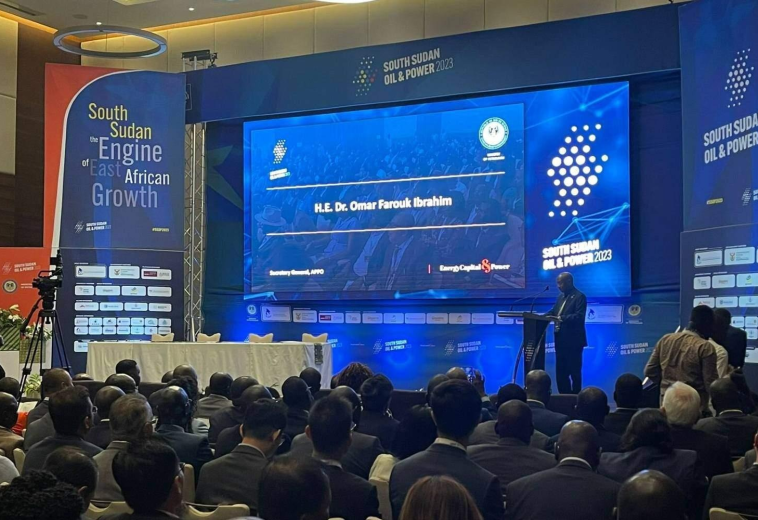

How can South Sudan translate its petroleum resources into broader economic opportunities and a more resilient energy sector? The country’s Oil and Power 2026 conference in Juba provides a platform for addressing this question, bringing government representatives, financial institutions and private-sector investors together to examine the financing and infrastructure requirements of energy development.
Taking place on 24 and 25 November 2026, the conference is centred on the theme Resource Renaissance – Energy-Fuelled Growth for a New Generation. Discussions are focused on project financing, risk management, petroleum infrastructure and opportunities for greater participation by domestic businesses.
READ ALSO: South Sudan Oil: Resilience and Strategic Positioning Amid Global Shifts
The Ministry of Finance and Planning is participating alongside representatives from Stanbic Bank, the Trade and Development Bank and Capium Partners. Their involvement highlights the importance of connecting government policy with financial expertise and private investment, particularly in a sector that requires substantial capital and long-term commitments.
For South Sudan, oil remains central to public revenue and export earnings. However, the country’s ability to translate petroleum resources into wider development benefits depends on more than production volumes. Infrastructure limitations, transport arrangements, financing conditions and the stability of the operating environment all influence the sector’s contribution to national growth.
The emphasis on project bankability is particularly significant. Energy investments require clear contractual arrangements, predictable regulation and credible mechanisms for managing commercial and political risks. Investors must be able to assess not only the availability of natural resources but also the conditions under which projects can be financed, implemented and operated.
The development of local energy services also presents an important opportunity. A stronger domestic supplier base could create opportunities for South Sudanese businesses in engineering, equipment maintenance, logistics, construction and other technical services. Building these capabilities would help retain a greater share of energy-sector expenditure within the country while developing skills that could support other industries.
There is also a broader development question surrounding the management of petroleum revenues. Oil can provide resources for public investment, but long-term economic resilience requires governments to strengthen other productive sectors and direct investment towards infrastructure, education, agriculture and essential services. This is particularly important for an economy exposed to fluctuations in international energy prices and disruptions to production or export routes.
The significance of the Juba conference should therefore extend beyond the number of investors attending or the discussions held. Its value will depend on whether it helps identify credible projects, establish practical financing arrangements and encourage partnerships that progress into implementation.
South Sudan has an opportunity to use its energy resources as a foundation for broader economic activity rather than allow the sector to remain disconnected from the rest of the economy. Stronger financing partnerships, improved project preparation and greater participation by domestic businesses could help move the country towards that objective.
Ultimately, the value of the 2026 investment dialogue will be measured by what follows: credible commitments, projects that reach implementation, stronger local capacity and an energy sector that contributes more consistently to national development.