Ghana is launching one of its most ambitious digital transformation programmes to date, aimed at reshaping how citizens and businesses access government services. The initiative seeks to integrate public services into a unified digital ecosystem, improving efficiency, reducing bureaucracy, and strengthening transparency across state institutions.
At the centre of the reform is the expansion of the Ghana.gov platform, which is being upgraded into a comprehensive one stop digital hub. The platform is expected to scale from approximately 1,500 to 2,000 services currently available to more than 16,000 services before the end of 2025. This marks a significant expansion in access to digital government services. The upgraded system will cover payments, permits, registrations, licences, and a broad range of administrative services for individuals and businesses.
READ ALSO: Digital Infrastructure as Africa’s Leadership Legacy
The transformation is being led by the Ministry of Communication, Digital Technologies and Innovation in partnership with the National Information Technology Agency. Following a structured procurement process, the government is working with technology partners to deploy a modern, scalable, and secure digital infrastructure expected to launch in the fourth quarter of 2025.
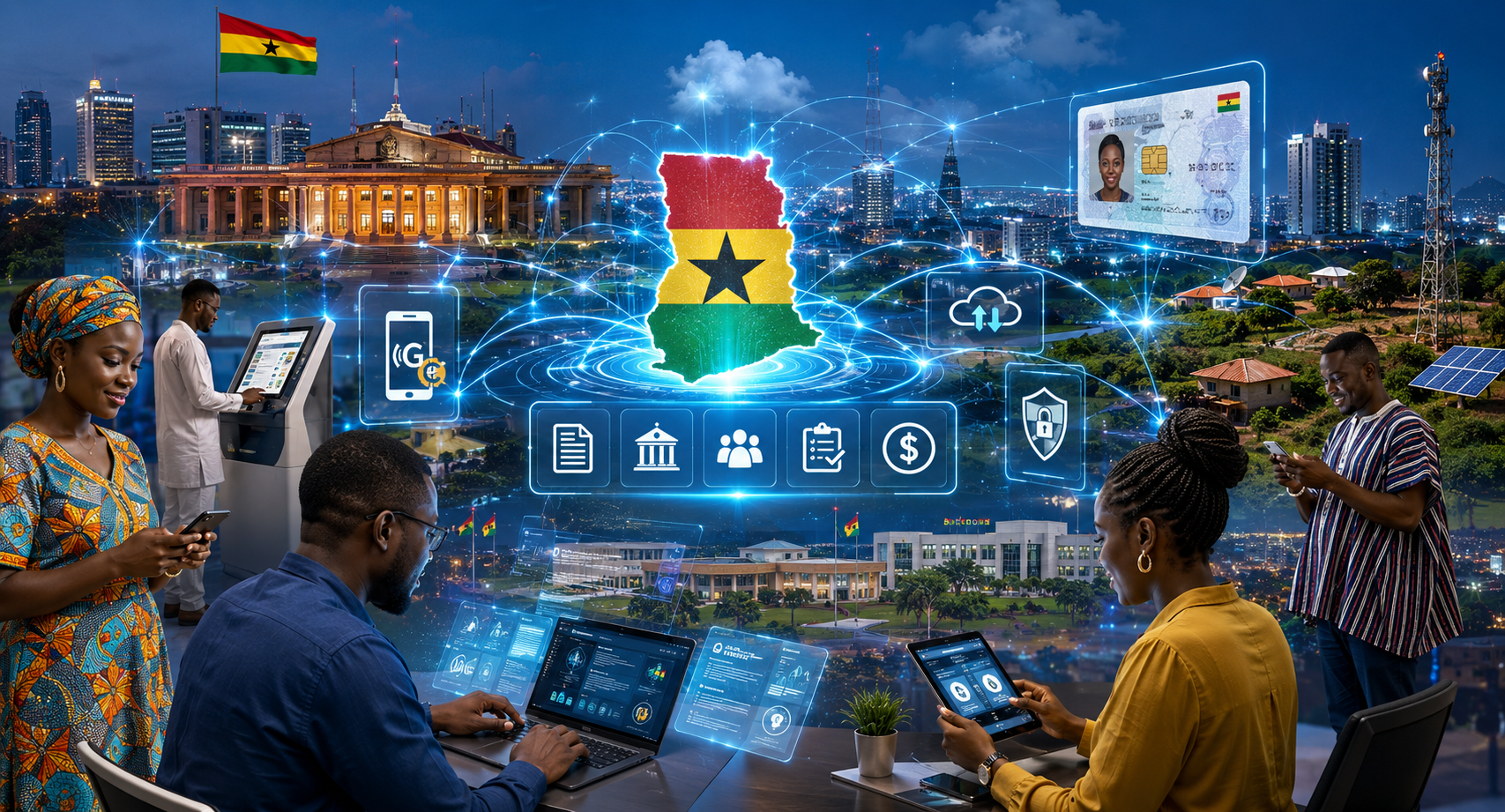
A key feature of the upgrade is its full integration with the national identity system managed by the National Identification Authority. The Ghana Card will serve as the primary authentication tool, enabling secure identity verification, reducing fraud, and supporting more personalised service delivery across government platforms.
The redesigned portal will feature a simplified and user-friendly interface aimed at reducing administrative complexity. Citizens will be able to complete transactions more quickly, track service requests in real time, and access services without repeated in-person visits. This is expected to reduce delays and improve user experience across both urban and rural populations.
The initiative forms part of the broader Ghana Digital Acceleration Project, a 200 million dollar programme supported by the World Bank and running from 2023 to 2027. The project focuses on strengthening digital infrastructure, improving public service delivery, and building a more inclusive digital economy. It also aims to support a more agile and citizen-centred model of governance.
In addition to the Ghana.gov upgrade, the government has introduced complementary systems such as the CitizenApp Data Interoperability System, which enables mobile-based identity verification and seamless access to services across multiple platforms. These interconnected systems are designed to reduce duplication and create a unified digital government architecture.
The reform also extends to policy and governance frameworks. A National Misinformation and Disinformation Bill is in its final stages of development, aimed at addressing false information while maintaining a balance with freedom of expression. This reflects broader efforts to strengthen public trust as services increasingly move online.
Ghana’s digital transformation strategy places strong emphasis on financial inclusion and interoperability. Integration with mobile money systems and digital payments will allow citizens to pay for services electronically, reducing reliance on cash and improving transparency in public revenue collection. This is particularly relevant in a country where mobile money usage continues to grow rapidly.
The initiative positions Ghana alongside other countries investing in digital governance. Rwanda has developed advanced e-government platforms for business registration and public services, while Kenya has expanded its e-citizen system to digitise hundreds of services. These examples demonstrate how integrated digital systems can improve efficiency and reduce corruption risks.
Globally, countries such as Estonia have set the benchmark for fully digital governance, where nearly all public services are accessible online through secure digital identity frameworks. Ghana’s approach reflects a similar ambition, adapted to local conditions and infrastructure realities.
Economically, the impact of Ghana’s digital upgrade is expected to be significant. Streamlined services can reduce administrative costs, improve tax collection efficiency, and enhance the ease of doing business. Faster licensing, registration, and permitting processes are also likely to attract increased private sector investment and support entrepreneurship.
However, challenges remain. Digital inequality, particularly in rural areas with limited connectivity, could affect adoption. Ensuring strong cybersecurity and building public trust will also be critical as more sensitive services move online.
Overall, Ghana’s nationwide digital upgrade represents a major step toward modernising public administration. By integrating thousands of services into a unified platform and expanding access nationwide, the country is positioning itself as a leading force in West Africa’s digital governance transformation.