South Africa’s latest investment push is not just another capital-raising exercise. It is a calculated effort to reset the country’s economic trajectory while positioning it as a continental anchor for industrial growth, digital transformation, and energy transition. The $116 billion, approximately R2 trillion, target by 2031 signals a shift from short-term recovery efforts to a long-term development strategy anchored on infrastructure, productivity, and global competitiveness.
As Africa continues to grapple with persistent deficits in energy, logistics, and industrial capacity, this initiative places South Africa at the centre of a defining continental question. Can coordinated, large-scale investment unlock Africa’s next growth cycle?
READ ALSO: Africa’s Aviation Boom Attracts Fresh Investment Surge
Launched at the Sixth Investment Conference in Johannesburg under the leadership of Cyril Ramaphosa, the initiative builds on a previous mobilisation effort that exceeded expectations.
South Africa has already moved from ambition to execution. Between 2018 and 2023, it secured R1.5 trillion in investment commitments against a target of R1.2 trillion and deployed over R600 billion in capital. The country is now scaling up with a new $116 billion target by 2031, driven by a project-linked and outcome-oriented approach under the theme “Invest. Partner. Prosper.” As President Ramaphosa noted, South Africa is “shifting from promise to performance,” signalling a stronger focus on accountability and measurable economic impact.
The new strategy rests on four core pillars designed to build a more competitive and resilient economy.
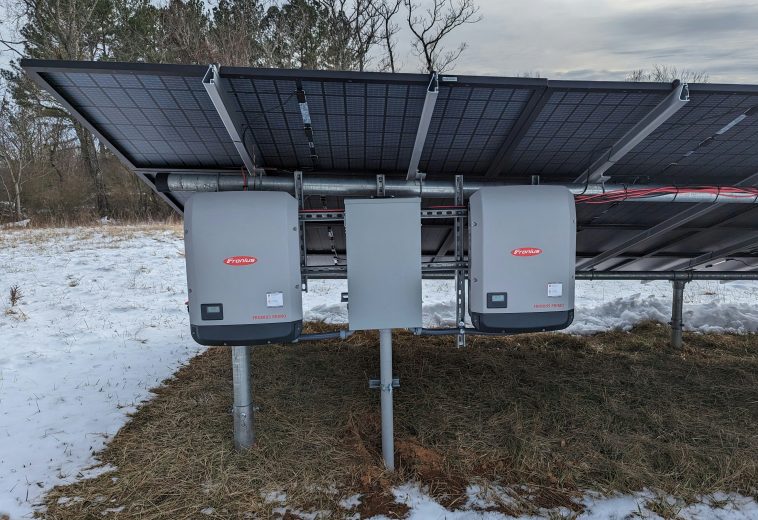
The first pillar focuses on energy transition and power stability. Years of electricity shortages have constrained industrial output, but ongoing reforms are opening the sector to private investment. This includes renewable energy expansion, grid modernisation, and emerging opportunities in green hydrogen.
The second pillar centres on digital infrastructure and economic modernisation. South Africa aims to position itself as a digital gateway to the continent through broadband expansion, data centre growth, and a strengthening fintech ecosystem. Connectivity is now as critical as physical infrastructure.
The third pillar targets industrial expansion and value addition. The strategy seeks to move beyond commodity dependence by scaling manufacturing, promoting mineral beneficiation, and supporting export-oriented industrialisation. This builds on South Africa’s diversified base across automotive, mining, chemicals, and finance.
The fourth pillar addresses logistics and trade connectivity. Planned improvements in port efficiency, rail networks, and regional trade corridors are expected to unlock significant gains. These upgrades could generate strong spillover effects for intra-African trade, given South Africa’s central role in regional commerce.
Beyond domestic impact, the initiative sends a strong signal to global capital markets about Africa’s readiness for structured, large-scale investment. Long viewed as high-risk and fragmented, the continent stands to benefit from a model that demonstrates policy consistency, institutional coordination, and credible project pipelines. This helps shift perception from risk to opportunity.
The strategy is also expected to strengthen regional value chains. Increased demand for raw materials from neighbouring countries could boost cross-border industrial linkages, while supporting intra-African trade under the African Continental Free Trade Area. In doing so, it deepens economic integration across the continent.
Equally important, the model itself offers a benchmark. Structured investment conferences, stronger public-private coordination, and a clear link between pledges and execution provide a framework that countries such as Nigeria, Kenya, and Egypt can adapt, even though South Africa’s scale remains distinctive.
South Africa enters this phase with clear structural advantages. These include mature financial markets, a deep industrial base, and relatively strong institutions. While Nigeria offers market size, Kenya leads in digital innovation, and Egypt advances infrastructure-led growth, South Africa remains one of the continent’s most diversified and investment-ready economies.
The investment programme unlocks several sectoral opportunities. Its natural resource base supports green hydrogen exports and renewable energy development. Its advanced financial system enables growth in digital payments and financial inclusion. At the same time, renewed industrial investment could boost export capacity and reduce reliance on raw commodity exports.
However, challenges remain. Persistent energy reliability concerns, gaps between investment commitments and actual delivery, and infrastructure constraints in ports and rail could limit progress. External risks, including global commodity price volatility and interest rate shifts, also pose potential headwinds.
At a continental level, the $116 billion target contributes to closing Africa’s infrastructure financing gap, estimated at tens of billions of dollars annually. More importantly, it demonstrates scalable financing models capable of attracting institutional investors to African markets. It reinforces a fundamental reality: Africa’s growth will be infrastructure-led, or it will stall.
If successfully implemented, the initiative could drive sustained economic growth, create jobs at scale, strengthen regional leadership, and enhance global competitiveness. Ultimately, success will depend not on ambition, but on execution. As Africa moves toward a more integrated industrial future, South Africa’s investment drive could define the pace and direction of the continent’s next decade of growth.