Africa’s agricultural future is no longer shaped by rainfall alone. It is increasingly engineered. Across the continent, a decisive shift is underway as climate-smart irrigation evolves from a technical upgrade into a survival imperative. In a region where weather patterns are becoming more erratic and food demand is projected to rise by over 260% by 2050, the ability to control water has become central to economic stability, food security, and climate resilience.
This transition marks a structural turning point. Africa is no longer passively adapting to climate change. It is actively redesigning its agricultural systems to withstand it.
READ ALSO: Ghana Deploys AI to Strengthen Climate Resilience
For decades, agriculture across the continent has depended heavily on rainfall, leaving it highly vulnerable to droughts, delayed rains, and flooding. Currently, only about 6 percent of cultivated land is irrigated, compared to roughly 40 percent in Asia. This gap is now being addressed through a shift toward climate-smart irrigation.
This approach is built on three core principles. The first is predictability, which allows farmers to control planting cycles regardless of rainfall variability. The second is efficiency, ensuring water is delivered precisely where and when it is needed. The third is scalability, enabling adoption across both smallholder and commercial farming systems.
The impact is immediate. Irrigation can double or even triple crop yields, extend growing seasons, and enable multiple harvest cycles each year. This transforms agriculture from subsistence-based production into a market-oriented enterprise.
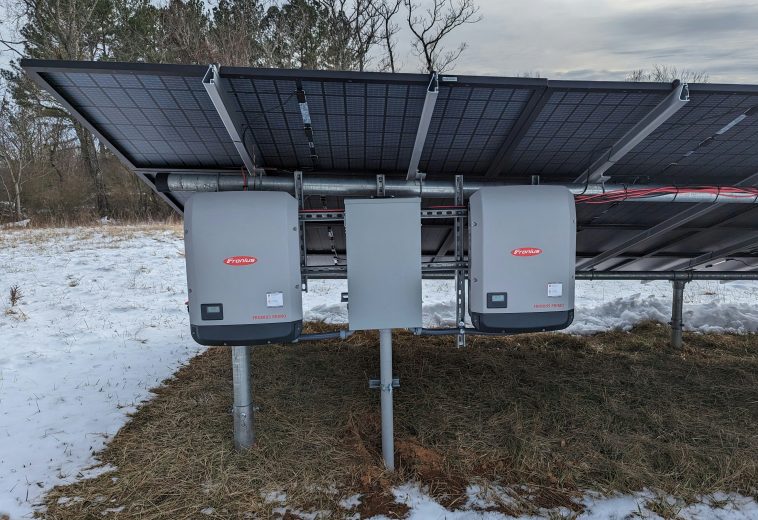
At the heart of this transformation is a growing suite of decentralised and climate-smart technologies. Solar-powered irrigation systems are replacing diesel pumps in regions such as northern Nigeria and the Senegal River Valley. These systems reduce operating costs, cut emissions, and expand energy access in off-grid communities, directly linking agricultural productivity with energy solutions.
In parallel, drip and precision irrigation technologies are improving water efficiency. By delivering moisture directly to plant roots, they reduce waste, enhance crop yields, and protect soil health. This level of precision is especially critical in water-scarce environments.
Unlike large-scale irrigation dams, which require heavy capital investment, these modern systems are modular and accessible. Pay-as-you-go models and micro-financing options are making it easier for smallholder farmers to adopt them, ensuring that the transition remains inclusive and scalable.
In Nigeria, this shift is already taking shape. An initiative led by the International Institute of Tropical Agriculture in Kano State has trained over 200 farmers in solar-powered irrigation, drip systems, sprinkler technologies, and climate-resilient crop varieties. These farmers are now better equipped to increase yields, extend production beyond rain-fed seasons, and stabilise incomes despite climate uncertainty.
The broader economic impact is significant. Irrigated farms consistently outperform rain-fed systems by enabling multiple cropping cycles and reducing the risk of crop failure. This stability allows farmers to transition into commercial agriculture, increasing incomes and strengthening participation in local and regional markets.
The benefits extend beyond farming. The irrigation value chain is creating jobs in equipment installation, maintenance, extension services, and agro-processing. This is particularly important for Africa’s youth population, given that agriculture remains the continent’s largest employer.
Climate-smart irrigation also serves as a powerful adaptation tool. Enabling controlled water use, it helps farmers withstand prolonged droughts, manage erratic rainfall, and maintain soil health. In doing so, it stabilises food systems and reduces dependence on emergency food aid.
However, adoption remains constrained by several structural challenges. Limited awareness, gaps in technical capacity, and high upfront costs continue to restrict uptake among smallholder farmers. Access to affordable credit is also a major barrier.
These challenges are compounded by policy fragmentation. Weak coordination between water, agriculture, and energy sectors often slows progress. Insecure land tenure systems further discourage long-term investment, while inadequate infrastructure in water storage and rural energy access adds to the difficulty.
To unlock the full potential of climate-smart irrigation, a coordinated continental strategy is essential. This must include integrated financing models, policy alignment, local manufacturing, and large-scale capacity building.
Blended finance and carbon market mechanisms can help attract private investment and reduce costs. At the same time, developing local production of irrigation equipment can lower prices, create jobs, and strengthen supply chains.
Governments must also align water management, agricultural policy, and renewable energy strategies within a unified framework. Expanding training programmes will be critical to closing the technical knowledge gap across regions.
If successfully implemented, this transformation could redefine Africa’s agricultural future. It represents a shift from climate vulnerability to engineered resilience. More importantly, it positions agriculture as a technology-driven sector capable of securing the continent’s role in the global food system through stability, productivity, and innovation.